Alexey Sapkin
Self-View
Fixation
How fixation on one’s own image leads to attention depletion, anxiety, and hypercontrol
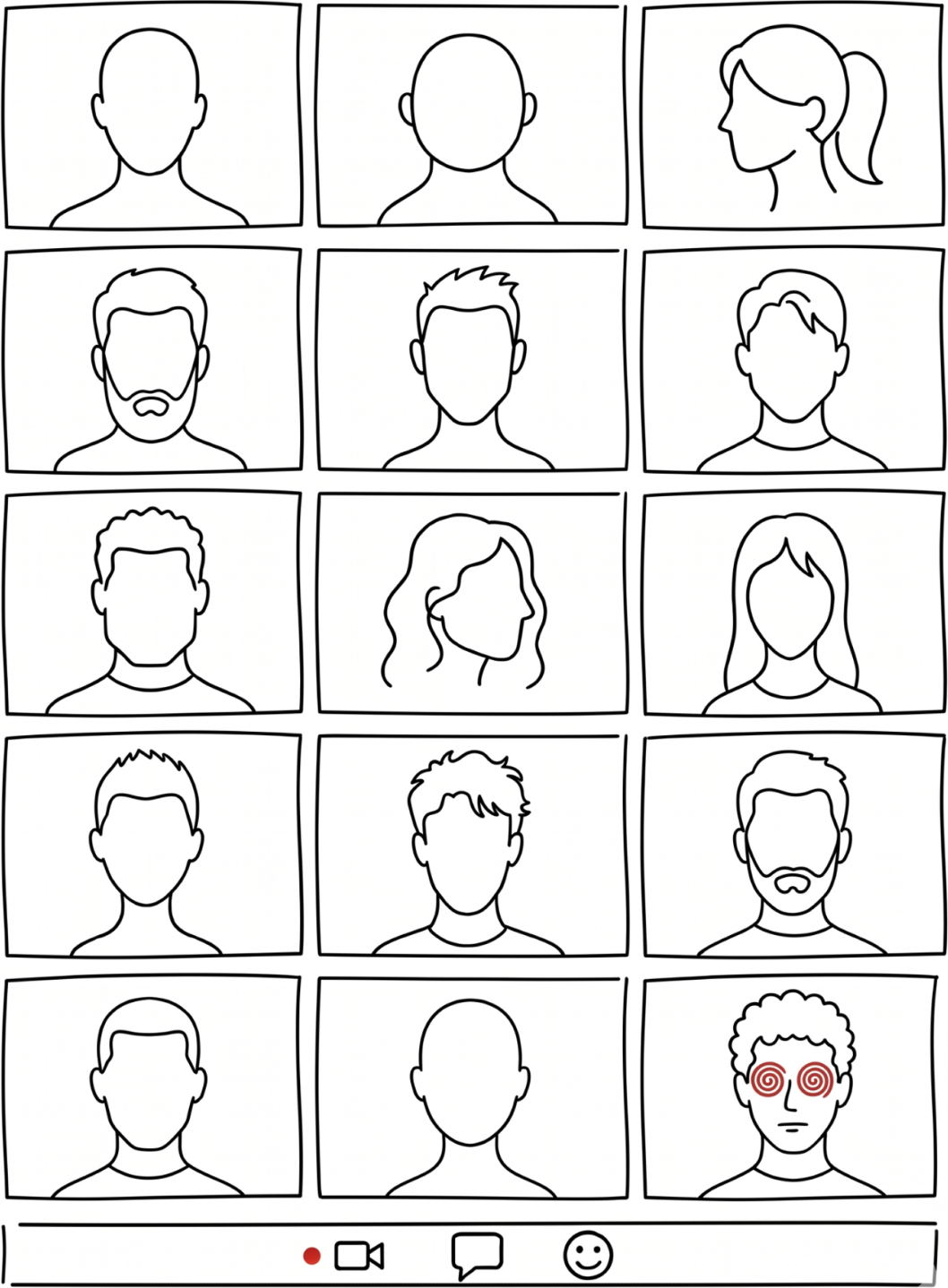
ISBN 978-5-0070-0634-7
Why can’t we tear our eyes away from our own faces during video calls? For 300,000 years, communication meant looking at someone else—we caught glimpses of ourselves only on rare occasions. What happens to the brain when we spend hours analyzing our own reflection in real time?
≈ 4h 14m reading time

About the Author
Alexey Sapkin
Alexey Sapkin is a certified clinical psychologist and CBT clinician specializing in Cognitive Behavioral Therapy and Schema Therapy. He is an International Affiliate of the American Psychological Association (APA) and a member of the Association for Cognitive Behavioral Psychotherapy (a Beck Institute partner).
With a background deeply rooted in science communication, Alexey graduated from Lomonosov Moscow State University, where he later taught disciplines at the intersection of psychology and media. A former science journalist and expert consultant for federal healthcare regulators, he is a strong advocate for evidence-based medicine. He currently runs a private practice focusing on anxiety spectrum disorders, helping clients navigate the complex cognitive traps of the modern digital world.
Preface
When someone can’t tear their eyes away from their own image on a video call, the first word that comes to mind is narcissism. The mythical Narcissus gazed at himself in the stillness of a lake; the digital one stares into a screen. It’s such a convenient label that people slap it on anyone without a second thought. "Case closed—that’ll be $150, please," as my fellow therapists joke when faced with such oversimplifications.
This book will show that it is almost never about narcissism. Even in those rare cases where narcissistic traits do play a role, the underlying mechanism is the exact opposite of what you’d expect. Research using functional magnetic resonance imaging (fMRI) has revealed that even for individuals with high narcissistic traits, looking at their own face doesn't activate the brain's reward system. Instead, it triggers the anterior cingulate cortex—an area associated with negative affect and social pain (the feeling of social rejection or a threat to self-esteem) [1]. It isn’t pleasure; it’s anxiety and tension. The thought isn’t "How beautiful I am," but rather "Am I good enough?" In fact, the very worry that one might be too focused on their reflection almost entirely rules out classic clinical narcissism [2].
So, what is it? If it’s not self-admiration, what exactly compels hundreds of millions of people to stare at a tiny rectangle of their own face instead of focusing on the person they’re talking to?
Three factors converge here. The first is evolutionary: for 300,000 years, humans communicated without ever seeing their own faces during the process. We simply have no cognitive mechanism to ignore such a potent stimulus. The second is technological: the "self-view" feature is enabled by default on every major video conferencing platform, and most users don't even realize it can be disabled in a few clicks. The third is individual: people have vastly different reasons for looking at themselves. Some monitor their expressions out of fear of looking "wrong." Others search for physical flaws they never noticed before. Some hide in the "familiar" window to escape the pressure of other people's faces. For some, their own face is simply an irresistible distractor, especially for those with attention deficits. We have identified seven such motives, each with its own mechanism and its own path to resolution.
In this book, I propose a name for this phenomenon: Self-View Fixation (SVF). This work explains the causes of fixation, helps identify the motive behind it, and offers a protocol for action. Disabling self-view when it’s not needed is one of the most accessible tools of digital hygiene—and, in many cases, a potential entry point for treating broader anxiety. It is an action you can take right now that instantly frees up resources currently being wasted.
Alexey Sapkin
Clinical Psychologist, Lecturer
Member of the Association for Cognitive Behavioral Psychotherapy
and the American Psychological Association
What This Book Promises You
This book is for anyone who spends a significant portion of their workday on video calls: managers, educators, therapists, HR professionals, and students. It will be useful for those who notice "camera anxiety," parents of teenagers in online school, and interface designers.
The material is divided into three logical blocks:
- Part I reveals the mechanism of Self-View Fixation: why the brain cannot ignore its own face and how the "digital mirror" overloads the nervous system.
- Part II focuses on diagnostics—the seven motives that sustain fixation and the vicious cycles behind them.
- Part III offers specific tools for therapy and prevention for individuals, teams, and platforms.
Introduction
Self-View Fixation as a Mass Psychological Experiment
Explosive Growth During COVID
In December 2019, Zoom had ten million daily users. By April 2020, that number had reached 300 million [3]. Over the first four months of the COVID-19 pandemic, hundreds of millions of people found themselves in an unprecedented situation: for hours every day, they watched their own faces while communicating with others.
Science fiction of past generations had long predicted the advent of video calls. It was envisioned in Orwell’s 1984, in Star Trek, and across classic mid-century sci-fi literature. Yet, neither in film nor in books did anyone anticipate the specific detail we are discussing now—the conversational partner always occupied the entire screen. Not a single sci-fi author thought to place a small window with the speaker's own face in the corner of the videophone. The engineers and designers who built video conferencing interfaces added this feature for technical convenience: to ensure the camera was working, the lighting was adequate, and the user was in frame. The feature was enabled by default, and it was simply never turned off.
As a result, a purely technical solution turned into a massive, uncontrolled experiment on human attention.
Four Sources of Fatigue
In 2021, Jeremy Bailenson, a Stanford University professor and founding director of the Virtual Human Interaction Lab, who has made an immense contribution to the psychology of video communication, proposed a systemic explanation for so-called "Zoom fatigue." He outlined four primary causes [4].
The first is excessive close-up eye contact: faces on the screen are situated in our "intimate space" (closer than 60 centimeters, according to Edward Hall's proxemics), creating a constant signal of high social intensity for the brain. The second is restricted mobility: the need to remain within the camera's field of view deprives us of the ability to move, gesture freely, or look away. The third is the cognitive load of nonverbal communication: on a video call, we have to nod exaggeratedly to confirm understanding and decode delayed reactions caused by audio latency (a frequent trope in comedy sketches).
The fourth cause of Zoom fatigue is observing one's own face. Bailenson formulated this as a thought experiment: imagine that throughout your entire workday, especially during meetings, someone is following you around holding a mirror [4]. It is precisely from Bailenson’s metaphor that this book, and its core concept, was born.
Observation of one’s own face as a cause of Zoom fatigue turned out to be the least studied, the least recognized by users, and yet the easiest to eliminate. To address the first three causes, we must change our working culture entirely. The fourth can essentially be eliminated with the click of a button. But even to take such a simple action, one must first notice the problem and recognize that it is more serious than it seems.
To help you measure the extent to which your attention is captured by this "digital mirror," we have included the SVF-7 rapid assessment scale at the end of Part I. It will help you evaluate your own degree of Self-View Fixation.
The Third Channel of Communication
Here is the central idea of this book.
For approximately 300,000 years—since the emergence of Homo sapiens—humans have communicated through two channels. The first is content: words, arguments, ideas. The second is the interlocutor's nonverbal cues: facial expressions, gestures, intonation, posture. The entire cognitive apparatus facilitating social interaction—from mirror neurons to the theory of mind—evolved to process exactly these two channels.
Video conferencing introduced a third channel, a third party to the communication: your own face.
Because this channel is not evolutionary anticipated, there is no established neural circuit for it, no mechanism for automatic suppression, and fundamentally no "off switch." It not only steals a portion of our limited cognitive resources but also completely redirects the focus of our consciousness. Instead of "I am communicating with this person," the mind engages in "I am observing myself communicating with this person." The individual shifts from being the subject of communication to also being its object—the one being looked at. It’s no longer just an interaction; it becomes communication layered with "post-post" and "meta-meta" awareness.
Everything described in this book is a consequence of the emergence of this third (and, as we will show, entirely superfluous) channel: evaluation anxiety, dysmorphia, exhaustion, loss of empathy, and dissociation. People react to it differently, but one way or another, it affects everyone.
Mirrors Have Always Changed Behavior
The idea that mirrors influence behavior is not new. Experimental psychology has been studying this effect for over fifty years. In 1972, Shelley Duval and Robert Wicklund formulated the Theory of Objective Self-Awareness: when a person sees their reflection, their attention shifts inward, triggering an automatic comparison between the "actual self" and the "ideal self," and the resulting discrepancy causes discomfort [5]. This model, incidentally, strongly echoes Lev Vygotsky’s ideas regarding the social origins of self-consciousness.
In 1976, Edward Diener and Mark Wallbom conducted an experiment in which students who considered cheating unethical were given the opportunity to break the rules. Without a mirror, 71% cheated. With a mirror present, only 7% did [6]. In 1979, Arthur Beaman and colleagues studied 363 children on Halloween: without a mirror, 34% of the children took extra candy from a bowl, but when a mirror was placed behind the bowl, only 9% did [7]. Subsequent studies showed that mirrors alter eating behavior, amplify or suppress emotions (depending on the context), affect self-efficacy during physical exertion, and increase the likelihood of prosocial actions [8]. Some of these experiments are still replicated in psychology departments every year for term papers and dissertations.
In all of these studies, the mirror contact lasted only minutes. Twentieth-century psychology had no data on what happens to attention and self-perception when a mirror becomes an unavoidable, hours-long part of the daily work routine. Meanwhile, the self-view on a video call is exactly that kind of mirror: "chronic"—that is, continuous and embedded in the workflow. What happens to attention, emotions, and self-perception in this state is the subject of the first part of this book.
Early Encounters with the Phenomenon
By pure coincidence, this problem entered my sphere of interest long before its explosive growth, back in the mid-2000s. I was finishing my postgraduate studies and lecturing at Moscow State University, and my life revolved around Mokhovaya Street, shifting between the faculties of journalism and psychology. Skype with video calling had just appeared (though it was still a novelty), and a partner and I decided to launch an online psychological counseling center. A format that seems mundane today was met with serious skepticism back then and failed to find demand.
However, while testing the process—for convenience, we placed the client and the therapist in adjacent rooms—we noticed a curious pattern: almost all participants looked at the window showing their own image significantly more than they looked at the psychologist. But the psychologists themselves also constantly checked their own image if the option was available.
Therapeutic contact—the most valuable resource in psychotherapy—was being undermined by a small rectangle in the corner of the screen. A therapist who is completely focused on the client during an in-person session suddenly found that on a video call, a portion of their attention was leaking into the self-view window. "Why did I make that face?" "Let's see, eyebrows drawn together... do I look empathetic enough?" Instead of purely listening to and observing the client, the therapist was observing themselves while concurrently listening to the client.
Having had this experience, when the pandemic hit a decade and a half later and hundreds of millions of people migrated to Zoom simultaneously, it was easy for me to see that a massive shift was occurring in how humans experience communication. People began experiencing widespread anxiety over physical appearances that had never bothered them before. They booked cosmetic procedures after seeing their nose from an unflattering angle. They felt drained after meetings where they barely even spoke. They were losing contact with their conversation partners, with their own bodies, and even with the feeling of being fully present in the here and now.
I started gathering research, searching for mechanisms, and systematizing observations from my clinical practice. It turned out that the scientific foundation for this phenomenon already existed—scattered across neurophysiology, clinical psychology, dermatology, and HCI (Human-Computer Interaction)—but it had not yet been synthesized. This book is an attempt to bring it all together.
Content Navigator
You do not have to read this book from the first page to the last. Depending on what you need right now, there are three entry points.
If you need to take action immediately, start with Chapter 12 (The Protocol), which contains concrete recommendations: what you can do yourself, what to suggest to your team, and what to demand from video conferencing platform developers. A rule you can apply today: when speaking, self-view is acceptable; when listening, hide it. But the safest bet is to turn it off completely and leave it off. Once you’ve put out the fires, return to the rest of the book.
If you first want to understand the mechanisms, read Part I in its entirety. It answers the question, "Why does the brain work this way?" and is written with respect to the canons of quality science communication to ensure an engaging read. It consists of three chapters: what mirrors do to humans (classic experiments), how self-view captures attention (neurobiology), and how it shifts consciousness from subject to object (vicious cycles).
If you want to understand yourself and others, turn to the chapters in Part II. Each of its seven chapters details a distinct motive for Self-View Fixation. Find yours using the internal prompts below.
Map of Internal Motives for Self-View Fixation
Read the thoughts and phrases in each block below. If any of them resonate with you, that is your chapter.
→ Chapter 4. The Controller. "If I don't constantly monitor my facial expressions and check myself, I might look angry, bored, or stupid, and that won't lead to anything good." "I feel calmer when I can see how I look."
→ Chapter 5. The Hider. "I get so exhausted by the stream of other people's faces on the screen that it's easier and more pleasant to look at my own." "My little window is the only safe place on a call with ten colleagues; it feels like I'm alone with myself."
→ Chapter 6. The Objectified. "I look worse on camera than in the mirror." "I notice flaws I never saw before: my nose, dark circles under my eyes, facial asymmetry." "During and after video calls, I feel unattractive."
→ Chapter 7. The Performer. "I try to look as professional as possible on camera: the right posture, the right expressions, the right background." "Is my smile too forced? Do my eyes look interested enough? They need to believe my enthusiasm!" "It's important for me to make a good impression, and self-view helps me monitor that." "After calls, I feel like I just performed a role at the Bolshoi Theatre."
→ Chapter 8. The Face-Saver. "I'm afraid my reaction will be inappropriate and everyone will notice." "People will see that I'm not looking at the screen; they'll think it's disrespectful and get offended. And turning the camera off is basically like not being there at all." "I monitor my facial expressions so as not to disrupt the harmony of the interaction."
→ Chapter 9. The Fascinated. "Honestly, I just like seeing myself on the screen." "Sometimes I catch myself looking at my reflection, and I don't feel anxious or ashamed—it's just pleasant." "Maybe I'm a bit narcissistic, but I'm not sure it's a problem."
→ Chapter 10. The Overwhelmed. "My eyes just naturally glue themselves to my own face, even though I don't want to look at it." "I have a hard time listening to people on video calls—my attention keeps drifting away." "I have an ADHD diagnosis (or some traits of attention deficit), and the camera makes everything worse."
Not all readers will fit neatly into just one block. Motives can combine and shift depending on the context, your level of fatigue, or who else is on the call. But generally, one motive dominates—and that is the perfect place to start reading if you want to save time.
References
[1] Giammarco, E. A., & Vernon, P. A. (2015). Interpersonal reactivity and narcissism: Self-viewing is associated with negative affect rather than reward in highly narcissistic men. Social Neuroscience, 10(4), 382–392. Later confirmed by a series of fMRI studies showing activation of the dorsal and ventral anterior cingulate cortex (ACC) when viewing one's own face. See also: Jauk, E., et al. (2017). Self-viewing is associated with negative affect rather than reward in highly narcissistic men. Social Neuroscience, 12(5), 530–541.
[2] Malkin, C. (2015). Rethinking narcissism: The bad—and surprising good—about feeling special. Harper Wave.
[3] Zoom Video Communications. Growth from 10 million daily meeting participants in December 2019 to 300 million in April 2020 (Company data).
[4] Bailenson, J. N. (2021). Nonverbal Overload: A Theoretical Argument for the Causes of Zoom Fatigue. Technology, Mind, and Behavior, 2(1).
[5] Duval, S., & Wicklund, R. A. (1972). A Theory of Objective Self-Awareness. Academic Press.
[6] Diener, E., & Wallbom, M. (1976). Effects of self-awareness on antinormative behavior. Journal of Research in Personality, 10(1), 107–111.
[7] Beaman, A. L., Klentz, B., Diener, E., & Svanum, S. (1979). Self-awareness and transgression in children: Two field studies. Journal of Personality and Social Psychology, 37(10), 1835–1846.
[8] Review of mirror experiments: effect of mirrors on eating behavior (Sentyrz & Bushman, 1998; Jami, 2016); emotional intensity (Scheier & Carver, 1977; Silvia, 2002); self-efficacy during physical exertion (Martin Ginis et al., 2003; Katula & McAuley, 2001); and prosocial behavior (Scaffidi Abbate et al., 2006). Detailed further in Chapter 1.
How the Mirror Hijacks the Brain
What the Mirror Does to a Person
From a psychological perspective, mirrors are not neutral surfaces. Over half a century of experiments has clearly established that when a person sees their own reflection, their behavior changes. It took researchers some time to articulate exactly how. For example, in the presence of a mirror, a person might eat less fatty food—or, conversely, eat more. They might help strangers more willingly. They might experience emotions more intensely—or suppress them more strictly. The result depends on the context, but the fact of behavioral change itself is a robustly reproducible phenomenon, confirmed by decades of research involving thousands of participants.
All of this happens during mere minutes of mirror contact. With the digital mirror—the self-view on a video call—many of us spend hours and entire workdays. Therefore, before discussing what happens during video conferences, we must first understand what is already known about mirrors.
The Theory of Objective Self-Awareness
In the early 1970s, two American psychologists, Shelley Duval and Robert Wicklund, asked a question that previously only philosophers had formulated: what happens to consciousness when a person becomes the object of their own attention?
Their answer, published in 1972 in A Theory of Objective Self-Awareness, turned out to be surprisingly concrete, even mechanistic [1]. Duval and Wicklund proposed that conscious attention operates like a switch with two positions. In one position, attention is directed outward—to the environment, the interlocutor, the task. In the other, it is directed inward, at oneself. Certain stimuli—mirrors, photographs, voice recordings, the presence of a video camera—flip this switch to the "inward" position. Duval and Wicklund called this state objective self-awareness (OSA).
In itself, this state is neither good nor bad. But objective self-awareness has an inevitable consequence: upon shifting attention inward, the person automatically initiates a comparison. The "actual self"—what they see and feel right now—is weighed against the "ideal self," the internalized standards of what they should be. If the discrepancy is small or non-existent, a brief sense of satisfaction arises. However, because standards are generally higher than reality, a gap is usually found. This gap generates negative affect: discomfort, awkwardness, or anxiety.
From here, two scenarios unfold. If the person believes they can close the gap (fix their posture, speak more confidently, be more honest, etc.), they actively correct their behavior. But when the gap feels insurmountable, a different mechanism kicks in: fleeing the stimulus. The urge is to look away from the mirror, leave the room, stop looking at oneself, or dive into a smartphone (in modern terms).
This simple model proved highly productive. Wicklund and Duval published three experiments in the Journal of Experimental Social Psychology confirming its predictions: participants who heard a recording of their own voice more actively aligned their opinions with group standards, and those who performed a task in front of a mirror did so with greater accuracy [2]. In the early 1980s, Charles Carver and Michael Scheier expanded this model into a cybernetic theory of self-regulation: the mirror triggers a feedback loop—comparison with a standard, correction, and repeated comparison [3]. A 2000 meta-analysis by Fejfar and Hoyle, which pooled 79 studies, confirmed the central thesis: manipulations that direct attention to the self consistently increase negative affect [4].
Yet, the most convincing demonstrations of this principle occurred not in the lab, but in the field.
(See Diagram 1: The Mechanism of Objective Self-Awareness at the end of the chapter).
A Tenfold Decrease in Cheating
In 1976, Edward Diener and Mark Wallbom conducted an experiment that became one of the most cited in the literature on self-awareness [5].
The researchers wanted to know how people behave when they believe no one is watching—and whether this behavior could be influenced without punishments or rewards. The participants were university students who had previously filled out a questionnaire where every single one stated that cheating was unethical. Each student was then given an anagram test with a strict time limit: five minutes, after which a buzzer would sound, and they were required to stop. The experimenter would then leave the room "on urgent business"—leaving the participant alone with the test, the timer, and a hidden observer.
In the control group (a standard, neutral room), 71% of the participants continued working after the buzzer. People who sincerely considered themselves honest cheated when they thought they were unobserved. (This is exactly why I never left the room during exams back when I was a lecturer at Moscow State University).
In the experimental group, a mirror was placed in front of the participant, and a recording of their own voice played in the room. Only 7% cheated.
The experimenters achieved a tenfold reduction in cheating without any surveillance or intimidation. It was enough to make the person see and hear themselves—and the gap between their declared values and actual behavior closed almost to zero. The mirror did not create new values; it simply activated the ones the person already held.
Children and Candy
Three years later, the same principle was tested in a completely different setting—becoming one of the most famous field experiments involving mirrors.
Arthur Beaman, Bonnie Klentz, Edward Diener, and Sven Svanum published the results of a study conducted on Halloween in 1977 across residential neighborhoods in Seattle [6]. Eighteen private homes served as the testing grounds. A female experimenter opened the door for trick-or-treaters. She offered each child to take exactly one piece of candy from a large bowl placed next to a pile of coins, then said she needed to step away and left the room. A hidden observer recorded how many candies and coins each child took.
The experiment varied two factors. First, anonymity: some children were asked for their names and where they lived, while others were asked nothing. Second, in half of the cases, a large mirror was placed directly behind the candy bowl, forcing the child to meet their own gaze at the exact moment of choice.
The results of the first study (363 children) and its replication (349 children) matched. In the condition with no mirror and no individuation, roughly one in three children took extra candy. The mirror, combined with individuation, reduced the transgressions to about one in ten—a fourfold decrease. The effect was especially pronounced in older children, which aligns with the developmental trajectory of self-awareness: for a mirror to influence behavior, a child must be mature enough to hold a standard and compare their actions against it.
This experiment became a classic not just for its elegant design, but for its practical takeaway: the mirror proved to be one of the cheapest and most reliable tools for behavioral regulation—achieved without rewards, punishments, or visible observers. You have likely noticed mirrors in places where honesty is relied upon: near semi-automatic coffee stations or self-checkout counters. In recent years, CCTV cameras (and fake ones) have become even cheaper and more common than mirrors. I invite interested young researchers to compare which actually works better for customer honesty.
Dinner with a Mirror
In the context of food, the mirror activates different standards. Sentyrz and Bushman (1998) conducted two studies—one in a lab and one in a supermarket [7]. Participants were asked to taste three types of cream cheese: full-fat, reduced-fat, and fat-free. One group sat in front of a mirror, the other did not. Those who saw their reflection ate significantly less of the full-fat product, but their consumption of the fat-free cheese remained unchanged. The mirror did not suppress appetite across the board; it selectively reduced the consumption of what was perceived as unhealthy.
Eighteen years later, Ata Jami (2016) ran a series of four experiments and found an even more nuanced effect [8]. Participants chose between chocolate cake and fruit salad, then ate their choice in a room with or without a mirror. Those who chose the cake and ate it in front of the mirror rated its taste as significantly worse. The mirror did not alter the taste of the fruit salad. Crucially, the effect vanished when participants were not given a choice but were simply assigned a dish: the mirror only "punished" the voluntary choice of unhealthy food. The mechanism, Jami concluded, was not physiological but evaluative: just as in the first experiments of this chapter, the mirror induced discomfort from the discrepancy between behavior (eating cake) and standard (wanting to be healthy), and this discomfort was attributed to the food's taste.
But the mirror and food aren't always about guilt. Rinka Nakata and Nobuyuki Kawai of Nagoya University (2017) asked elderly individuals and young adults to eat popcorn (a product that, in a Japanese context, lacks a strongly "healthy" or "unhealthy" reputation) in front of a mirror or a blank wall [9]. Those who saw their reflection ate more and rated the popcorn as tastier. The researchers attributed this to social facilitation: the mirror acted as a virtual dining companion, making a solitary meal feel shared. For elderly people, who often have to eat alone, this effect was particularly pronounced.
Despite the differing effects, the underlying mechanism is identical. The mirror triggers a comparison with whichever standard is most relevant at that moment: healthy eating, ethical behavior, or the need for social contact. This principle is central to understanding what happens with the self-view on a video call. Different people have different standards active during a meeting, and the self-view triggers a comparison specifically against them. This is why, later in the book, we outline seven distinct motives rather than just one.
The Gym Mirror
One of the most practically significant areas of research involves physical exercise. Mirrors are everywhere in gyms, but their impact on people with different fitness levels has proven diametrically opposed.
Kathleen Martin Ginis, Mary Jung, and Lise Gauvin (2003) randomly assigned 58 sedentary (this is key!) college-aged women to two groups [10]. Both groups pedaled a stationary bike for 20 minutes. One group faced a mirrored wall, the other a plain wall. After the workout, participants in the mirrored group reported lower energy levels, less relaxation, and a less positive mood. What surprised the researchers was that this effect did not depend on how satisfied the women were with their bodies before the experiment. The mirror worsened the mood of all sedentary women—even those who had no complaints about their figures. In 2007, the same researchers added another variable—the presence of other people—and showed that for sedentary women, the combination of a mirror and a social environment amplified the negative effect [12].
However, with a different sample, the result was the exact opposite. Katula and McAuley (2001) found that experienced female athletes exercising in front of a mirror demonstrated an increase in self-efficacy—confidence in their ability to complete the task [11].
It turns out that a mirror is harmful when a person does not feel competent in what they are doing while under observation—even if the "observer" is themselves. As we will see later, this is a direct parallel to video conferences. A meeting participant who is unsure of how they look, how they sound, or how they are perceived is in the exact same vulnerable position as the sedentary woman facing a mirror in an unfamiliar gym.
Mirrors and Emotions
Early research provided a straightforward answer: mirrors amplify any emotion. Scheier and Carver (1977) showed across four experiments that participants in front of a mirror reacted more strongly to both pleasant and unpleasant stimuli [13]. People asked to imagine a positive situation felt more joy in front of a mirror; those asked to imagine a sad one felt more sadness. The conclusion seemed universal: self-awareness acts as an emotional amplifier.
A quarter of a century later, Paul Silvia (2002) identified a subtle methodological flaw [14]. Scheier and Carver's procedure essentially instructed participants on what to feel—thereby setting a standard of emotionality. When Silvia removed this component from the instructions, the mirror no longer amplified sadness; it weakened it. In a parallel study, he showed that people who believed it was important to restrain their emotions became less happy in front of a mirror—while those who believed it was normal to express feelings freely showed no change [15].
Later, the picture became clearer. The mirror does not automatically amplify emotions. Rather (as Silvia later clarified), it acts much more subtly: it aligns the emotional state with whichever standard is currently active. When an internal standard demands emotional expression, the reflection boosts it. Conversely, an attitude of restraint means that in front of a mirror, a person suppresses their feelings even harder. It turns out the mirror acts not as a universal amplifier, but as a standard corrector, checking our real selves against our own ideals.
For a person on a video call, this means the emotional consequences of the self-view depend entirely on their active standard. If the standard is "I must look calm and competent," the self-view will amplify discomfort every time the reflection shows something else. If the standard is "I must be emotionally engaged," the self-view will punish them for a blank face. The standards differ, but the mechanism triggered by the digital mirror is the same.
The Beggar with a Mirror and Helping Strangers
A mirror can alter not only individual behavior but also social actions.
In 2006, a team of Italian psychologists led by Scaffidi Abbate conducted an experiment at the University of Palermo [16]. Students were asked to hold a mirror to their faces (under the guise of a different study), after which they were asked to write a postcard in English to support an unknown English-speaking recipient. Those who had just seen their reflection agreed to help significantly more often.
Two years later, the same team took the experiment to the streets [17]. A beggar asking for alms held either a mirror or a piece of cardboard of the same size against his chest. Passersby who caught a glimpse of their own reflection were more inclined to give money. The mirror activated a standard of helpfulness: "I am a good person; I help those in need."
If a mirror can make people more honest, generous, and kind, does that mean the self-view on a video call should do the same? Not necessarily. In the beggar experiment, the mirror contact lasted seconds, the standard was unambiguous (help), and the situation was simple. On a video call, the contact lasts for hours, there are multiple standards (look competent, pay attention, hide fatigue), and they frequently conflict with one another. Neither a regular nor a digital mirror makes people inherently better. It continuously confronts them with who they "should" be—and the more standards there are, the more contradictory they are, and the longer the mirror operates, the higher the psychological cost.
The Mirror Makes People "Themselves"
In 1975, Charles Carver conducted an experiment that settled the question of whether a mirror makes people "better" [19].
Participants were prescreened into two groups based on a questionnaire: one group considered physical punishment an acceptable educational tool; the other did not. Then, in a standard "teacher-learner" paradigm (modeled after Milgram's famous studies, though with lower intensity), participants were asked to punish a partner with electric shocks for making mistakes. Half the participants performed the task in front of a mirror, the other half without.
Without the mirror, both groups behaved roughly the same: the difference between proponents and opponents of punishment was statistically insignificant. But the mirror drove them in opposite directions. Those who approved of punishment delivered stronger shocks in front of the mirror. Those who considered it unacceptable delivered weaker ones.
In the presence of a mirror, people did not become kinder or crueler; rather, it made them more "themselves"—more accurate representatives of their own standards. Prosocial standards were implemented more actively, but so were antisocial ones. The mirror is a neutral amplifier of congruence (the alignment of beliefs and actions), and this is perhaps the most important conclusion from a half-century of research.
For self-view, this means the following: on a video call, the digital mirror does not make everyone equally anxious or equally self-critical. It drives each person toward their own specific standard. That is precisely why the consequences of Self-View Fixation (SVF) are so varied. Under its influence, anxious individuals sink deeper into their fears, perfectionists start nitpicking their appearance, and those with fragile self-esteem feel even more vulnerable. Meanwhile, a person who is entirely satisfied with themselves might even feel a surge of confidence. But even for them, the mirror is not free: it consumes the same cognitive budget.
The Cross-Cultural Difference
In 2008, Steven Heine and colleagues from the University of British Columbia conducted a cross-cultural study that refined the idea of the mirror effect as a universal phenomenon [18].
Canadian students in the classic experimental condition (in front of a mirror) behaved exactly as we would now expect: they became more self-critical, judged themselves more strictly, and exhibited signs of objective self-awareness. Japanese students, however, did not. The mirror did not change their behavior.
The explanation offered by the authors had nothing to do with being insensitive to mirrors. In fact, it was the exact opposite: Japanese participants, having grown up in a collectivist culture with a high norm of self-monitoring, were already in a state of chronically elevated self-awareness. The mirror added nothing new; the internal observer was already operating continuously. The culture itself served the function of a constant psychological mirror.
This finding is highly relevant to the premise of this book. It means that for people from cultures with a high degree of "face-saving"—such as Japan, Korea, and China—the self-view on a video call can act as a mirror on top of a mirror: a technological stimulus of self-awareness layered over a cultural one. We will return to this dynamic in Chapter 8.
The Reflection Rewires the Brain
Most of the experiments described above operate on the level of behavior and emotion. But one of the most astonishing applications of mirrors demonstrated that a reflection can influence things much deeper: the neural representation of the body itself.
In 1996, neuroscientist V.S. Ramachandran published the results of his work with patients suffering from phantom limb pain—an excruciating sensation in an amputated limb—in the Proceedings of the Royal Society [20]. Some patients felt that their missing hand was tightly clenched into a fist and could not be "unclenched"; the pain from this phantom spasm was entirely real.
Ramachandran’s solution was elegant and brilliant. He placed a mirror vertically between the patient's arms so that the reflection of the intact arm appeared where the amputated one used to be. When the patient moved the intact arm—opening the fist, wiggling the fingers—they "saw" the phantom arm moving. Of the first ten patients, six experienced kinesthetic sensations in the phantom limb. For four out of the five who suffered from painful spasms, the pain decreased. For one patient, after a series of sessions, the phantom limb disappeared entirely—the first "amputation" of a phantom limb in medical history.
Mirror box therapy is now used in stroke rehabilitation and for chronic pain syndromes. For our purposes, it is vital as an illustration of an extreme case: a mirror does not just affect behavior and mood; it is capable of rebuilding the internal model of the body. If visual feedback from a reflection can rewrite the neural map of a limb in just a few sessions, then months of visual feedback from one's own face on a video call can hardly be considered trivial. Mirrors operate on a much deeper level than one might expect from such common household objects.
From Minutes to Hours and Days
Every experiment described in this chapter lasted for minutes. Five, ten, twenty. The longest were no more than half an hour. None of the researchers ever imagined a scenario where a participant would look at their own reflection for hours on end, every working day, for months and years. Yet, the self-view on a video call is exactly that regime.
Experimental psychology has no precedent for "chronic" mirror exposure—but the existing data allows us to predict its consequences. If minutes in front of a mirror are enough to reduce cheating tenfold, alter the taste of food, worsen mood after a workout, and increase willingness to help a stranger—what happens when the mirror becomes a permanent fixture of our working routine?
The answer to this question lies in the next two chapters. Chapter 2 will show that one's own face is a stimulus of the highest priority, impossible to ignore through sheer willpower, and that neurophysiological data records cognitive depletion after just fifteen minutes. Chapter 3 will explain how this third channel shifts consciousness from the position of the subject to the position of the object—and triggers vicious cycles that do not fade away on their own.
An Experiment You Can Run in the Classroom
If you are a lecturer or seminar leader, try replicating the basic mirror effect with your students. It requires minimal setup and takes about twenty minutes.
Option 1 (Simple, repeated measures): Divide an online class into two ten-minute blocks. For the first block, ask participants to turn on their self-view. For the second, ask them to hide it. (Or vice versa; the order should be randomized). After each block, administer a brief survey: "On a scale of 1 to 10, how focused were you on the content? On your own appearance? How tired do you feel?" Compare the averages.
Option 2 (Inspired by Diener and Wallbom): Give an assignment with a soft time limit—say, solve a series of problems in 7 minutes. Display the timer on the screen. The experimenter then "steps away." One group works with self-view on, the other with self-view off. Record who continues working after the timer goes off. (Naturally, this should be done with informed consent and a debriefing afterward).
Even with a small sample size, the trend is usually visible. And for the participants themselves, simply experiencing the contrast between the two conditions is a powerful moment of awareness.
References
[1] Duval, S., & Wicklund, R. A. (1972). A Theory of Objective Self-Awareness. New York: Academic Press.
[2] Wicklund, R. A., & Duval, S. (1971). Opinion change and performance facilitation as a result of objective self-awareness. Journal of Experimental Social Psychology, 7(3), 319–342.
[3] Carver, C. S., & Scheier, M. F. (1981). Attention and Self-Regulation: A Control-Process Approach to Human Behavior. New York: Springer. // Scheier, M. F., & Carver, C. S. (1983). Self-directed attention and the comparison of self with standards. Journal of Experimental Social Psychology, 19(3), 205–222.
[4] Fejfar, M. C., & Hoyle, R. H. (2000). Effect of private self-awareness on negative affect and self-referent attribution: A quantitative review. Personality and Social Psychology Review, 4(2), 132–142.
[5] Diener, E., & Wallbom, M. (1976). Effects of self-awareness on antinormative behavior. Journal of Research in Personality, 10(1), 107–111.
[6] Beaman, A. L., Klentz, B., Diener, E., & Svanum, S. (1979). Self-awareness and transgression in children: Two field studies. Journal of Personality and Social Psychology, 37(10), 1835–1846.
[7] Sentyrz, S. M., & Bushman, B. J. (1998). Mirror, mirror on the wall, who's the thinnest one of all? Effects of self-awareness on consumption of full-fat, reduced-fat, and no-fat products. Journal of Applied Psychology, 83(6), 944–949.
[8] Jami, A. (2016). Healthy reflections: The influence of mirror-induced self-awareness on taste perceptions. Journal of the Association for Consumer Research, 1(1), 57–70.
[9] Nakata, R., & Kawai, N. (2017). The "social" facilitation of eating without the presence of others: Self-reflection on eating makes food taste better and people eat more. Physiology & Behavior, 179, 23–29.
[10] Martin Ginis, K. A., Jung, M. E., & Gauvin, L. (2003). To see or not to see: Effects of exercising in mirrored vs. unmirrored environments on sedentary women's feeling states and self-efficacy. Health Psychology, 22(4), 354–361.
[11] Katula, J. A., & McAuley, E. (2001). The mirror does not lie: Acute exercise and self-efficacy. International Journal of Behavioral Medicine, 8(4), 319–332.
[12] Martin Ginis, K. A., Burke, S. M., & Gauvin, L. (2007). Exercising with others exacerbates the negative effects of mirrored environments on sedentary women's feeling states. Psychology & Health, 22(8), 945–962.
[13] Scheier, M. F., & Carver, C. S. (1977). Self-focused attention and the experience of emotion: Attraction, repulsion, elation, and depression. Journal of Personality and Social Psychology, 35(9), 625–636.
[14] Silvia, P. J. (2002). Self-awareness and emotional intensity. Cognition and Emotion, 16(2), 195–216.
[15] Silvia, P. J. (2002). Self-awareness and the regulation of emotional intensity. Self and Identity, 1(1), 3–10.
[16] Scaffidi Abbate, C., Isgrò, A., Wicklund, R. A., & Boca, S. (2006). A field experiment on perspective-taking, helping, and self-awareness. Basic and Applied Social Psychology, 28(3), 283–287.
[17] Scaffidi Abbate, C., & Ruggieri, S. (2008). A beggar, self-awareness and willingness to help. Current Psychology Letters, 24(1), 98–107.
[18] Heine, S. J., Takemoto, T., Moskalenko, S., Lasaleta, J., & Henrich, J. (2008). Mirrors in the head: Cultural variation in objective self-awareness. Personality and Social Psychology Bulletin, 34(7), 879–887.
[19] Carver, C. S. (1975). Physical aggression as a function of objective self-awareness and attitudes toward punishment. Journal of Experimental Social Psychology, 11(5), 510–519.
[20] Ramachandran, V. S., & Rogers-Ramachandran, D. (1996). Synaesthesia in phantom limbs induced with mirrors. Proceedings of the Royal Society of London. Series B: Biological Sciences, 263(1369), 377–386.
Self-View As An Attention Drain
Why the Brain Cannot Ignore Its Own Face
After three hours of video conferencing, Maria shuts her laptop and feels as though she has spent the entire day on her feet. She is a university lecturer, well accustomed to six-hour days in physical classrooms. In-person teaching is tiring too, but in a predictable way: by evening, your feet ache and your voice is hoarse. Online, Maria feels completely different. After just two classes, she feels as if she has been drained by Dementors from Harry Potter.
"And then I sat in silence for forty minutes during a department meeting, just listening—and afterward, I was as exhausted as if I had just taken a final exam," she says. "It makes no sense. I wasn't even doing anything."
In reality, it makes perfect sense. Maria simply doesn't suspect that the cause is hiding in plain sight: in the small window in the corner of her screen. The entire time Maria was "just listening," her brain was simultaneously processing another visual stream—her own face. This happened entirely automatically, without any conscious desire or intention on her part. Had Maria attended the same meeting in a physical room, she would have been engaged in one task: listening. On Zoom, she was engaged in two: listening and observing herself. The second task is invisible, but highly energy-intensive.
In the previous chapter, we saw that mirrors alter behavior reliably, reproducibly, and most importantly, in a matter of minutes. The question now is: what happens when the mirror operates for hours? What exactly is the brain doing when your face appears on the screen? And why can't you "just not look"?
Neurophysiology, eye-tracking, and electroencephalography provide exhaustive answers.
Three Channels, One Superfluous
Let us return to the central idea of this book, outlined in the introduction.
For 300,000 years, human communication relied on two channels. The first is content: words, arguments, the meaning of what is said. The second is the interlocutor's nonverbal behavior: facial expressions, gestures, intonation, posture, and distance. All the systems of social cognition our brains possess—from mirror neurons to the theory of mind—evolved to process exactly these two streams of information simultaneously and in parallel. And this capacity was perfectly sufficient for Homo sapiens.
Video conferencing added a third communication stream: your own face. As science writers like to say, Mother Nature never intended this.
The scale of the problem becomes clear when we look at how attention works. Back in the mid-20th century, Alexander Luria, one of the founders of modern neuropsychology, demonstrated that voluntary attention is not a boundless resource, but a highly energy-intensive function dependent on the prefrontal cortex. When performing complex tasks—especially when a person must simultaneously absorb information, suppress distracting stimuli, and regulate their own behavior—these resources deplete rapidly.
In 2006, Annie Lang proposed the Limited Capacity Model, positing that attention is not an infinitely elastic resource, but rather a strictly limited budget [1]. Imagine it as one hundred arbitrary units. If the content of the conversation requires, say, forty units, and processing the interlocutor's nonverbals takes another thirty, thirty are left for everything else. This remainder is enough for many things: keeping track of the time, adjusting your posture, taking notes, or pouring a glass of water. The system works—it has been fine-tuned by natural selection over hundreds of thousands of years. Those who lacked the attention to pour a glass of water during a tribal meeting likely didn't survive to reproductive age to pass on their genes.
Now add the third channel—your own face on the screen. It demands resources. Exactly how much depends on the individual (this is the focus of Part II of the book), but it is never zero. And it's not just the amount that matters, but the priority. The third channel doesn't just subtract units from the first two; it commandeers them with absolute priority, because for the human brain, there is no visual stimulus more important than one's own face.
The issue goes beyond the mere quantity of hijacked resources. This "parasitic" third channel fundamentally changes the nature of the task. When processing the content and the interlocutor's nonverbals, the brain is solving a normal, external problem: understanding the other person. But when processing its own face, it switches to an internal problem: evaluating oneself. These two modes—external and internal, "I am listening to you" and "I am looking at myself"—compete for the exact same neural resources and are highly incompatible. As a result, the person attempts to do both, but does neither fully. They listen to their colleague with half an ear while fleetingly (or sometimes intently) evaluating themselves. Caught between these two tasks, both the conversation's content and the person's peace of mind slip through the cracks.
Faces: A Primate’s Priority
Among all the visual objects the human brain can recognize, faces occupy a special tier. A brain region known as the fusiform face area (FFA) specializes specifically in processing them. It activates faster and more intensely than it does for any other category of objects—houses, cars, letters, or landscapes [2]. This is not a learned cultural skill, but the direct result of millions of years of evolutionary pressure. For social primates—and we are no exception—the ability to instantly recognize faces, read their emotions, and, above all, distinguish "friend" from "foe" has always been a matter of survival. Those who recognized faces and emotions too slowly lost the evolutionary race. This superpower is a tool for survival and adaptation, honed to automaticity by natural selection.
But even within the hierarchy of faces, there is an absolute peak. At that peak is our own face.
In 2010, Polish neurophysiologists Paweł Tacikowski and Anna Nowicka used EEG to record event-related potentials—the electrical responses of the cerebral cortex to presented stimuli. Participants were shown three categories of faces: unfamiliar, familiar, and their own. Their own face triggered the most pronounced and rapid electrical response [3]. This reaction is automatic; it occurs before a person even has time to consciously register what they are looking at. The brain tags its own face as a self-relevant stimulus and assigns it the highest priority. This is the same reason you can hear your own name across a noisy room—the well-documented "cocktail party effect," only translated into visual modality.
Your own face on a video conference screen is exactly this kind of stimulus. It does not require a conscious decision to "look at myself." It hijacks attention automatically, at a level preceding conscious thought. This mechanism is so fundamental that it traces back to Ivan Pavlov. Over a century ago, he described the "orienting reflex" (or the "What is it?" reflex)—the body's automatic response to any new or biologically significant stimulus. This reflex instantly heightens sensory sensitivity and directs attention exactly where crucial information might be hiding. For humans engaged in communication, their own face is one of the most powerful triggers for this reflex. The brain simply cannot ignore it. And no amount of willpower can completely override this mechanism; it can only brake it for a short time, expending a portion of your already limited cognitive budget with every attempt.
Where They Actually Look
People tend to overestimate their control over their own attention. If you ask a video call participant what they were looking at, most will say, "At the person speaking. Well, sometimes at the presentation." Eye-tracking technology—which captures gaze direction with pinpoint accuracy—paints a different picture.
In 2024, Stephanie Ariss and Christopher Fairbairn at the University of Illinois asked: "Everyone says they look at their conversation partner. But do they?" They equipped participants with eye-trackers and recorded their gaze trajectories during real video calls. The results were unequivocal: participants systematically returned to their own self-view window, making serial visual fixations far more frequently than they later reported [4]. The gap between where people think they are looking and where they are actually looking proved robust and reproducible. Even while preparing a presentation on this book for a scientific conference, we easily replicated this experiment using open-source eye-tracking software.
Even more striking data came from researchers at Dartmouth College that same year. They discovered a paradox that, at first glance, defies common sense: participants who experienced the most discomfort from the self-view looked at it more often, not less. Those who reported unpleasant feelings when seeing their own face fixated on it longer than anyone else [5].
This is certainly not done for masochistic pleasure. It is a manifestation of a well-known clinical psychology mechanism: anxiety often triggers compensatory hyper-control. A person begins to obsessively focus on the perceived source of a threat to ensure that "everything is okay" and nothing has spiraled out of control. In the moment, this brings fleeting relief, but in the long run, it only amplifies the anxiety and sustains a vicious cycle. The daily practice of any psychotherapist provides ample examples of this. A person terrified of spiders cannot stop looking at a spider they spotted in the room. A person embarrassed by a stain on their shirt will constantly dart their eyes down toward it. A person experiencing a panic attack cannot stop scanning their bodily sensations, constantly checking their pulse or breathing to ensure nothing catastrophic is happening. A person anxious about their appearance cannot stop looking at their own face.
The self-view acts as a spiral of discomfort: the more discomfort you feel, the more you look; the more you look, the more discomfort you feel. This is a textbook definition of a positive feedback loop. In clinical psychology, such self-sustaining mechanisms are called vicious cycles, and we will dissect three of them in the next chapter. But even at the level of simple eye-tracking, the reality is clear: the self-view is not a neutral UI element that you can simply choose to ignore. For a significant portion of users, this stimulus becomes a black hole that swallows attention whole.
Instrumental Evidence
Subjective complaints about Zoom fatigue have echoed since the first months of the pandemic. But subjective data is just that—subjective. A person, especially one locked at home with relatives during a pandemic, might label themselves "exhausted" for dozens of reasons: boredom, irritation, poor sleep, lack of fresh air. Gernot Müller-Putz, head of the Institute of Neural Engineering at Graz University of Technology, approached the question differently: can we see Zoom fatigue on an EEG? Can we record it not from participants' words, but objectively, through the electrical activity of the cortex?
Müller-Putz and his colleagues invited thirty-five students to attend the exact same seminar in two formats: in-person and online. During both, participants wore EEG caps, and their electrocardiograms (ECG) were simultaneously recorded. The content, the instructor, and the duration were identical. The only variable was the format.
The results were stark and became apparent much sooner than the researchers expected. After just fifteen minutes of the online meeting, the EEG registered markers of cognitive fatigue that were nowhere to be found in the in-person format. Simultaneously, heart rate variability (HRV) dropped—a metric reflecting the tone of the parasympathetic nervous system, which is responsible for rest and recovery. When the parasympathetic system is suppressed, the body shifts into a state of mobilization—the classic "fight or flight" response, but in a chronic, smoldering form. The video format didn't just "seem" more tiring; it measurably depleted the cerebral cortex and shifted the autonomic balance toward stress [6].
Fifteen minutes is merely a quarter of a typical meeting, class, or consultation. The brain entered a trajectory of exhaustion before participants even had time to realize they were tired. The internal monologue of an online participant, as quoted by Müller-Putz, sounds like this: "Is my shirt okay? Does my background look normal? How is my face?" None of these questions arise when those same people sit around a physical conference table. But on a video call, they arrive in full force.
The Graz experiment captured the general cognitive cost of video conferencing. But what specific role does the self-view—that small window with your own face—play in this cost? Another study, conducted on the other side of Europe, addressed this exact question.
Habituation Does Not Occur
In 2024, Jin Xu, Eoin Whelan, and colleagues from the University of Galway (Ireland) conducted a compelling experiment [7]. Thirty-two volunteers participated in a series of live video conferences—not artificial lab tasks, but real conversations with other people. The only variable manipulated was the self-view, which was alternately toggled on and off for the participants. Everything else remained constant: the interlocutors, the topic, the duration. Participants wore EEG electrodes tracking brain activity across five frequency bands: delta, theta, lower alpha, upper alpha, and beta.
Whelan and Xu were primarily interested in the alpha rhythm (oscillations in the 8–13 Hz range). The alpha rhythm is one of the most reliable markers in neurophysiology. It is linked to two simultaneous processes: cortical inhibition (the brain "braking" its processing) and mental fatigue. When the cortex is overloaded, alpha activity spikes, and the nervous system shifts into an energy-saving mode.
The result: when the self-view was enabled, alpha activity was statistically significantly higher than when it was hidden. The difference was consistent and predictable.
But the most crucial discovery wasn't the spike in alpha activity itself—it was its trajectory. The alpha rhythm did not decline over time when the self-view was on. For the entire twenty minutes of observation, it remained stably elevated. Habituation or adaptation (which typically occurs with many other continuous stimuli) never took place. The brain did not "learn" to ignore its own face, nor did it reallocate resources. The twentieth minute of self-view burdened the cortex exactly as much as the first minute.
This is a detail that deserves special attention. Many everyday irritants act as acute stressors: they provoke a reaction, the nervous system adapts, and the load decreases. You stop noticing the hum of an air conditioner after a minute. The smell of a new room "disappears" for us within five minutes. The self-view is not that kind of stressor. It operates as a permanent background load and lasts as long as the video call lasts—one, two, or three hours, if not turned off.
In practical terms, this means that if your workday consists of four one-hour video meetings with the self-view on, your brain remains under a state of elevated cognitive load for all four hours. It is neurophysiologically impossible to "train yourself" or get used to this stimulus—at least over the timeframes researchers have been able to measure.
One more significant detail: Xu and Whelan's EEG data found no gender differences in neurophysiological load. Male and female brains reacted to the self-view identically. The differences consistently captured in self-reported surveys—where women report higher Zoom fatigue and greater dissatisfaction with their appearance—are differences not in the neural load, but in its interpretation. The brains of both sexes are equally overloaded, but it seems social norms steer women toward explaining this exhaustion through their appearance, while men simply attribute it to being "tired." We will return to this strange effect in the next chapter.
Why You Can't "Just Not Look"
The most common advice given to people who notice themselves fixating on the self-view is: "Well, just don't look at it." The advice seems entirely reasonable from a common-sense perspective, but it fundamentally doesn't work (much like other hollow psychological advice, such as "Just don't be sad" or "Stop overthinking").
There are three reasons why, and each is sufficient on its own.
First is the priority of the self-relevant stimulus, which we discussed earlier. As Tacikowski and Nowicka’s data showed, your own face is processed automatically and with the highest priority. Suppressing this automatic reaction requires the active intervention of the prefrontal cortex—the exact same resource needed to do your job, listen, and make decisions. Every act of suppression withdraws cognitive units from the same budget needed to understand your colleague. You aren't "saving" energy by trying not to look at yourself through sheer willpower; you are spending energy on the effort of suppression itself.
Second is peripheral vision. Even when you consciously direct your gaze at the speaker, the self-view window remains in your peripheral vision. Evolutionarily, peripheral vision is highly attuned to detecting movement—it is what saved our ancestors' lives by spotting a predator at the edge of their visual field. (And it still constantly saves our lives today, for example, while driving). Your own moving face is a powerful stimulus constantly competing for the resources of central attention. Every nod, every turn of your head is registered by your periphery, and every single time, your brain must make a micro-decision: switch focus or suppress. This process is unconscious—which is exactly why it is so taxing.
Third is the self-referential network. The brain houses a specific network of regions that activates whenever processing information related to the self: the medial prefrontal cortex (mPFC), the posterior cingulate cortex (PCC), and the insula [8]. This network forms the foundation of self-awareness; it lights up when you see your face, hear your name, or think about yourself. The self-view on the screen acts as its constant activator. "Not looking" means suppressing not just the direction of your gaze, but the spontaneous activation of an entire neural network. This is possible—briefly. But the longer the call, the higher the likelihood that the suppression will fail, and your eyes will dart right back to your reflection.
The Hidden Cost of Switching
Let’s assume a person uses heroic effort to keep their eyes on the speaker. Let’s even assume they succeed most of the time. There is another hidden cost that is easily overlooked: the switch cost.
Cognitive science established long ago that every time attention shifts from one object to another, it takes time and consumes resources [9]. A single switch takes anywhere from a few dozen to a few hundred milliseconds. By itself, this amount is tiny—we don't even feel it. But on a video call with self-view enabled, these switches occur dozens, sometimes hundreds of times an hour. Speaker → self-view → speaker → presentation slide → self-view → another participant → self-view → chat window. Every cycle incurs a micro-expense. But micro-expenses compound. Crucially, each switch isn't just a tax on transit; it involves a micro-loss of context. You return your gaze to the speaker, but for a fraction of a second, you’ve lost the thread of what they were saying. These micro-losses are imperceptible individually, but together they create a highly recognizable sensation: "I felt like I was listening, but for some reason, I don't remember anything."
There is a useful everyday analogy. If an app on your phone briefly activates the screen once a minute, each individual episode uses a negligible fraction of the battery. But by the end of the day, the battery is dead—not because of one massive drain, but because of a thousand tiny ones. The switch cost of the self-view operates on the exact same principle: by the end of a one-hour meeting, the total cognitive deficit accumulated strictly from visual context switching can be equivalent to several minutes of focused mental work, entirely wasted.
The Gallery of Mirrors
There is one more aspect of video conferencing that demands separate attention. On most platforms, in addition to the "active speaker" layout, there is a "gallery view"—a grid displaying all participants simultaneously. In a corporate environment, this could mean five, ten, twenty-five, or more windows. Your own face is one of them, embedded in the mosaic right alongside the others.
A scenario where a person sees themselves in a lineup with dozens of other faces of roughly the same size, on a single flat plane, all at once, has never existed in the natural world. No social context in 300,000 years has presented a stimulus like this. In real life, you do not see yourself sitting next to your colleagues; you see them, and you experience yourself from the inside, through interoception and proprioception. In the "wild," you do not see how you look. Gallery view shatters this asymmetry: you become just one of many rectangles, each of which can be directly compared to your own.
This is the ultimate breeding ground for upward social comparison—the automatic, poorly controlled tendency to measure oneself against those who subjectively appear to look better [10]. Leon Festinger outlined this mechanism back in 1954, long before screens existed: people continuously evaluate themselves through comparison with others. This isn't a conscious choice, but a foundational property of social cognition. Gallery view feeds this mechanism an unprecedented volume of material. Dozens of faces at once, each a potential object of comparison, situated literally adjacent to yours. Whose skin looks better? Who has better lighting? Who looks more put-together? These comparisons happen automatically in the background, further draining the cognitive budget we discussed at the beginning of the chapter.
An Evolutionary Vulnerability
Everything described in this chapter—the absolute priority of the self-relevant stimulus, the automatic hijacking of attention, the absence of habituation, the switch cost, and the gallery view effect—is the result of a normal brain functioning perfectly normally in abnormal conditions. A person staring at themselves on a video call is not demonstrating a bad habit, narcissism, vanity, or a lack of self-discipline—none of the things they are so often accused of. They are demonstrating the entirely expected reaction of an evolutionarily shaped nervous system to a stimulus it was never designed to process in the background.
The problem lies in the environment, not the user. The self-view is enabled by default across all major platforms and messengers: Zoom, Microsoft Teams, Google Meet, Telegram, WhatsApp, FaceTime. It is turned on—and it stays on unless the user takes deliberate action to hide it. Most users likely don't even know that disabling it is an option. Many others, even if they do know, hesitate to turn it off out of a fear of losing control over how they appear. (We will explore exactly why this happens in Part II, in the chapters on "The Controller" and "The Performer").
Ultimately, a design decision implemented purely for technical convenience is inflicting a cognitive load on users that is objectively measurable by neurophysiological instruments. It would be one thing to make such claims based solely on subjective surveys (though many major psychological findings rely exactly on those); it is quite another when we look at an instrumentally recorded spike in alpha rhythms that refuses to drop for the entirety of a call.
Let us return to Maria. She now has a far better explanation for her exhaustion than "you're just not used to it yet." For three straight hours, her brain was processing a high-priority stimulus that it can neither adapt to nor ignore. The cognitive resources meant for decoding the conversation and reading her colleagues' nonverbal cues were bleeding into a third channel—one that simply does not exist in the evolutionary blueprint of human communication.
Attention hijacking is only the first layer of the problem. In the next chapter, we will see how the hijacking described here morphs into something even deeper: a shift in the very way a person is present in a conversation. From the subject of communication to its object. From the one who speaks to the one who observes themselves speaking. And we will examine how this shift triggers vicious cycles that become self-sustaining.
References
[1] Lang, A. (2006). Using the Limited Capacity Model of Motivated Mediated Message Processing to Design Effective Cancer Communication Messages. Journal of Communication, 56(s1), S7–S24.
[2] Kanwisher, N., McDermott, J., & Chun, M. M. (1997). The fusiform face area: a module in human extrastriate cortex specialized for face perception. Journal of Neuroscience, 17(11), 4302–4311.
[3] Tacikowski, P., & Nowicka, A. (2010). Allocation of attention to self-name and self-face: An ERP study. Biological Psychology, 84(2), 318–324.
[4] Ariss, S., & Fairbairn, C. (2024). Eye-tracking during videoconference interactions: Self-view fixation and gaze patterns. University of Illinois.
[5] Ratan, R. et al. (2022). Self-view and public self-consciousness in video meetings. Wayne State University. (Data on the paradox "discomfort → higher fixation" is also corroborated by Dartmouth College research, 2024).
[6] Müller-Putz, G. R. et al. (2025). Neurophysiological markers of cognitive fatigue in videoconferencing vs. face-to-face meetings: An EEG and ECG study. Graz University of Technology.
[7] Whelan, E. et al. (2024). Self-view in video-conferencing and its role in Zoom fatigue: An EEG study. Behaviour & Information Technology. PubMed: 38574294.
[8] Northoff, G. et al. (2006). Self-referential processing in our brain – A meta-analysis of imaging studies on the self. NeuroImage, 31(1), 440–457.
[9] Monsell, S. (2003). Task switching. Trends in Cognitive Sciences, 7(3), 134–140.
[10] Festinger, L. (1954). A theory of social comparison processes. Human Relations, 7(2), 117–140.
The Inner Observer Trap
How Self-View Shifts the Brain from "I Am Communicating" to "I Am Observing Myself," Triggering Vicious Cycles
Take the example of a colleague, shared on her social media (her name is changed for privacy). Nelly is a clinical psychologist with fifteen years of experience. In her physical office, she works exactly as she was trained to do: she listens, observes, registers pauses, catches micro-expressions, and notices the subtle tension in a client's shoulders. But when the pandemic forced her practice onto Zoom, Nelly discovered something unexpected. A client would be talking about a painful divorce, their voice trembling—and Nelly would catch herself looking not at the client, but at her own face in the corner of the screen.
"Why did I make that face? Do I look empathetic enough? Let's furrow the brows a bit... or is that too much?" She forces her gaze back to the client, but a minute later, her eyes slide back to her own reflection.
Nelly is an experienced professional who understands exactly how the psyche and attention work. She spent years working in a psychiatric hospital and a crisis center for victims of abuse. If even she cannot stop looking at herself, what is happening to everyone else?
The automatic hijacking of attention—which causes alpha rhythms to spike and stay elevated—is only the tip of the iceberg. The deeper issue is that the self-view fundamentally alters the direction of consciousness, not just consumes attentional resources. A person ceases to be merely the subject of a conversation and simultaneously becomes its object. They are the one communicating—and the one being looked at. And the primary person looking is themselves.
It is precisely this shift—from subject to object—that triggers vicious cycles that become self-sustaining. This is why it is impossible to "just get used to" the self-view: the longer a person remains in the position of their own observer, the deeper they sink into it.
The Theory of Objective Self-Awareness
As discussed in the previous chapter, in 1972—half a century before the first Zoom call—Shelley Duval and Robert Wicklund described a mechanism that operates today with frightening precision. Their Theory of Objective Self-Awareness states that when a person's attention is directed inward (whether by a mirror, a camera, or a voice recording), an automatic process of comparison is triggered. The "actual self" is compared to the "ideal self." If a discrepancy is found—and it almost always is—negative affect arises: discomfort, anxiety, or shame [1].
From there, a person has two options. The first is to try and reduce the discrepancy: fix their hair, straighten their posture, adjust their facial expression. The second is to flee the stimulus: turn away from the mirror, leave the room, stop the recording.
In a laboratory, both options are available. In real life, too: you can step away from a mirror in an elevator or look away from a shop window. But on a video call, both exits are effectively blocked. Reducing the discrepancy is impossible: a web camera with a short focal length distorts facial proportions—making the nose appear wider, the face rounder, the shadows harsher—and no amount of fixing your hair will correct this (leaving users to place all their hope on AI enhancement filters, where available). Fleeing is also not an option: you are in a meeting, you are visible, and you cannot leave. The self-view keeps running. The comparison continues. The negative affect accumulates.
Duval and Wicklund could never have imagined that half a century later, hundreds of millions of people would be forced into a state of objective self-awareness for several hours a day, for months and years on end. Their theory proved even more accurate than its authors could have anticipated once the pandemic—and the broader remote-work economy—created the conditions to test it on a global scale.
Through the Eyes of an Outside Observer
In 1995, David Clark and Adrian Wells proposed a cognitive model of social anxiety that explained a long-standing paradox: why doesn't social anxiety fade with repeated exposure to the feared situation? [2] A person with a phobia of spiders who encounters a spider and survives gradually stops being afraid. A person with social anxiety who speaks in front of an audience repeatedly without being mocked or judged does not stop being afraid. Clark and Wells demonstrated why.
Their model outlines a closed loop consisting of six stages:
1. A person enters a social situation, which activates core beliefs: "I am boring," "People will notice my anxiety," "I look ridiculous." 2. The situation is perceived as a threat. 3. Attention shifts inward—to one's own thoughts, physical sensations, and appearance. This is known in the literature as self-focused attention (SFA). 4. This is the most critical link for our topic: The person constructs an image of themselves from an external perspective. They don't just feel anxious; they see themselves as anxious from the outside. Not from within, as internal states are usually experienced, but externally, as if through the eyes of the audience. This is the observer perspective. 5. To cope with the threat, the person employs safety behaviors: avoiding eye contact, rehearsing every sentence mentally, gripping their hands under the table, frequently taking sips of water, etc. As a result of these safety behaviors, the person is momentarily "distracted," and anxiety drops briefly. But in the long run, the brain becomes convinced that it "survived" solely because of the safety behaviors ("If I hadn't controlled myself, it would have been unbearable"), which ultimately reinforces the anxiety. 6. After the situation, post-event rumination sets in: "Why did I say that? How did that look? They definitely noticed everything."
For us, the key link is the fourth: the observer perspective. In normal life, this is an internal construct; the person imagines how they look to others. The image is inaccurate and distorted by anxiety, but it is at least imaginary. It can be challenged in therapy. A therapist can show the client a video recording of their speech, and the client will see that they looked much calmer than they thought. In fact, video feedback is a core therapeutic technique in Clark's treatment model used to correct distorted self-imagery [3].
The self-view on a video call makes the observer perspective literal, rather than metaphorical. A person no longer needs to imagine how they look—they are already seeing it. In real-time, and continuously. And what they see is typically a version distorted by a webcam lens. Clark's therapeutic technique worked because the video was viewed in a safe context, alongside a professional, with attention directed toward behavior rather than appearance. The self-view lacks this framing. It is presented without context or guidance—which is exactly why it works in reverse. It does not correct the distorted image; it creates or sustains it.
The Clark-Wells model explains why Self-View Fixation does not fade with experience. Every video call activates all six links simultaneously and continuously: Core Beliefs → Threat → Self-Focused Attention → Observer Perspective (literal) → Safety Behaviors (monitoring facial expressions, posture, or under-eye bags is a textbook safety behavior) → Post-Call Rumination. The cycle is sealed. The lived experience never refutes the negative beliefs because the safety behaviors prevent that from happening. The person thinks: "The meeting only went okay because I kept checking my face and making sure I looked engaged." The takeaway is not "my fears were unfounded," but "anxiety is unbearable, I must keep controlling my appearance."
Not Just for the Anxious
It is a mistake to think that this only applies to people with clinical social anxiety.
Self-focused attention (SFA) operates in everyone. It is not a pathology; it is a normal cognitive process. The only difference lies in the intensity of the process and its consequences. In 1975, Allan Fenigstein, Michael Scheier, and Arnold Buss described a stable trait they called public self-consciousness—the tendency to focus on how one appears to others [4]. This is also not a diagnosis, but a continuum: everyone falls somewhere on a scale from minimal concern about others' opinions to maximum concern.
Recent studies have shown that reactions to the self-view predictably depend on a person's position on this continuum. For people with high public self-consciousness, the self-view worsens their attitude toward video calls, increases anxiety, and decreases satisfaction. For the rare, lucky few with low public self-consciousness, it can even be helpful as purely technical feedback: making sure the camera is on, the lighting is fine, and there's no clutter in the frame [5]. There is no universal recipe. But because the self-view is enabled by default for everyone, it creates an excessive burden for a massive portion of users—the exact portion for whom observing themselves triggers the vicious cycle described above.
The Double Weakening of Empathy
There is another hidden cost to this shift in consciousness that is difficult to notice from the inside, but is felt by everyone in the conversation: the loss of empathy. Video inherently weakens the function of mirror neurons, and the self-view delivers a secondary blow by draining resources away from them.
Mirror neurons—a group of neurons that activate both when you perform an action and when you observe someone else performing that same action—form the neurophysiological basis of our ability to understand others' emotions and intentions. They provide what is sometimes called motor resonance: when you see your conversation partner wince in pain, your brain briefly simulates that pain. This mechanism is essential for the rich social interactions characteristic of primates.
The problem is that the video format naturally weakens this mechanism. Studies on primates have shown that out of 123 mirror neurons in the F5 area, only 43% reacted to a video with the same intensity as they did to a live action [6]. Video is, in a sense, an impoverished signal: flat, delayed, and devoid of spatial depth. The mirror neurons still work, but their firing is muted.
The self-view adds a second layer of suppression. Mirror neurons activate when observing others. When attention shifts to one's own image, a different system activates: the self-referential network (the medial prefrontal cortex, posterior cingulate cortex, and insula). These two systems—processing others' actions and processing one's own image—compete for resources [7]. The self-view redirects a portion of the incoming signal from the first system to the second.
The result is a double weakening: the video format degrades the signal reaching the mirror neurons, and the self-view distracts the brain from whatever signal remains. This explains a very specific sensation that many people describe: video calls feel emotionally "empty," "fake," or "exhausting"—even though no one can pinpoint exactly why. The content is the same, the people are the same, but something is missing. What’s missing is resonance. The very feeling of contact that makes people want to communicate face-to-face in the first place.
The Camera as an Unreliable Witness
In 1972 (coincidentally, the same year Duval and Wicklund published their theory), Daryl Bem introduced Self-Perception Theory [8]. Its premise is simple but counterintuitive: we learn about our own emotions not (only) from the inside out, but by observing our own behavior. If I am smiling, it means I am amused. If my posture is rigid, it means I am anxious. To a certain extent, we are forced to "read" our own states based on external cues, exactly as we do with the people around us. (I suspect the popular psychology advice to smile at yourself in the mirror every morning was born from Bem's concept).
The self-view turns this mechanism into a trap. The camera is an unreliable witness: as we've established, the wide-angle lens distorts proportions, poor lighting adds harsh shadows, and low resolution erases nuance. A person looks at the screen, sees a tired, tense face, and—following Bem's mechanism—concludes: "I am tired and tense." This conclusion, in turn, amplifies the actual physical sensation of fatigue and tension. You notice signs of exhaustion on the screen → you subjectively feel more exhausted → your facial expression becomes genuinely more exhausted → you see this on the screen. It is another closed loop.
The Betrayal of Interoception
Constantly watching yourself strikes another target: interoception—the ability to read the signals of your own body, such as heartbeat, breathing, muscle tension, hunger, and fatigue.
In normal life, as trivial as it sounds, we learn about our physical state primarily from within. We feel tired not because we look in a mirror and see a tired face, but because we register heaviness in our limbs, a slowing of our thoughts, and a desire to close our eyes. Interoception is an internal feedback channel, and it functions as long as our attention is at least partially directed inward. (Psychotherapists frequently work both with clients who cannot interpret their bodily signals and with clients who fixate on them excessively, such as constantly checking their pulse).
The self-view forcefully yanks attention outward—onto the screen, the image, the visual representation of the self. This is an exteroceptive fixation: a person learns about their state from the outside rather than the inside. Hours of fixation on an external image gradually displace interoceptive contact with the body. A person stops noticing that they are sitting in an uncomfortable position, that their shoulders are hiked up to their ears, or that their breathing has become shallow. They see how they look, but they no longer feel how they feel.
Reduced interoceptive awareness is a known neurophysiological predictor of anxiety disorders [9]. The self-view, therefore, does not merely provoke anxiety—it actively degrades the very system designed to help regulate it.
A Workday in Front of a Digital Mirror
In the classic mirror experiments described in Chapter 1, the exposure time was long enough to alter behavior, but not long enough to alter the brain. The self-view on a video call is a different story entirely. For many professionals, four, six, or even eight hours of video conferencing a day is the norm, not the exception.
The neuroscience of chronic stress shows that persistent cognitive overload is more than just fatigue. Chronic strain on the prefrontal cortex (the brain region responsible for executive functions, emotional regulation, and voluntary attention) can lead to measurable changes: a reduction in long-term potentiation (LTP), which is foundational for memory and learning, and a simplification of the dendritic architecture of neurons [10]. The prefrontal cortex is vulnerable to chronic stress even in adults—and this is exactly the region being taxed every time you suppress the urge to look at your self-view, every time you force your attention back to the speaker, and during every cycle of "evaluate self → suppress evaluation → evaluate self again."
To be clear: there are not yet direct studies definitively linking SVF to long-term neuroplastic changes. However, the pattern of exposure—daily, multi-hour sessions involving chronic activation of the self-referential network and the suppression of automatic reflexes—aligns perfectly with what neuroscience categorizes as an ecological stressor capable of provoking microstructural changes in neural networks. For now, this remains the author's hypothesis.
Three Vicious Cycles
Everything described above can be systematized into three self-sustaining mechanisms—three vicious cycles, each triggered by the self-view and perpetuated by it.
1. The Anxiety Cycle (The Clark-Wells Loop). Adapted for video calls: Self-view activates SFA → the person views themselves from the observer perspective → cognitive distortions activate ("I look ridiculous," "Everyone sees it") → safety behaviors kick in (controlling facial expressions, fixing hair, monitoring the self-view) → the safety behaviors sustain the SFA → the cycle is closed. This is the primary loop for individuals with high public self-consciousness and social anxiety. It does not fade with exposure; it intensifies. 2. The Dysmorphic Cycle. Self-view fixates attention on specific facial features → selective attention creates a magnifying effect ("My nose is huge. How did I never notice this?") → emotional reasoning takes over ("I feel like I look terrible, therefore I really do look terrible") → increased scrutiny → discovery of new "flaws" → the cycle is closed. This parallels clinical descriptions of compulsive mirror-checking in Body Dysmorphic Disorder, but it is being triggered in people who had no issues with their appearance prior to the era of endless video calls. (We will discuss the early 2020s spike in plastic surgeries—likely associated with the self-view—later on). 3. The Neurocognitive Cycle. Self-view automatically hijacks attention (the mechanism from Chapter 2) → resources for processing the conversation partner drop → the person struggles to follow the conversation → a feeling of lost control arises → compensatory return of gaze to the self-view (the only "familiar" and predictable element on the screen) → the hijacking intensifies → the cycle is closed. This cycle operates even in people without anxiety or dysmorphic concerns; it is purely automatic. (As a reminder, we possess no evolutionary immunity to this third communication channel). This cycle explains why even those completely satisfied with their appearance still find their eyes glued to their own window.
These three cycles are not mutually exclusive. A single person might experience two or all three simultaneously. But generally, one cycle takes the lead. Identifying which one is driving your behavior is the goal of Part II of this book, where we will break down the seven motives for fixating on the self-view.
Asymmetry: The Listener and the Speaker
There is one more crucial detail to consider: not all roles on a video call are equal.
When you are presenting or speaking at a meeting, the self-view can function as a genuine feedback tool: you can see your gestures, ensure you haven't drifted out of frame, and calibrate your delivery. This is active monitoring integrated into an action. It is cognitively expensive, but justifiable by rational needs. (Though, as a psychologist and lecturer, I would still highly recommend looking at engaged participants instead—their reactions and support are far more informative and useful than your own reflection).
But when you are listening, the dynamic flips entirely. You are not performing any action that requires visual feedback. It is entirely in your best interest to focus on external reality: the words, intonations, and facial expressions of the speaker and other participants. Yet, the self-view remains active, and you have no functional reason to look at it. The cognitive load it generates during this time is a pure deficit. The latest research confirms this asymmetry: for a listener, the self-view exacts a maximum cognitive toll while providing minimum utility [11]. Hide it.
The Additional Burden on Women
In the previous chapter, we mentioned the gender paradox found in the data of Whelan and Xu: EEG scans show no difference between men and women in the neurophysiological load caused by the self-view, yet subjective reports consistently show that women experience more Zoom fatigue, are more frequently dissatisfied with their appearance, and fixate on their image more often.
With an understanding of the vicious cycles, this paradox now has an explanation. The neurophysiological load is identical—but the interpretation is different. Social norms, which place far stricter appearance demands on women, channel the experience of cognitive overload into a specific narrative: "I am exhausted because I look bad." Men experience the exact same overload but describe it differently: "I'm just tired. My head hurts. I probably didn't sleep enough."
The Anxiety Cycle (Clark-Wells) and the Dysmorphic Cycle activate more frequently and intensely in those for whom evaluating their appearance is a habitual way of interpreting any physical discomfort. The Neurocognitive Cycle operates equally in everyone—but it is noticed less often because its symptoms are less specific.
This is not a biological gender issue, but a social one—yet its consequences are highly concrete. Women on video calls are not "weaker" or "more sensitive"; their brains react identically to men's. But the interpretive mechanism instilled by culture translates the exact same neurophysiological load into different subjective experiences—and, consequently, feeds different vicious cycles.
Let us return to Nelly. She is an expert psychotherapist. She knows exactly what self-focused attention and the observer perspective are. She understands the Clark-Wells model and uses it in her practice. And yet, she still catches herself staring at her own face precisely when her client needs her undivided attention. Has she lost her professionalism? No. This is the predictable reaction of a nervous system to a stimulus against which it has no defense.
Therapeutic contact—the psychologist's primary tool—is sabotaged by a rectangle in the corner of the screen. The therapist tries her best, but the self-view activates three vicious cycles simultaneously. The Anxiety Cycle: "Do I look empathetic enough?" The Neurocognitive Cycle: Her gaze automatically darts to herself, missing a client's micro-expression. Bem’s Self-Perception Cycle: She sees her tense face on the screen and feels even more tense.
This concludes Part I. We have journeyed from classic mirror experiments (Chapter 1) through the neurobiology of attention hijacking (Chapter 2) to the mechanism of shifting consciousness and the three vicious cycles (this chapter). The overarching conclusion is this: the self-view does not merely distract us; it recalibrates the very optics through which we perceive ourselves during communication. Mirrors have always done this, but usually in brief intervals. The self-view does it chronically.
Up to this point, we have discussed the mechanisms—how it works. We have not yet asked why a specific person looks at themselves. As it turns out, the motives vary wildly. One person monitors their facial expressions out of a fear of negative judgment, while another hunts for flaws they never noticed in a bathroom mirror. For a third, the familiar little window becomes a refuge from the intimidating gaze of others, and someone else might simply be unable to look away because their own moving face is an insurmountable distractor. The underlying motive determines which vicious cycle is driving the bus—and, consequently, how to stop it.
Part II of this book outlines seven such motives. Before we break them down and help you find your profile, I invite you to conduct a brief self-assessment. This scale will help objectify your experience and show you exactly where you stand.
The SVF-7 Self-Test
Reflect on your experience with video calls over the past few months. Rate each statement from 1 to 5 — the result is calculated instantly and never leaves your browser.
During video calls, I frequently look at my own image for extended periods.
My gaze slides back to my own face automatically, even when I am trying to watch the speaker.
The presence of my face on the screen makes it difficult for me to fully concentrate on what others are saying.
After long video calls, I feel a specific kind of exhaustion or depletion that I do not experience after in-person meetings.
After a call, I sometimes struggle to remember details of the conversation because a portion of my attention was spent observing myself.
Seeing my own face on the screen regularly causes me background tension, anxiety, or dissatisfaction.
I feel that without the self-view window, things would be easier, but I hesitate (or don't want) to hide it.
A self-reflection tool based on the SVF-7 scale in Chapter 3 — not a clinical diagnosis. If self-view fixation is affecting your wellbeing, see the strategies in Part III or speak with a professional.
References
[1] Duval, S., & Wicklund, R. A. (1972). A Theory of Objective Self-Awareness. New York: Academic Press.
[2] Clark, D. M., & Wells, A. (1995). A cognitive model of social phobia. In R. G. Heimberg et al. (Eds.), Social Phobia: Diagnosis, Assessment, and Treatment (pp. 69–93). New York: Guilford Press.
[3] Clark, D. M., & Wells, A. (Ibid.) Video feedback as a therapeutic tool is detailed in Clark's work on social anxiety disorder therapy; George, S., & Stopa, L. (2008) demonstrated that live video reflection increases anxiety and public self-awareness.
[4] Fenigstein, A., Scheier, M. F., & Buss, A. H. (1975). Public and private self-consciousness: Assessment and theory. Journal of Consulting and Clinical Psychology, 43(4), 522–527.
[5] Ratan, R. et al. Studies on the link between public self-consciousness and reaction to self-view (Wayne State University); Kuhn (WSU): "One-size-fits-all does not work."
[6] Data on mirror neuron responses to video stimuli are derived from primate studies; the suppression of the mu rhythm (a marker of mirror neuron system activation) is significantly weaker during video observation than live observation.
[7] The conflict between the mirror neuron system (processing others' actions) and the self-referential network (mPFC, PCC) is described within the neurophysiology of social cognition; see reviews by V. S. Ramachandran, G. Rizzolatti.
[8] Bem, D. J. (1972). Self-perception theory. In L. Berkowitz (Ed.), Advances in Experimental Social Psychology (Vol. 6, pp. 1–62). New York: Academic Press.
[9] For a fundamental review on the link between reduced interoception and clinical conditions (including anxiety and eating disorders), see: Khalsa, S. S., et al. (2018). Interoception and Mental Health: A Roadmap. Biological Psychiatry: Cognitive Neuroscience and Neuroimaging, 3(6), 501–513. Empirical data showing how exteroceptive manipulation (observing one's body via video) is negatively related to interoceptive awareness can be found in: Bekrater-Bodmann, R., Azevedo, R. T., Ainley, V., & Tsakiris, M. (2020). Interoceptive Awareness Is Negatively Related to the Exteroceptive Manipulation of Bodily Self-Location. Frontiers in Psychology, 11, 562016.
[10] The impact of cognitive overload and stress on synaptic plasticity (LTP) and the architecture of the medial prefrontal cortex is detailed in: Fagiani, F., et al. (2022). Long-term memory, synaptic plasticity and dopamine in rodent medial prefrontal cortex: Role in executive functions. Frontiers in Behavioral Neuroscience, 16. On the connection between the loss of dendritic spines, reduced LTP in the prefrontal cortex, and the development of depressive symptoms, see the classic review: Duman, R. S., Aghajanian, G. K., Sanacora, G., & Krystal, J. H. (2016). Synaptic plasticity and depression: new insights from stress and rapid-acting antidepressants. Nature Medicine, 22(3), 238–249.
[11] The integration of the sender-receiver framework with the consumption of self-referential information in virtual meetings is presented in: Abramova, O., Gladkaya, M., & Krasnova, H. (2024). The differential effects of self-view in virtual meetings when speaking vs. listening. European Journal of Information Systems. The authors compellingly demonstrate that the cognitive cost and consequences of SVF differ radically depending on whether the participant is currently speaking or listening.
#
In the first part, we dismantled the mechanism: what the presence of your own face on a screen does to the brain, how it hijacks attention, depletes the cortex, and shifts consciousness from an "I am communicating" mode to an "I am observing myself" mode. This mechanism is universal—it operates in everyone. But the motives driving people to look at the self-view differ radically.
Imagine five people sitting in a meeting. All five are looking at themselves, but their motives vary completely. One is anxiously checking to make sure she doesn't look terrified. Another is tortured by the thought that the wide-angle lens has enlarged his nose. A third uses his little window as a safe haven from the intense pressure of a dozen other people's gazes. The fourth is currently giving a presentation and evaluating her own persuasiveness, while the fifth physically cannot look away because, due to his attention deficit, a moving image is an insurmountable distractor.
A single behavioral act—looking at the self-view—triggers different vicious cycles for these people and requires entirely different solutions. This is exactly why the universal advice to "just don't look" or "just turn it off" is highly unlikely to work: it completely ignores why the person cannot pull themselves away. At this stage, the person understands neither the root of the problem nor the benefit of giving up their "favorite toy" to solve it.
We have identified seven consistent motives—seven reasons people look at themselves. Each gets its own chapter. The archetypes are arranged on a spectrum from the most anxiety-driven to the most neurocognitive: The Controller, The Hider, The Objectified, The Performer, The Face-Saver, The Fascinated, and The Overwhelmed.
One person may have a primary motive and one or two secondary ones. Identifying yours is the first step toward stopping the self-view from dictating your attention. If you scored over 18 points on the SVF-7 scale, the following chapters will serve as your navigator. We will break down exactly which of the seven mechanisms is devouring your cognitive resources and how to disable this automatic response.
Seven Faces in the Digital Mirror
The Controller
How the need to make sure "everything is fine" reinforces anxiety instead of reducing it
Marina, 34, is a middle manager at a large company. She is the only woman on the executive team. Every morning, before her first video call, she spends five minutes adjusting her setup: the lighting, the camera angle, the background, her hair. During the meeting, her eyes dart to her own window every twenty to thirty seconds. It’s a rapid scan-and-check: Is my face calm? Do I look confident? Am I squinting? Is my forehead wrinkled? If a "defect" is detected, she corrects it instantly: smoothing her brow, slightly raising her chin, adjusting her expression.
After the meeting, Marina experiences a familiar blackout: she cannot remember what her colleagues were talking about for the last twenty minutes. The content of the conversation completely bypassed her. But she remembers with absolute certainty that at 10:47 AM, a tense expression appeared on her face, and she managed to fix it in time.
After six months of this routine, Marina notices that meetings have begun to trigger a vague anxiety even before they start—not so much because of the agenda, but because of the camera. She believes (or rather, as she would put it, she feels) that without constant visual monitoring, "everything will collapse": her colleagues will notice her insecurity, her boss will doubt her competence, she will make some facial slip that reveals her internal state, or, worst of all, she will show her wrinkles. The self-view is her safety net, the only thing standing between her and catastrophe.
Marina is a Controller. This is the most common archetype of Self-View Fixation, and its mechanism is detailed extensively in clinical literature—albeit in a completely different context.
Safety Behaviors: From Classic to Digital
In Chapter 3, we described Clark and Wells' cognitive model of social anxiety—the six stages of a vicious cycle in which a central role is played by so-called safety behaviors: defensive actions aimed at preventing an imagined catastrophe [1]. In everyday life, these actions for social anxiety are well-cataloged in CBT literature: avoiding eye contact, mentally rehearsing sentences, gripping one's hands, speaking quietly, trying to "not attract attention," engaging in mental rituals, and a myriad of other ways to "protect" oneself from seemingly unbearable anxiety and discomfort (e.g., during public speaking, meetings, parties, or any social interaction).
Video conferencing has spawned an entirely new set of defensive actions—digital equivalents of classic safety behaviors. They are not yet described in Cognitive Behavioral Therapy (CBT) textbooks because the environment in which they occur did not exist on a mass scale until 2020, and the research is happening right now. But their structure is identical: each one subjectively reduces anxiety in the moment—and objectively reinforces it in the long run.
Classic Safety Behaviors → Digital Equivalents on a Video Call
- Avoiding eye contact → Fixating gaze on the self-view instead of the interlocutor's face.
- Mental rehearsal of every phrase → Checking one's facial expression on the self-view before speaking.
- Controlling posture and gestures (rigidity) → Restricting movement to "look good on camera."
- Quiet voice, mumbled speech → Muting the microphone between remarks "just in case," even when actively participating in the conversation.
- Attempting to "blend into the background" → Turning off the camera as an avoidance tactic (not to be confused with a conscious boundary-setting decision).
- Excessive monitoring of audience reactions → Excessive scanning of the gallery view: "Who is looking at me? Who turned away?"
Pay close attention to the first pair. In an in-person setting, a person with social anxiety simply looks away from their conversation partner. On a video call, they also look away—but not into the void; they look at themselves. The self-view takes the place that the floor, a wall, or one's own hands would occupy in a physical room. But unlike a floor or a wall, the self-view offers no respite; instead, it adds a highly specific and measurable neurocognitive load (as discussed in Part I). The person flees from one source of anxiety (the faces of others) and runs straight into another (their own face, subject to constant evaluation).
The Paradox of Control
All safety behaviors share one characteristic that makes them so resilient: they actually "work." Albeit subjectively and only in the moment, they provide relief. (For those familiar with operant conditioning, this is classic negative reinforcement). Marina checks her self-view, sees a tense expression, corrects it, and her anxiety drops briefly. The meeting ends without incident. The conclusion Marina makes (or rather, her amygdala, since what pop-science book is complete without it?): "The catastrophe didn't happen because I controlled my face."
This is the ultimate trap. In Cognitive Behavioral Therapy, this is known as blocking a corrective experience [1]. For an anxious belief to weaken, a person must acquire an experience that refutes it. If I am convinced that without monitoring my facial expressions my colleagues will notice my insecurity, the only way to test this is to go through a meeting without monitoring and see that nothing terrible happens. But this is exactly what the safety behavior prevents. Marina never learns what would happen without her checks—because she never stops checking. Her anxious belief remains untouched. Furthermore, it strengthens: "I checked, and everything went fine—therefore, the checks are necessary."
The cycle is sealed: Negative belief ("Without control, everything will collapse") → Self-view as the primary safety behavior → Detection of an imagined "defect" → Correction → Temporary relief → Attribution ("I survived because I checked") → Belief reinforced.
And the longer this cycle runs, the harder it is to break. Not because the anxiety becomes inherently stronger (though it often does), but because the subjective value of the safety behavior—in Marina's case, the checking and controlling—grows. Every successful meeting is just more "proof" that she cannot survive without the self-view.
The Illusion of Transparency
In 1998, Thomas Gilovich, Kenneth Savitsky, and Victoria Husted Medvec from Cornell University described a cognitive bias they dubbed the illusion of transparency: people systematically overestimate how visible their internal states—nerves, deception, insecurity—are to others [2]. A person is already terrified of looking bad, and on top of that, they are convinced that their anxiety is plastered across their face like a billboard, obvious to everyone.
In experiments, participants asked to lie were convinced the audience saw right through them. Those who drank a bitter beverage were certain their disgust was glaringly obvious. In reality, observers noticed significantly less than the participants assumed.
I can offer an amusing example from my own therapeutic experience. Recently, I participated in an open experiment on treating fears and phobias (using spiders and snakes) organized at the Moscow Center for Cognitive Therapy by Yakov Kochetkov (who, incidentally, is David Clark's Russian co-author). I was certain I had absolutely zero control over my expression of sheer disgust while holding a massive, furry, black tarantula in a plastic lunchbox. Yet, to my surprise, the photographs showed my face looking far more restrained and socially acceptable than it felt in the moment.
The illusion of transparency is one of the most stubborn errors in social cognition. It is highly reproducible and doesn't depend on baseline anxiety levels; even calm, confident people demonstrate it. But in individuals with elevated social anxiety, it is far more pronounced [3]. And—crucially for our topic—the self-view radically amplifies it.
The amplification mechanism is simple. In normal life, the illusion of transparency is based on imagination: a person assumes others see their anxiety, but has no proof. On a video call with the self-view on, they get visual "proof." They look at their own face and see what they interpret as anxiety: tense muscles, an insecure gaze, an awkward expression. They conclude: "If I can see it, they can see it." The self-view upgrades the illusion of transparency from a hypothesis to a "fact."
But this is, of course, a cognitive distortion. For starters, your conversation partners are just as absorbed in their own little windows. And even if they are looking at you, their brains are processing the image with far less detail: to them, your face is just one of many, not a priority stimulus. Furthermore, the optics themselves distort reality: bad lighting and low resolution create an image that differs significantly from how people see you in person.
However, the Controller does not have access to this rational information in the moment they look at themselves (or if they do, they "can't feel it" through the fog of anxiety). They see a face that looks tense, and their anxiety system registers it: threat confirmed.
If you are a Controller, the best way to prove to yourself that your anxiety is not "written all over your face" is to watch a recording of your own presentation (Clark's video-feedback technique). Do this with a therapist or a trusted colleague. You will see a fundamental disconnect between how you felt in the moment (trembling, tense, losing words) and how it looks from the outside (a reasonably competent and calm speaker, or at worst, specific areas for growth). This experience, properly structured, can significantly reduce the perceived need for exhausting real-time self-monitoring.
The Spotlight Effect
It is worth mentioning another well-documented distortion: the spotlight effect, described by the same Gilovich in collaboration with Savitsky [4]. People systematically overestimate how much attention others pay to their appearance, mistakes, and behavior. We feel like we are standing in a literal spotlight. In reality, every participant on a video call is standing in their own spotlight, and everyone else is on the periphery.
For the Controller, this means that the immense effort they pour into monitoring and correcting their face is aimed at solving a problem that largely does not exist. No one is scrutinizing their facial expressions with the same intensity that they are. Their colleagues are busy with their own self-views—or, at best, the content of the meeting. The performance the Controller is putting on for the camera largely has no audience.
But, as fellow psychologists understand all too well, intellectually knowing this is not a panacea. The rational knowledge that "no one is looking at me" does not shut off an automatic anxiety response. It helps cognitively, of course, which is why we explain it here. But to truly change an anxious belief, you don't need an argument; you need an action. You need a counter-experience.
What to Do
Cognitive Behavioral Therapy for social anxiety, following Clark's protocol, offers a specific tool for this: the behavioral experiment [5]. The format is incredibly straightforward and concrete. While it is an excellent exercise for individual psychotherapy, in many cases, it can be successfully applied as self-help.
- Step One: The Prediction. Before a meeting, the Controller writes down exactly what they believe will happen if they do not look at the self-view. The prediction must be specific and testable. Not "It will be bad," but "My colleagues will notice I'm nervous, and someone will ask if I'm okay." Or: "I'll make a weird face, and Peter will exchange a glance with Olga." It is vital to write this down beforehand, as human memory tends to edit expectations after the fact.
- Step Two: Dropping the Safety Behavior. For one specific meeting, the Controller takes two clicks into the settings and hides the self-view. Not forever—just for one meeting or one presentation. The duration is limited, the load is manageable. The goal is not a heroic feat of willpower, but a small, tolerable experiment to test the predictions written in step one.
- Step Three: The Review. After the meeting, the Controller compares their prediction against reality. Did anyone ask if they were okay? Did Peter and Olga exchange glances? Did any of the things they usually try to prevent by monitoring the self-view actually happen? In the overwhelming majority of cases, the answer is no. Nothing predicted occurred. The meeting went exactly as it always does—with the sole difference that the Controller didn't dissociate from reality and can actually remember what was discussed.
One experiment, naturally, does not shatter a deeply held belief. But it creates a precedent: It turns out, without the self-view, nothing catastrophic happens. A second experiment reinforces this precedent. A third makes it a habit. The goal is not instantaneous healing, but the gradual accumulation of corrective experiences that the safety behavior had previously blocked.
The Controller and Others
The Controller is easily confused with The Performer (Chapter 7)—both closely monitor their faces on the screen. The difference lies in the vector of motivation. While the Controller is driven by fear and the desire to avoid a catastrophe (not being exposed, not looking "wrong"), the Performer is driven by a desire to reach an ideal and make an impression. The first worries: "Am I normal enough?" while the second is concerned with the quality of their act: "Am I good enough?"
The Controller can also be confused with The Objectified (Chapter 6)—both fixate on their "defects." However, unlike the Objectified, who is entirely consumed by aesthetic flaws (the shape of a nose, under-eye shadows, wrinkles), the Controller reads their facial expression as a communicative signal. They are asking a different question: "What is my face saying about me right now?"
These nuances are precisely why identifying the correct motive matters for choosing a solution. The behavioral experiment (testing predictions) works brilliantly for the Controller, but will be utterly useless for the Objectified—they need to understand how camera optics distort reality. The Performer, meanwhile, needs to realize that it is impossible to do a job well while simultaneously sitting in the audience watching one's own play. Diagnosing the wrong motive inevitably leads to picking the wrong tool.
The Hidden Cost of Attention Switching
Let us return to Marina. We can practically calculate her toll on the back of a napkin. Twenty to thirty checks an hour, four meetings a day. If each check takes two seconds (glance at self-view, evaluate, return), twenty-five checks an hour equals about one minute of pure time spent staring at the self-view. It doesn't seem like much.
But we must add the switch cost described in Chapter 2: every shift from a colleague to the self-view and back takes anywhere from a few dozen to a few hundred milliseconds and is accompanied by a micro-loss of context. Twenty-five switches an hour add up. And to this, we must add the biggest expense of all—the background load. Even when Marina is not looking at the self-view, it hovers in her peripheral vision, and her brain is continuously solving the equation: "switch or suppress." As Whelan's data showed (Chapter 2), this load does not decrease over time.
Therefore, Marina isn't just "wasting time" on the self-view. She is continuously spending her cognitive budget on three parallel processes: monitoring her face, suppressing the automatic hijacking of her attention, and switching between visual targets. Not one of these processes helps her accomplish the actual goals of the meeting. She is fighting a war on two fronts—managing a team while simultaneously evaluating herself—and failing to do either fully.
When, after six months of this routine, Marina feels like she is "breaking down," it is an entirely logical outcome. It is the predictable result of a chronic double burden on the cognitive apparatus. Her brain isn't tired from the meetings; it's tired from the meetings plus continuous self-monitoring. Remove the second, and the first will feel significantly lighter.
Run the behavioral experiment: go through a single meeting without a mirror in your face and test your negative predictions. Find out just how "unbearable" it truly is.
References
[1] Clark, D. M., & Wells, A. (1995). A cognitive model of social phobia. In R. G. Heimberg, M. R. Liebowitz, D. A. Hope, & F. R. Schneier (Eds.), Social Phobia: Diagnosis, Assessment, and Treatment (pp. 69–93). Guilford Press.
[2] Gilovich, T., Savitsky, K., & Medvec, V. H. (1998). The illusion of transparency: Biased assessments of others' ability to read one's emotional states. Journal of Personality and Social Psychology, 75(2), 332–346.
[3] Alden, L. E., & Wallace, S. T. (1995). Social phobia and social appraisal in successful and unsuccessful social interactions. Behaviour Research and Therapy, 33(5), 497–505.
[4] Gilovich, T., Medvec, V. H., & Savitsky, K. (2000). The spotlight effect in social judgment: An egocentric bias in estimates of the salience of one's own actions and appearance. Journal of Personality and Social Psychology, 78(2), 211–222.
[5] Clark, D. M. (2001). A cognitive perspective on social phobia. In W. R. Crozier & L. E. Alden (Eds.), International Handbook of Social Anxiety (pp. 405–430). John Wiley & Sons.
Продолжаем перевод. Я сохранил логику, стилистику и научную точность, аккуратно адаптировав терминологию (например, «порог оптимальной стимуляции» и «сенсорная чувствительность») для англоязычной среды, где эти концепты очень хорошо известны.
Структуру заголовков выдерживаем в едином стиле с предыдущими главами.
The Hider
Why Some People Look at Themselves Not Out of Anxiety, But From Attention Exhaustion
Alexey, a 28-year-old programmer working in a distributed team of thirty, describes his meetings like this: "When there are fifteen or twenty windows on the screen, I get the feeling that they are all looking at me. I logically know they aren't—everyone is busy with their own things. But the feeling is physical, visceral. It’s as if twenty people crammed into a room and all turned to face me. At some point, I noticed my eyes naturally fleeing to my own window. No, I’ve never cared much about how I look. But my own image is the only place on the screen that doesn't exert pressure; it feels 'cozy' to look at it. It's like finding a quiet corner in a crowded subway car where you can just stand without being jostled."
After four hours of such meetings, Alexey doesn't feel anxiety like Marina (The Controller); he feels empty. It is a characteristic emotional numbness described in clinical practice as mild depersonalization. The world becomes slightly less real. His colleagues feel a bit less alive, and he feels a bit less like himself.
Alexey is not a Controller, as described in the previous chapter. He is not afraid of looking "wrong." He doesn't check his facial expressions or correct his posture. He is... hiding. His self-view is not a mirror for monitoring, but a refuge from overload. This makes his case crucial for understanding the full SVF typology: fixation on one's own window is not always born of anxiety. Sometimes, it is born of exhaustion.
Twenty Faces in the Intimate Zone
To understand exactly what Alexey is hiding from, we must return to Jeremy Bailenson's model, described in the introduction. Out of the four causes of Zoom fatigue, three directly apply to the Hider's situation.
First is excessive close-up eye contact. In normal life, another person's face at a distance of less than sixty centimeters—which is exactly how the brain processes a close-up on a screen—signals one of two things: intimacy or a threat. Both demand a reaction from the nervous system. In a meeting with twenty participants in gallery view, the brain receives twenty such signals simultaneously. No situation in human evolutionary history has ever presented anything like this. Even in a 300-seat lecture hall, faces are meters away, their features are blurred, and most aren't looking in your direction. On a video call, all faces are the same size, front-facing, and point-blank [1].
Second is restricted mobility. In a live conversation, people behave quite freely: they look away, shift their posture, stand up, or leave the room. In most cases, this isn't a safety behavior, but normal regulation of social distance. This is the "move closer, step back" system that anthropologist Edward Hall described in the 1960s when studying proxemics (the spatial behavior of humans) [2]. On a video call, this system breaks down. The camera demands that you stay in the frame. You can avert your eyes, but you cannot walk away. Even turning off the camera is often socially unacceptable in a corporate environment. A person is locked into a posture that broadcasts "attention," and their nervous system is deprived of its usual methods for releasing tension.
Third is the cognitive load of nonverbal processing. As discussed in Chapter 2, a massive chunk of nonverbal information is missing on a video call: there are no full-body gestures, no posture visible below the shoulders (many therapists complain that they cannot see a client's lower body online—even if the client is nervously bouncing their leg, the therapist will never know), no spatial distance, and no peripheral vision of the group. To compensate for this lack of expected data, the brain (if the situation is deemed important) works overtime: it scrutinizes micro-expressions, tries to interpret a barely noticeable nod, and decodes delayed reactions (was that a lag in the connection or a real, awkward silence?). In a live conversation, most of this processing happens automatically and with minimal effort. On a video call, it becomes conscious and resource-intensive.
All three of these loads operate simultaneously. And all three are maximized in one specific mode: gallery view with a large number of participants.
For Whom the Load is Unbearable
All participants on a video call experience the loads described above. But for some, they are tolerable; for others, they are practically destructive. The difference cannot be boiled down to the standard "introvert vs. extrovert" dichotomy (that is too blunt an instrument), but introversion is a good entry point for this discussion.
One of the most reproducible findings in the psychology of individual differences relates to optimal stimulation thresholds. Hans Eysenck proposed this model back in the 1960s: people we call introverts have a lower threshold of nervous system activation. They reach the state of "enough stimulation" much faster than extroverts [3]. This inherently neutral neurophysiological classification means that the exact same dose of social stimulation will be comfortable for one person and overwhelming for another.
A gallery view with two dozen faces is a massive dose. For a person with a high stimulation threshold (a conditional extrovert), it might be lively and even pleasant—"Great, so many faces, so much energy!" For a person with a low threshold, that same grid brings no positive emotions; it is perceived negatively, as severe sensory overload. It is simply too much incoming signal for a nervous system that, by its "temperament," prefers quiet and solitude.
It is important to clarify: The Hider is not synonymous with the introvert. Introversion is a predisposing factor for this archetype, but not the only one. This group also includes people with high Sensory Processing Sensitivity (a construct proposed by Elaine Aron in the 1990s), people going through a period of emotional exhaustion for reasons entirely unrelated to video calls (a family crisis, burnout, illness), and people who have simply spent too many consecutive hours on camera. The overload threshold is not static. Yesterday, you handled a 20-person gallery view just fine. Today, after a sleepless night, five faces are your absolute limit.
And this is where the self-view enters the stage.
A Refuge on the Periphery
In a crowded room, an introvert typically seeks out a quiet corner; at a loud party, they step out onto the balcony for air; in an open-plan office, they save themselves with noise-canceling headphones. These are all perfectly functional strategies for reducing incoming information—the volume of stimuli genuinely decreases when you physically move away from the source.
Once again: on a video call, none of these strategies are available. You cannot leave, you cannot turn your back, and you cannot simply close your eyes without it being instantly noticed. And so, the gaze seeks out the only place on the screen that doesn't add even more social pressure. As you have likely guessed, that place is the self-view window.
We must pause here to describe exactly how this happens, because the Hider is generally unaware of their own mechanism. They don't make a conscious decision: "I'm feeling overwhelmed, I think I'll look at myself." It happens differently, outside of voluntary attention. At some point—usually ten to fifteen minutes into a meeting—their gaze simply begins to "slip" away from the speaker. The faces on the screen blur—not optically, but perceptually: the brain starts conserving resources by reducing the depth of processing. In that moment, one's own window acts like a quiet corner: it is a familiar object that requires no interpretation. The gaze lingers on it—not for a fraction of a second, like the Controller, but for several seconds. Sometimes, for dozens of seconds. The Hider is not checking themselves. They are simply staring, the way one stares out the window of a moving train—not looking at anything in particular, but giving the eyes (and the brain) a break.
Your own face is the only familiar, predictable object in a grid of twenty faces that does not require empathetic processing. It doesn't need to be "read" or interpreted. It won't throw any curveballs, ask any questions, or expect a reaction. To an overloaded brain, the self-view feels like a breath of fresh air, a pause. Hence the characteristic description people of this type provide: "My little window is the only safe place on a call with ten colleagues; it feels like I'm alone with myself."
This is precisely what separates the Hider from the Controller. The Controller looks at the self-view to make sure everything is okay. The Hider looks at the self-view so they don't have to look at everyone else. The Controller is driven by fear; the Hider is driven by exhaustion. The motives are opposites, yet the external behavior is identical. This difference is invisible to an outside observer, and often to the person themselves—until they stop and ask why they are doing it.
A Bad Refuge is a Trap
The Hider's logic is understandable: if looking at other people's faces is exhausting, and looking at my own face brings subjective relief, then the self-view must be a great rest zone. The logic is compelling, but unfortunately, false.
The entirety of Chapter 2 was dedicated to one neurobiological fact: for the human brain, there is no visual stimulus with a higher priority than its own face. Your own face activates the self-referential network (the medial prefrontal cortex, posterior cingulate cortex, and insula) automatically, long before (in neural processing speeds) the conscious decision to "look" [4]. This activation occurs regardless of the motive behind it. The brain does not care whether you are checking your expression out of anxiety or hiding from others' gazes out of exhaustion. The self-referential neural network fires up in both cases. The cognitive budget is spent in both cases. The alpha rhythm spikes and stays elevated in both cases [5].
Subjectively, the Hider feels relief. Objectively, they are trading one type of load for another. Instead of processing other people's faces (an external, social task), the brain switches to processing its own face (an internal, self-reflective task). The total energy expenditure does not decrease. In fact, it may even increase—because the cost of switching between two modes ("processing others" and "processing myself") is now added to the baseline load of the gallery view. And every switch, as we discussed in Chapter 2, incurs a toll: a switch cost, a micro-loss of context, and a drain on prefrontal resources [6].
In other words, for the Hider, the self-view is not the equivalent of stepping out onto a balcony from a noisy room. It is more like leaving a loud nightclub only to walk onto a noisy factory floor. The brain is still processing a highest-priority visual stimulus, the nervous system remains mobilized, and the precious cognitive budget is melting away. The feeling of rest is an illusion, born of the fact that self-reflection is subjectively experienced as more controllable than a barrage of foreign faces. But "controllable" does not mean "free."
As a result, a person who joined a meeting already tired and sought a breather in their self-view ends the meeting even more exhausted—and has no idea why. After all, they were "resting" by looking at themselves.
Furthermore, the Hider who regularly "rests" in the self-view gradually loses contact with the content of the conversation. They miss remarks, lose context, and fail to pick up on emotional nuances. Colleagues begin to notice that they are "zoned out." Social awkwardness ensues—and that awkwardness, in turn, intensifies the desire to hide. Thus, the neurocognitive cycle (Cycle 3) accrues social consequences that lock it in even tighter.
The Hider's Vicious Cycle
The primary cycle here is the third one—the neurocognitive loop described in Chapter 3. Overload from gallery view → gaze drifts to the self-view → the brain spends resources processing its own face → the cognitive budget shrinks → even fewer resources remain to process other people's faces → the overload intensifies → the gaze retreats to the self-view again. The cycle is self-sustaining because every attempt to "rest" in the self-view increases the need for the next attempt.
Elements of the first cycle (Anxiety) often bleed into this third cycle. The Hider does not start with anxiety; they start with exhaustion. But chronic overload is never neutral. Over time, the mere anticipation of an upcoming meeting begins to trigger tension. "Another 20-person sync"—and the parasympathetic system shuts down before Zoom even opens. Accumulated exhaustion provokes anticipatory anxiety for future calls. This tension makes sensory overload even sharper, forcing the person to hide in the self-view with redoubled intensity. Thus, ordinary fatigue quietly metastasizes into chronic avoidance.
In severe cases, if left unchecked, this can lead to what clinical practice calls videoconferencing anxiety (Zoom phobia): a persistent avoidance of video calls accompanied by anticipatory dread and intense relief when a call is canceled. While the Hider doesn't start with a phobia, the cycle can certainly drag them there.
What to Do
While the Controller is afraid of being seen, the Hider is afraid of seeing everyone else. For the Hider, the core strategy is to reduce incoming sensory load. This doesn't mean white-knuckling it with a forced "stare at the speaker" willpower effort; it requires systematic environmental changes.
- Speaker View Instead of Gallery View. This is the simplest and most effective change. In "active speaker" mode, there is only one face on the screen—the person currently talking. One face is infinitely better than twenty; the load drops radically. Many people either don't know about this mode or don't use it, assuming gallery view is the "normal" way to meet. But for the Hider, gallery view is the root of the problem.
- Hide the Self-View (Here is yet another of the dozens of places in this book where we recommend doing this). If a refuge doesn't function as a refuge, it is useless—and even harmful. Disabling the self-view removes the stimulus the Hider returns to again and again, mistaking resource depletion for rest. Without the self-view, the brain loses its false "quiet corner"—and, more importantly, stops squandering its cognitive budget on processing its own face.
- Rest Between Calls. The Hider often arrives at a meeting already depleted—usually from the previous meeting. Ten to fifteen minutes of absolute silence between calls (not scrolling social media or checking messages, but actual, off-screen silence) allows the parasympathetic nervous system to partially recover. This is not a luxury; it is a physiological necessity confirmed by the heart rate variability data discussed in Chapter 2 [7].
- Focus on the Voice. A practical trick: during a meeting, try minimizing the video window as much as possible (or closing your eyes/looking down for a few seconds) and concentrating purely on the speaker's voice. The voice is an older, less energy-intensive evolutionary channel of perception. It doesn't require processing faces, it doesn't fire up the fusiform face area, and it doesn't overload the visual system. For the Hider, shifting focus to audio acts exactly like that balcony for the party-hater—unlike the self-view.
- Audio Format Where Permissible. Not every meeting requires a camera. Research from Carnegie Mellon University has shown that groups working in an audio-only format demonstrate higher levels of collective intelligence: participants focus more heavily on content rather than visual self-presentation [8]. For the Hider, an audio meeting is a return to a communication format that the human nervous system is actually built to handle.
- Finally, pay attention to the size of the video window. The larger the window on your monitor, the larger the faces—and the stronger the "intimate zone" signal. The Hider can experiment with shrinking the application window: faces that take up a quarter of the screen are perceived entirely differently by the nervous system than faces blown up to full screen. This simple trick dials down the intensity of stimulation without any social repercussions; no one will know you shrunk the window.
Key Takeaway
The Hider is a vital counterexample to the idea that SVF is entirely driven by anxiety. Not every fixation on one's own face is born from a fear of judgment. Sometimes, it is driven by the exact opposite: an attempt to shelter from an overwhelming barrage of other people's faces in the only window that makes zero social demands.
But a broken shelter is worse than no shelter at all. The brain does not rest while staring at its own face—it merely swaps one heavy load for another. For the Hider, the solution lies in reducing the amount of things they feel the need to hide from. You must physically reduce the volume of stimuli you want to flee: keep fewer faces on the screen, turn on the camera less frequently, use standard audio calls more often, and absolutely mandate silent breaks. The simpler the environment, the calmer the brain.
While the Hider uses the self-view window as a shield against the outside world, our next archetype—The Objectified—falls into the digital mirror for a completely different reason. In it, they confront a face they no longer recognize, and one they are beginning to actively dislike.
References
[1] Bailenson, J. N. (2021). Nonverbal Overload: A Theoretical Argument for the Causes of Zoom Fatigue. Technology, Mind, and Behavior, 2(1).
[2] Hall, E. T. (1966). The Hidden Dimension. Doubleday.
[3] Eysenck, H. J. (1967). The Biological Basis of Personality. Charles C Thomas.
[4] Tacikowski, P., & Nowicka, A. (2010). Allocation of attention to self-name and self-face: An ERP study. Biological Psychology, 84(2), 318–324.
[5] Whelan, E. et al. (2024). Self-view in video-conferencing and its role in Zoom fatigue: An EEG study. Behaviour & Information Technology. PubMed: 38574294.
[6] Monsell, S. (2003). Task switching. Trends in Cognitive Sciences, 7(3), 134–140.
[7] Müller-Putz, G. R. et al. (2025). Neurophysiological markers of cognitive fatigue in videoconferencing vs. face-to-face meetings: An EEG and ECG study. Graz University of Technology.
[8] Results of the Carnegie Mellon University study on the impact of audio format on collective intelligence in work groups: Tomprou, M., Kim, Y. J., Chikersal, P., Woolley, A. W., & Dabbish, L. A. (2021). Speaking out of turn: How video conferencing reduces vocal synchrony and collective intelligence. PLoS ONE, 16(3), e0247655.
The Objectified
How the Webcam Shows Non-Existent Appearance Flaws
Let's return to the COVID year of 2020 (did any of us think back then that those times would turn out to be less difficult than the years that followed?). The world is locked down. Hospitals are overflowing, and medical professionals are working themselves to the bone. The economy is in freefall. And in the midst of this, Shadi Kourosh, a dermatologist at Harvard Medical School, notices something unexpected: she and her colleagues are being flooded with patients complaining about their appearance. We aren’t talking about an allergic rash; people are overwhelmingly complaining about noses, chins, wrinkles, and under-eye bags they had never noticed before. In other words, in the middle of a global catastrophe, people suddenly decided to book rhinoplasties and brow lifts.
Kourosh decides to check if this is a local anomaly. She surveys 134 dermatologists across the United States. The result is unequivocal: the vast majority report a sharp spike in consultations regarding "defects" that patients discovered... on video calls. People arrive with specific complaints and frequently show Zoom screenshots as proof of the problem. Kourosh gives this phenomenon a witty name: Zoom dysmorphia [1].
The term proved accurate and quickly entered professional circulation. But for our purposes, it is crucial to understand exactly how video calls provoked this wave of bodily dissatisfaction. The cause lies at the intersection of optics and psychology. And we must start with how a camera is physically constructed.
The Camera Lies
A webcam is not a mirror. It operates differently, and the result differs from what you are used to seeing in your bathroom in the morning.
The front-facing cameras on laptops and smartphones are equipped with wide-angle lenses with short focal lengths. These lenses introduce barrel distortion—a geometric distortion where the center of the image swells and the edges compress. The nose, being closest to the camera, can appear up to thirty percent wider than it is in reality. The face as a whole appears rounder, and the eyes seem further apart. Any lens with a short focal length distorts facial proportions when shooting from a close distance.
Other factors compound this optical distortion. The flat, frontal lighting from the screen highlights skin texture, making pores, shadows, and unevenness—invisible under normal ambient light—glaringly obvious. The low resolution of the camera (and by no means does everyone use flagship devices for work) blurs some features while coarsening others. Video latency creates a feeling of unnatural micro-expressions; a person sees their own facial expression with a split-second delay, making it feel less "theirs." And what if the video freezes on an unflattering frame? "What a hideous face!"
The bottom line: the image on a video conferencing screen is not your face. It is an optically deformed projection of your face, systematically skewed toward unattractiveness. It is a distorted version that no one in the real world ever sees. But the person who stares at this projection for hours every day does not mentally correct for the optics. They accept the distortion as reality.
Anna and Her Nose
When the pandemic hit, Anna was twenty-seven and working remotely. Even back in college, she had been diagnosed with Obsessive-Compulsive Disorder (OCD). With the shift to video calls, her attention fixated on her nose. "It loomed on the screen for eight to twelve hours a day," she describes. "It started living a life of its own, like something out of Gogol." Every video call turned into torture: instead of seeing her conversation partner, Anna saw her nose—too big, too wide, too noticeable. When her nose ceased to be the center of her anxiety, her focus migrated to her teeth. Then to the shape of her chin [2].
In Anna's example, we see the Dysmorphic Cycle—the second of the three vicious cycles described in Chapter 3. The mechanism here differs from that of the anxious Controller. While the Controller scans the window searching for awkward facial expressions ("What is my face broadcasting to others?"), the Objectified is concerned with appearance as a static fact: shape, proportions, texture. The Controller is preoccupied with the impression they make in communication ("What does my face say about me?"), whereas the Objectified is preoccupied with the aesthetics of their own body ("How does my face look?").
The Dysmorphic Cycle unfolds in three steps:
1. Selective attention to the "defect": Out of the entire image on the screen, the gaze snags on a single detail (the nose, under-eye bags, the shape of the jawline) and returns to it again and again. 2. Cognitive distortion (Emotional Reasoning): "I feel ugly, therefore I am ugly. I feel my nose is too big, therefore it is too big." The subjective feeling is accepted as objective fact. 3. Intensified scrutiny: The person returns to the self-view to check if it looks any better—and discovers that the "defect" is still there. (Naturally, it hasn't gone anywhere, because it is either being created by the camera lens or magnified by the intense focus of attention). The cycle is sealed.
For Anna, this cycle carried an additional burden—her pre-existing OCD, which provided the mechanism for compulsive checking. But a clinical diagnosis is not required to launch the Dysmorphic Cycle. Regular, multi-hour contact with an optically deformed image of one's own face is more than enough.
352,000 Surgeries
Anna's experience is one of multitudes. Data from the American Academy of Facial Plastic and Reconstructive Surgery (AAFPRS) reveals the scale of the phenomenon. Rhinoplasty became the most requested procedure in 2020. The volume of septorhinoplasties jumped by 20.5% compared to pre-pandemic levels. For patients under thirty, the volume of facial plastic procedures increased by 13.6%—including blepharoplasty (eyelid correction) and brow lifts. An astonishing 83% of surveyed AAFPRS surgeons cited "Zoom dysmorphia" as an unprecedented factor driving consultations [3].
The only category of procedures that saw a decline was rhytidectomy (facelifts), a surgery more common in older age groups. Those over sixty proved less susceptible to the pressure of video calls. The primary wave of consultations came from people in their twenties, thirties, and forties—the exact demographic spending the most hours on Zoom.
By 2025, the terminology had broadened. Dermatologists Sachin Mehta and Tarunpreet Narang proposed the umbrella term "digitized dysmorphia," encompassing Zoom dysmorphia, Snapchat dysmorphia (the desire to look like one's own filtered image), and the so-called "Instagram face"—a unified aesthetic standard spawned by the mass use of identical filters and cosmetic procedures [4]. All three phenomena share a core mechanism: a person compares their real face to a technologically manipulated version—and reality loses.
The Body as an Object
In 1997, psychologists Barbara Fredrickson and Tomi-Ann Roberts formulated Objectification Theory—one of the most influential frameworks in the psychology of the body and gender [5]. The core premise is this: when a person begins to perceive their own body primarily as an object to be looked at and evaluated from the outside, a process of self-objectification begins. The consequence of self-objectification is habitual body monitoring: a constant checking of how the body looks "to others." This monitoring drains cognitive resources, breeds shame and anxiety, and diminishes motivation for activities unrelated to appearance.
Fredrickson and Roberts described this mechanism in the context of cultural practices—advertising, media, and the male gaze. The self-view on a video call reproduces this exact dynamic, but in a far more relentless form. Cultural pressure is discrete: a commercial ends, a magazine is closed, a stranger's gaze lasts a second. The self-view is continuous. It is present throughout the entire workday. And—crucially—it comes not from another person, but from the subject themselves: you become the one observing yourself from the outside.
Duval and Wicklund's Theory of Objective Self-Awareness (Chapter 1) explains why a mirror triggers the comparison between the "actual self" and the "ideal self." Fredrickson and Roberts' Objectification Theory adds a vital dimension: chronic self-observation alters not just your current mood, but your habitual relationship with your own body. A person who spends hours every day looking at their face on a screen gradually begins to treat that face not as a part of themselves, but as an object subject to evaluation, control, and correction. This shift from a subjective position to an objective one is the very transformation described in the introduction as the central effect of the third communication channel.
Everyone is Beautiful Except Me
To people of this archetype, the faces of other participants on a video call almost always seem more "beautiful" than their own.
There is a neurocognitive explanation for this. Other people on the screen are not subjected to the same intense scrutiny as your own face. To your brain, a colleague's face is just one of many stimuli; your own face is a self-relevant stimulus of the highest priority (Chapter 2). You scrutinize yourself ten times harder than you scrutinize anyone else—and, predictably, you find ten times more "flaws."
Added to this is a systematic error we have already mentioned, one that famously makes social media users unhappy: upward social comparison. A person involuntarily compares themselves not to those who look worse, but to those who look better. In a meeting with twenty participants, the Objectified will find five faces next to which their own looks inferior—and absolutely zero next to which it looks superior.
The combination of self-objectification (via the self-view) and upward comparison (via the gallery view) creates a double bind. Your own window forces you to examine imaginary flaws under a microscope, while the gallery of other faces sets an unrealistic standard for comparison.
Daria and the Distortion
Daria, 32, is a university lecturer. She had always liked her reflection in the mirror—not in a narcissistic way, but in the most ordinary sense: she looked, saw no issues, and moved on with her day. But when she transitioned to teaching online, she noticed under-eye bags she had never seen before. First, she started applying more makeup before every lecture. Then, she invested in professional lighting. Finally, she booked an appointment with a cosmetologist.
The cosmetologist examined her and found absolutely nothing that required intervention. The bags were "well within the normal range for your age." Daria left unsatisfied. She was absolutely certain the problem existed—after all, she saw it with her own eyes. Every single day. For three to four hours at a time.
Daria was not seeing her face. She was seeing barrel distortion layered over flat, frontal screen lighting, layered over selective attention to the area around her eyes, multiplied by emotional reasoning ("I feel it, therefore it is true"). Four layers of distortion—none of which she controlled, and none of which she even knew existed.
What to Do
For the Objectified, the primary intervention is psychoeducation. Not a dry lecture on cognitive biases (though that helps), but the internalizing of one concrete fact: the camera is not a mirror.
This fact is simple, testable, and usually makes a profound impression. Suggest to someone who is obsessing over their nose on video calls to take a photo of themselves using their laptop camera from 30 centimeters (1 foot) away, and then take another photo from 1.5 meters (5 feet) away (or have someone else take it). The difference in facial proportions will be glaringly obvious. The nose that looked massive on the video call will return to its normal size at a standard focal length. This is "optics therapy," so to speak, very much in the spirit of Clark's video feedback method. For the Objectified, who has spent months treating their screen image as an accurate reflection, this simple experiment can be a turning point.
The second tool is restricting "mirror time." For the Objectified, the self-view operates on the exact same mechanism as mirror-gazing in Body Dysmorphic Disorder: the longer you look, the more flaws you find. Studies on mirror gazing in BDD show that a brief check (around 25 seconds) causes significantly less distress than staring for longer than ten minutes [6]. The self-view during a multi-hour meeting is not a ten-minute gaze; it is a multi-hour stare. Cutting off contact—hiding the self-view and turning it on only briefly to check the technical quality of the frame—is a disproportionately effective measure.
The third tool is an interoceptive anchor: shifting attention away from how the body looks to how the body feels. Place your feet flat on the floor. Lean your back against your chair. Notice your breathing. Self-objectification, by definition, pulls focus outward, onto the visual image. Interoception—awareness of internal bodily sensations—pulls it back inward. It is not a perfect antidote, but it is often a highly reliable alternative anchor: when the Objectified feels their gaze being dragged toward the self-view, switching to a physical sensation provides a grounding point that starves the dysmorphic cycle of fuel.
The Objectified and Others
The Objectified is easy to confuse with the Controller, as both anxiously stare at their rectangles on the screen. But while the Controller fears a social failure ("Do I look unconfident?"), the Objectified is at war with their own anatomy ("Why is my nose so big? Where did these dark circles come from?"). This distinction is critical for choosing the right "cure." The behavioral experiment (testing colleagues' reactions), which works wonders for the Controller, will be utterly useless here: the Objectified's problem isn't other people's judgments, but their own distorted perception. They need a different entry point: understanding the laws of webcam optics and systematically, methodically reducing their screen time.
For those whose preoccupation with appearance goes beyond mere discomfort and becomes a source of persistent suffering—intrusive thoughts about a specific "defect," inability to focus on anything else, avoidance of video calls or social situations, or seeking cosmetic procedures that bring no relief—this may be a case of Body Dysmorphic Disorder (BDD). This is a clinical condition affecting an estimated 1.7% to 2.9% of the population. For individuals with subclinical BDD, daily, multi-hour contact with a distorted image of their own face can be the catalyst that turns a background issue into a clinically significant one [7]. In such cases, hiding the self-view is a necessary but insufficient step. Professional intervention is required.
Current clinical guidelines strongly recommend that dermatologists and plastic surgeons screen for BDD prior to any aesthetic interventions—especially when a patient arrives with a Zoom screenshot as "proof" of their problem [8].
Contact with the Body
While the Controller's cognitive budget burns up in attempts to manage their facial expressions, the Objectified pays a different price: they lose healthy contact with their own body. Every hour spent in front of the self-view is an hour during which their face ceased to be a part of a living subject and became an object of scrutiny. And during that hour, body shame quietly eroded their self-perception.
It is impossible to eliminate barrel distortion because it is dictated by the physics of the lens (though flagship smartphone manufacturers attempt to correct it with software). However, it is incredibly easy to eliminate the self-view. It is the exact same recommendation given to the Controller, but with a different rationale. By hiding the window, the Controller escapes the exhausting need to manage impressions. The Objectified does something equally important: they simply stop looking at a face that, in reality, does not exist.
References
[1] Kourosh, A. S., Harrington, C. R., & Adinoff, B. (2020). Zoom dysmorphia: A new diagnosis in the COVID-19 pandemic. International Journal of Women's Dermatology, 6(4), 330–331.
[2] Based on a 2021 InsideHook report concerning individuals with Obsessive-Compulsive Disorder whose symptoms were exacerbated by daily video calls. Name changed for privacy.
[3] American Academy of Facial Plastic and Reconstructive Surgery (AAFPRS). (2021). Annual Survey: 2020–2021 statistics on facial plastic surgery trends.
[4] Mehta, S., & Narang, T. (2025). Digitized dysmorphia. Journal of the American Academy of Dermatology (JAAD).
[5] Fredrickson, B. L., & Roberts, T.-A. (1997). Objectification theory: Toward understanding women's lived experiences and mental health risks. Psychology of Women Quarterly, 21(2), 173–206.
[6] Veale, D., & Riley, S. (2001). Mirror, mirror on the wall, who is the ugliest of them all? The psychopathology of mirror gazing in body dysmorphic disorder. Behaviour Research and Therapy, 39(12), 1381–1393.
[7] BDD prevalence data according to: Buhlmann, U., Glaesmer, H., Mewes, R., et al. (2010). Updates on the prevalence of body dysmorphic disorder. Psychiatry Research, 178(1), 171–175.
[8] Current guidelines of professional plastic surgery associations (2024–2025) mandate BDD screening as a standard component of pre-operative evaluation.
The Performer
How the Self-View Turns a Video Call Participant Into the Director of Their Own Performance
Let's return to Nelly, the psychotherapist with fifteen years of experience we introduced in Part I. When working in her physical office, Nelly focuses all her attention on the client. Facial expressions, pauses, intonation, body language—nothing escapes her notice. Therapeutic contact is the primary tool in psychotherapy, and Nelly knows exactly how to wield it. When her practice migrated to Zoom, she didn't anticipate any particular difficulties. She had the experience, her skills were honed, and many of her clients remained the same.
The problem didn't reveal itself immediately. After a few weeks of working online, Nelly noticed that during sessions, a portion of her attention was leaking into the window showing her own image. "My face turned out to be far more expressive than I thought," she articulated later [1]. In her physical office, she never saw what she looked like while listening. On Zoom, she did. And what she saw troubled her: overly active facial expressions, involuntary grimaces of surprise, furrowed brows precisely when the client was sharing something painful. "Do I look empathetic enough?"—this question had never arisen in her physical office. On video calls, it became an intrusive background hum.
Nelly is not an anxious person. She doesn't have social phobia, she doesn't suffer from dysmorphia, and she doesn't struggle with self-esteem. She is not a Controller; she doesn't feel that "everything will collapse" if she stops monitoring her face. But she is a professional for whom the impression she makes is a working tool. A therapist must look calm, attentive, and accepting. When you are suddenly given the ability to see yourself through your client's eyes in real-time, giving up that monitoring proves surprisingly difficult. Not out of fear, but out of a commitment to the quality of service.
In our classification, Nelly is a Performer. It might surprise her clients, but even she cannot resist the self-view.
Nelly's experience is no exception. In 2021, researchers at Rutgers University surveyed 448 practicing clinicians—psychologists and psychotherapists—about their transition to telehealth. One consistent finding was that many participants rated one hour of video therapy as the equivalent of four to five hours of in-person work in terms of subjective exhaustion [2]. That ratio seems unrealistic—until you remember that a therapist on a video call is performing a job that simply did not exist in an in-person format: they are simultaneously conducting a session and watching themselves conduct it.
Think about it: a psychotherapist is a person professionally trained to manage attention, self-reflect, and sustain focus on another human being. If even a highly trained specialist cannot withstand the gravitational pull of the self-view, it speaks volumes about the sheer power of the mechanism. The Performer is the archetype that manifests most vividly in people for whom communication is the profession: educators, executives, trainers, broadcasters, salespeople, journalists, politicians. People who genuinely have something to lose if they don't look the part.
A Stage Without a Backstage
In 1959, Canadian sociologist Erving Goffman published The Presentation of Self in Everyday Life, in which he proposed a dramaturgical model of social interaction [3]. According to Goffman's concept—which remains highly influential in psychology today—we are always playing a role in the presence of others. This doesn't mean we are faking or deceiving; it refers to the structure of interaction itself: we choose what to show, what to hide, and how to present ourselves. We are one way with our parents, another with our colleagues, and yet another with our neighbors. Goffman called this impression management.
The central element of this model was the division of space into the front stage and the back stage. The front stage is where we are "in public": a meeting, a presentation, a job interview. Here, expectations and norms apply, behavior is controlled, and an image is maintained. The back stage is the space where we can take off the mask, relax, and stop managing impressions. In normal life, these zones alternate naturally. You finish a meeting, step into the hallway, pour a cup of coffee, and exhale. The front stage has ended; the back stage has begun.
Video conferencing deforms this architecture. First, the boundaries between the front and back stages blur: you are sitting at home, but your colleagues or clients can see you. Your home office becomes a simultaneously public and private space. The bookshelf behind you, the kitchen in the frame, a child accidentally walking in—all of this previously belonged to the back stage and required no control. Now, it does.
Second—and more importantly—the self-view annihilates the back stage entirely. During an in-person meeting, there is a natural shift in focus: when you are speaking, you are on the front stage; when you are listening, you can allow yourself to retreat to the periphery, relax your face, and stop managing the impression, because the room's natural focus shifts to the next speaker. You become part of the background. On a video call with the self-view enabled, this automatic shift does not exist. Even when you are not speaking, but merely listening, you continue to see yourself. And therefore, you continue to manage the impression. As long as the visual feedback loop is active, the brain cannot ignore it.
In an in-person setting, the Performer gets pauses. They finish their pitch, sit down, relax their face, and step off the "stage." On a video call, there are no pauses. The self-view displays your face continuously, meaning the front stage never ends. The Performer turns into an actor who is simultaneously playing a role, watching a live playback of their performance, and trying to adjust what they see on the fly.
During a live conversation, you do not know what your face looks like. This ignorance is, in fact, a profound blessing—it allows you to stop thinking about your face and focus on the interaction. The self-view, by eliminating this blissful ignorance, creates a task that never existed before: managing your own broadcast image in real-time.
The Proteus Effect
In 2007, Nick Yee and Jeremy Bailenson at Stanford University described a phenomenon they called the Proteus effect: the physical appearance of an avatar in a virtual environment unconsciously alters the behavior of its owner [5]. Participants assigned taller avatars in the experiment negotiated more aggressively, offering less favorable terms to their opponents and insisting on their own way more often. Those given more attractive avatars stood closer to virtual strangers and were more open in communication. Crucially, the participants did not know their avatars differed from anyone else's. They didn't make a conscious decision to "act more confidently"—the change happened automatically, below the threshold of awareness.
The Proteus effect operates via the self-perception mechanism described by Daryl Bem in 1972: we draw conclusions about ourselves by observing our own behavior and appearance [6]. If I see myself as tall and confident, I begin to act more confidently. If I see myself as pale, with dark circles under my eyes and a crooked smile (which is exactly how most people look through a wide-angle webcam under poor lighting)—my conclusions about myself will align with that image.
The self-view on a video call is not an avatar in the strictest sense. But to the brain, the difference is negligible: it sees an image it associates with the self, and it calibrates behavior to match what it sees. A Performer who sees a face on the screen that feels insufficiently convincing begins to overcompensate: they amplify their facial expressions, straighten their posture, and try to project more energy. This compensatory behavior demands severe cognitive resources. And yet, the image in the self-view—subject to camera distortion and flat lighting—still fails to look the way the Performer wants it to. (At least, until they invest in a high-end camera with proper depth of field, professional lighting, set design, or software filters—though even then, the core dynamic remains). The result is a growing, often unconscious gap between effort and result, which steadily metastasizes into exhaustion.
A Performance With No Audience
As we recall from the eye-tracking data, video call participants systematically overestimate how much attention others pay to them. The spotlight effect, first described by Gilovich, Medvec, and Savitsky, operates in full force here [7]. Every participant on a video conference feels like they are standing in the center of their own spotlight, while in reality, they exist on the periphery of everyone else's.
For the Performer, this means a massive chunk of their effort is directed at an audience that isn't watching. They tweak their lighting, calibrate their micro-expressions, and monitor their eye contact—while their colleagues are busy doing the exact same thing: looking at their own windows. The grand production into which the Performer pours their cognitive budget largely plays to an empty house.
Unfortunately, the simple intellectual understanding that "no one is looking at me" is not enough to shut down the automatic impression management process. As long as the self-view is on, the brain receives visual feedback about its own image and reacts to it. The Performer can fully agree that their efforts are redundant while simultaneously continuing to exert them.
The Performer vs. The Controller
The Controller and the Performer look identical from the outside—both frequently check the self-view and meticulously manage their facial expressions. The difference lies in the vector of their motivation, which is critical from a practical standpoint.
While the Controller is driven by the fear of catastrophe and the desire to avoid failure ("Do I look weird?"), the Performer is driven by ambition. They are concerned with the quality of the act: "Am I convincing enough? Am I at my best?" The Controller is playing defense, using the self-view as a security monitor. The Performer is chasing an ideal, treating the little window as a director's monitor.
The distinction may seem subtle, but it dictates both the subjective experience and the type of vicious cycle they fall into. Consequently, the "fuel" burning in their respective engines is different. The Controller burns up in classic Clark-Wells social anxiety. The Performer suffers from perfectionistic strain and total fatigue: they aren't afraid of a catastrophe; they are simply exhausted from the relentless manual override of their own image. Their cycle is rooted in perfectionism: High standard → monitor for compliance → detect discrepancy → increase effort to eliminate discrepancy → exhaustion → drop in quality → increase monitoring.
In practice, archetypes frequently blend. A person might start a meeting as a Performer—striving to look as persuasive as possible—but halfway through, as fatigue sets in and control slips, they downshift into Controller mode: "I think I look exhausted. If they notice, my position weakens. I need to force a better face so they don't see it."
What the Performer Should Do
The Performer's core problem is a split—or even a fracturing—of identity: they are simultaneously trying to be a participant in the conversation, the director of their own broadcast, and the audience in the front row. These are two or three separate tasks aggressively competing for the same limited cognitive resource.
The way out is to consciously choose a single task: to be, to appear, or to observe. Not all at once. For instance, during the actual online event, the Performer can decide to commit fully to "being the speaker" or "being the actor," and satisfy the "director" and "audience" components later by watching the recording. This approach aligns perfectly with David Clark's classic protocol: post-event video feedback is infinitely more effective than real-time self-monitoring. By watching the recording later, you will discover that the micro-flubs that felt catastrophic in the moment are completely invisible on screen. This allows you to gradually break the habit of live self-monitoring while still leaving room for professional growth.
This doesn't necessarily mean a blanket ban on the self-view. For the Performer, it is genuinely useful at times—specifically as a technical feedback tool. If you are a lecturer starting a class or a journalist recording an interview, it is highly adaptive to check your framing, your lighting, and ensure you don't have breakfast in your beard before you begin. The problem only arises when a technical check morphs into a continuous broadcast.
Listening is the moment when impression management is definitively unnecessary. It doesn't help; it only drains resources.
Should the Performer continuously or periodically look at themselves while they are speaking? The stance of this book is: still no. While arguments in favor of this tactic have been made by Bailenson and by Olga Krasnova and her colleagues (we will dissect those studies in Chapter 12), both for preventing a slide into the Controller's anxiety loop and for maximizing communication efficacy, it is always more valuable for the Performer to receive feedback from the audience (rather than "feedback" from their own reflection) and to calibrate based on the reactions of engaged participants.
The second tool is restoring the back stage. Goffman described the back stage as the space where you don't have to perform. In a remote work environment, this space must be engineered intentionally. Pauses between meetings should not be treated as a luxury, but as a functional necessity: five minutes off-camera and away from the self-view are required to step off the stage and drop the role. For someone executing six to eight video calls a day, the absence of a back stage means six to eight hours of continuous front-stage performance. The cognitive budget is not designed for that. If the organization doesn't mandate breaks, the Performer must create them: end the call two minutes early, turn off the camera for a minute before the next one starts (or even during it), and physically shift positions—stand up, pace, look out a window. The body needs a signal: The front stage is closed. Stand down. Return to baseline.
Finally—and this is perhaps the hardest step, often requiring personal psychotherapy—the Performer needs to audit some of their core beliefs. For instance: while the Performer might believe it in the moment, do twelve years of hard-earned professional expertise genuinely evaporate just because the webcam caught a bad angle? Is it possible that the interlocutor is evaluating the content, not just the visual packaging? Can you survive without micromanaging every single facial expression and trust that the conversation won't fall apart?
Nelly, the therapist from the beginning of this chapter, eventually made the decision to hide the self-view during her sessions. Not immediately, not without internal resistance, and not permanently. But during the sessions where her own image wasn't devouring her attention, that attention naturally flowed back to the client. Nelly's face ceased to be an object requiring manual transmission. Therapeutic contact—the exact tool this entire setup was supposed to facilitate—was restored. The results of these experiments convinced Nelly to abandon the self-view entirely. It allowed her to stop observing her own professionalism and simply begin embodying it.
References
[1] Neidich, H. (2021). Quoted in: Schulman, A. My Face Was Far More Expressive Than I Thought. Business Insider, 2021.
[2] Situational data from Rutgers University survey of 448 clinicians on telehealth fatigue, reported in professional telehealth literature, 2021.
[3] Goffman, E. (1959). The Presentation of Self in Everyday Life. Doubleday.
[4] Günther, J. (2020). Quoted in materials by TherapyDen, 2020.
[5] Yee, N., & Bailenson, J. N. (2007). The Proteus effect: The effect of transformed self-representation on behavior. Human Communication Research, 33(3), 271–290.
[6] Bem, D. J. (1972). Self-perception theory. In L. Berkowitz (Ed.), Advances in Experimental Social Psychology (Vol. 6, pp. 1–62). Academic Press.
[7] Gilovich, T., Medvec, V. H., & Savitsky, K. (2000). The spotlight effect in social judgment: An egocentric bias in estimates of the salience of one's own actions and appearance. Journal of Personality and Social Psychology, 78(2), 211–222. [https://doi.org/10.1037/0022-3514.78.2.211](https://doi.org/10.1037/0022-3514.78.2.211)
The Face-Saver
Why the Self-View Works Differently in Other Cultural Contexts
To truly grasp the mechanics of "saving face," imagine an online meeting between a country's king or president and their ministers and governors. How many of them would risk appearing on screen without a tie or with their camera turned off? Very few. For traditional Japanese culture, this exactingly high standard of self-control and protocol is the absolute norm—not just at the top-management level, but in routine corporate and sometimes even family communication.
Yuki is twenty-six and works in the Tokyo office of an international consulting firm. When her Western colleagues insisted on a "cameras on" policy, she complied without objection; to object would have been impolite. Before every meeting, Yuki turns on the "Touch up my appearance" filter, double-checks her virtual background, and sits up perfectly straight. During the call, she looks at her own window—but not to check her skin or see if her nose looks big (like The Objectified in Chapter 6). Yuki is checking something else: does her facial expression comply with strict social norms? Is it sufficiently respectful? Could her micro-expressions accidentally betray an internal disagreement that is unacceptable to voice out loud? Is her surprise too legible when a manager from London suggests something entirely inappropriate for the Japanese office?
After a two-hour meeting, Yuki has a headache. She barely spoke, yet she feels as if she has spent two hours in intense negotiations. In a sense, she has: for two hours, she was in continuous negotiations with her own face.
At first glance, Yuki looks very much like the Controller from Chapter 4, but their motives are diametrically opposed. While the Controller is terrified of exposing their own internal anxiety, Yuki’s fear is directed outward: she is afraid her face will cause discomfort to others. This is a fundamentally different motive, one that is not always understood in the West. If we were to view it strictly through the lens of Western social anxiety, we would have to diagnose the populations of entire East Asian countries with a disorder.
What is "Face"?
The word "face" carries a dual meaning: anatomical and social. To "lose face" means to lose dignity, respect, and reputation. In East Asian cultures, this second meaning is developed to a profoundly deeper level.
In Chinese, there are two distinct concepts: miànzi (面子)—social prestige, reputation, and how one is viewed by others; and liǎn (臉)—moral reputation and the sense of self-worth derived from proper behavior. In Korean, it is chemyeon (체면)—a complex system of mutual obligations where one must not only protect one's own "face" but actively safeguard the "face" of others [1]. In Japanese, there is an entire constellation of terms related to how an individual fits into the group.
In 1946, American anthropologist Ruth Benedict proposed a distinction between guilt cultures and shame cultures. In guilt cultures (predominantly Western), behavior is regulated internally: by conscience, beliefs, and personal principles. In shame cultures, the regulator is external: the gaze of the group, the evaluation of others, and compliance with expectations [2].
Both mechanisms operate in every culture, but the dominant vector is usually clear. For our purposes, the logical consequence of Benedict's framework is crucial: in cultures where "face" is the central regulator of social behavior, one's own face on a screen likely carries a completely different psychological load than it does in cultures oriented toward individual self-esteem.
It is telling that in the Japanese psychiatric tradition, there is a distinct diagnostic category: taijin kyofusho—the fear of causing discomfort to others through one's presence, appearance, or behavior. This is not the fear of being mocked or judged (as in classic social phobia), but specifically the fear of becoming a source of discomfort for the people around you.
In Western clinical literature, taijin kyofusho is often described as a culture-specific form of social anxiety. It would be more accurate, however, to say it reflects an entirely different logic: the anxiety is directed not inward ("I will feel bad/embarrassed"), but outward ("Others will feel bad because of me").
A Western user in front of the digital mirror usually worries about themselves ("Do I look good? Can they tell I'm nervous?"). The Eastern focus is shifted toward the group: "Am I disrupting the harmony? Am I making my conversation partner lose face?" The stimulus is the same, but the cultural optics refract it into completely different forms of anxiety.
When the Self-View Broadcasts Social Status
We must mention a phenomenon observed in Chinese academic settings (though likely familiar to educators worldwide): lurking—a persistent preference for passive presence in online classes without turning on the camera or microphone. A 2024 study showed that Chinese students systematically avoid visual and vocal participation not out of laziness or apathy, but out of a fear of public failure—of losing "face" in front of the group [4]. The camera turns every class into a public performance, and the self-view adds a mirror in which the student can watch themselves "lose face" in real-time.
At the same time, China presents a unique cultural profile that defies a simple "West vs. East" dichotomy. Studies on self-construal have shown that for Chinese participants, independent (individualistic) and interdependent (collectivist) identity types correlate positively—they do not compete, but coexist in an integrated model. In Chinese culture, social evaluation may be experienced not as a threat, but as collective support; the drive to meet an ideal is motivated less by the fear of judgment than by a positive striving for harmony. In this context, self-construal does not predict social anxiety in a straight line—the relationship is mediated by multiple factors. For UI designers and managers of global teams, the takeaway is clear: "Asia" is not a monolith, and solutions that work for a Japanese user will not necessarily fit a Chinese one.
Japanese students have found their own solution: the mass adoption of beauty filters. Here, the filter does not solve an aesthetic problem (as it does for The Objectified), but a social one: it creates a neutral, "safe" face that will not disrupt group harmony. For the exact same reason, many Japanese users prefer avatars over real video feeds—an avatar cannot accidentally betray an inappropriate emotion.
A Mirror on Top of a Mirror
In Chapter 1, we mentioned an experiment by Steven Heine and colleagues (2008) that revealed an unexpected cultural boundary in the mirror effect. Canadian participants placed in front of a mirror became more self-critical—a classic effect replicated countless times since Duval and Wicklund. Japanese participants did not. This wasn't because the mirror didn't affect them, but because, as the researchers put it, they were already in a chronic state of heightened objective self-awareness [5].
This is one of the main reasons we separate the Face-Saver into a distinct archetype. If a culture already functions as a permanent psychological mirror—through group expectations, a finely tuned system of "face," and the habit of evaluating oneself through the eyes of others—adding another mirror (the self-view) does not double the effect; it overlays it. A mirror on top of a mirror. A person who already spends a significant chunk of their cognitive budget managing impressions simply receives another (highly intrusive) tool for control.
Here lies a paradox. One might assume that for people accustomed to chronic self-monitoring, the self-view is nothing new. They are already constantly "looking at themselves" in their mind's eye. But the EEG data from Chapter 2 shows that the self-view creates a cognitive load not because of its novelty, but because of the continuous nature of the visual stimulus. You can temporarily drop mental self-monitoring, get distracted, or "lose yourself" in the moment. You cannot do that with a digital reflection on a screen. It is constantly present in your visual field, and the brain never stops processing it, even when you aren't looking at it directly. For someone who already lives under the "gaze of the group," the self-view is not just a duplication of their usual burden; it is its materialization into a physical stimulus that is impossible to look away from.
The Double Trap
The Face-Saver is caught in a situation with no easy exit.
The self-view is exhausting. We established that in Part I. But for the Face-Saver, the absence of the self-view is also a problem. The Controller needs to monitor themselves to hide their panic. For the Face-Saver, abandoning self-monitoring risks a very real social blunder: displaying an inappropriate emotion or violating an unspoken code, which in Eastern cultures can cause tangible damage to one's career and status. It is a classic choice between Scylla and Charybdis: watching yourself is exhaustingly difficult, but looking away means risking your reputation.
Add to this one more factor: in collectivist cultures, turning off the camera or hiding your image can be socially impossible. Yuki cannot turn off her camera, not because corporate policy forbids it—formally, there is no such rule. She cannot turn it off because doing so would be interpreted as aloofness, an unwillingness to participate, or disrespect for her colleagues. In a culture where relationships with the group take absolute priority, turning off the camera is not a technical adjustment; it is a social statement.
The Clash of Norms in Multicultural Teams
The situation is further complicated in multicultural teams—which are becoming the global norm. Western corporate culture insists: be expressive, show emotion, demonstrate engagement. Nod, smile, react. The East Asian norm dictates the opposite: be restrained, do not stand out, do not cause discomfort through excessive expression.
In a meeting with representatives from both cultures, Yuki receives conflicting signals. The London manager expects "energetic presence." The Tokyo colleagues expect restraint. The self-view broadcasts a face that must somehow satisfy both standards simultaneously. This is impossible—so Yuki solves the equation the only way she can: she suppresses everything. Her expression becomes neutral to the point of opacity. In her specific case, the cognitive price for this neutrality is a headache after every meeting.
The problem doesn't stop with Yuki. Her Western colleagues are paying a price, too—just a different one. They see a participant on the screen who "expresses nothing" and interpret this through their own cultural lens as disinterest, passivity, or boredom. The misunderstanding is perfectly symmetrical: each side reads the other's nonverbal cues through their own set of expectations. The self-view amplifies this effect because every participant's face is available for continuous scanning.
It is worth noting that the very design of video conferencing platforms is rooted in Western communication models. The placement of the self-view, the default "cameras on" setting, the gallery view, the prompts for reactions (virtual applause, emojis, raised hands)—all of this reflects the assumption that facial visibility and emotional display facilitate communication. For cultures where facial visibility is not a tool but an obligation, and demonstrating emotion is not a virtue but a potential source of discomfort, this assumption simply does not hold up in the same way.
What to Do
The Face-Saver is the only archetype for which individual recommendations are insufficient. A culturally sensitive approach at the team and organizational level is required.
First and foremost: Normalization. If a manager in a multicultural team explicitly states, "It is perfectly fine to turn off your camera or hide your self-view; it will not be seen as a sign of disrespect," they liberate people from the double trap. While this doesn't solve the problem entirely, it significantly lifts the social pressure.
Second, recognize that a rigid "cameras on for everyone" rule is profoundly non-neutral. It creates an unequal burden: for people from individualistic cultures, the camera is a tool; for people from "face" cultures, it is a social obligation and a source of stress. Teams working across time zones and cultural borders thrive on flexible rules: cameras on when speaking, but at the participant's discretion the rest of the time.
Third, utilize Speaker View instead of Gallery View as the default option for those who need it. Gallery view creates the sensation of being constantly watched by the group—the exact sensation that is heaviest for the Face-Saver. In speaker view, only the active speaker is on screen; the pressure of "twenty pairs of eyes" is removed.
Finally, understand that beauty filters and virtual backgrounds for the Face-Saver are not a cosmetic whim; they are a protective function. They create a life-saving buffer between the real face and the group. Instead of condemning filters as a lack of authenticity, it makes sense to recognize them as an adaptive mechanism: the person is reducing their cognitive load using the tools available. The long-term solution lies not in filters, but in rethinking the necessity of constant visibility. But in the interim, a filter is better than a headache.
The Face-Saver vs. Others
The Face-Saver is most easily confused with the Controller. Both archetypes closely monitor their micro-expressions in the Zoom window, but they are searching for entirely different things. The Controller is scanning for signs of their own panic, whereas the Face-Saver is ensuring their appearance doesn't accidentally become a source of awkwardness for the collective.
The difference might seem subtle, but it dictates the logic of the intervention. The Controller benefits from a Clark-protocol behavioral experiment: predict, drop the safety behavior, and test reality. For the Face-Saver, this helps much less, because their fears are not illusory. In a culture where an inappropriate facial expression can genuinely damage relationships, the anxiety is partially justified. What is needed here is not a psychological experiment, but an environmental change: a team culture where it is acceptable to be invisible, backed by leadership that explicitly says so.
There is one more crucial distinction. In the concept of social anxiety underpinning the Clark and Wells model, self-focused attention (SFA) is viewed as a symptom and a maintaining factor of the disorder. However, cross-cultural studies on SFA reveal a paradox: for individuals with an interdependent self-construal (those who define themselves through their relationships with the group), elevated social anxiety does not lead to an increase in SFA [6]. Cognitive models developed exclusively on Western samples require serious calibration when applied to cultures where attention to the self is inextricably linked to attention to others.
References
[1] Ho, D. Y. (1976). On the concept of face. American Journal of Sociology, 81(4), 867–884; Ting-Toomey, S. (1988). Intercultural conflict styles: A face-negotiation theory. In Y. Kim & W. Gudykunst (Eds.), Theories in Intercultural Communication. Sage.
[2] Benedict, R. (1946). The Chrysanthemum and the Sword: Patterns of Japanese Culture. Houghton Mifflin.
[3] Tilburg, W. A. P. van, et al. (2021). Cross-cultural investigation of emotion suppression in video conferences: A comparison of Spanish and Dutch participants.
[4] Frontiers (2024). Chinese-style lurking: Avoidance of visual participation in online learning and the role of "face."
[5] Heine, S. J., Takemoto, T., Moskalenko, S., Lasaleta, J., & Henrich, J. (2008). Mirrors in the head: Cultural variation in objective self-awareness. Personality and Social Psychology Bulletin, 34(7), 879–887.
[6] For empirical evidence of this paradox, see: Vriends, N., et al. (2016). Does self-focused attention in social anxiety depend on self-construal? Evidence from a probe detection paradigm. Journal of Experimental Psychopathology, 7(1), 18–30. For a fundamental review on the necessity of cross-cultural calibration of cognitive models of social anxiety, see also: Hofmann, S. G., Asnaani, A., & Hinton, D. E. (2010). Cultural aspects in social anxiety and social anxiety disorder. Depression and Anxiety, 27(12), 1117–1127.
The Fascinated
Why SVF Doesn't Always Cause Pain—But That Doesn't Make It Harmless
In 2021, an anonymous reader submitted a question to a WIRED advice column that had apparently been bothering them for a while: "I've noticed that I constantly look at myself during video calls. It doesn't bother me—in fact, quite the opposite. Should I turn off my self-view so I don't become a narcissist?"
The columnist replied quite accurately: the mere fact that you are worried about this practically rules out clinical narcissism [1]. A person with narcissistic personality disorder does not worry about whether they are too self-absorbed; that kind of anxiety requires reflection and self-criticism, which are deficient in clinical narcissism. The WIRED reader's question is a symptom of a normally functioning critical mind encountering an unfamiliar sensation.
Nevertheless, the question highlights a new facet of interacting with the digital mirror: looking at oneself can be pleasant. Is it truly about pleasure, and not just a temporary reduction in anxiety resulting from a safety behavior, as is the case with the Controller? This places the WIRED reader in a completely different position from most of the people described in the previous chapters. The Controller looks at the self-view out of fear. The Objectified looks out of an aversion they cannot break. The Hider looks out of exhaustion. The Fascinated looks because they genuinely enjoy it. And this is exactly what makes this case both the least painful and the hardest to recognize.
The Myth of Narcissus
Narcissism is the first thing that comes to mind when people hear about Self-View Fixation. "Looking at yourself means you're vain." The image of Narcissus frozen over the surface of a lake is so culturally accessible that people stop thinking right there. We touched on this in the preface, and now it is time to unpack it in detail.
This debunking will consist of two parts. First: narcissism is only one of the seven motives for SVF, and by no means the most common. Most people who stare at themselves during video calls do so not out of pleasure, but out of anxiety, discomfort, or neurocognitive hijacking. The second part (which is counterintuitive): even when narcissistic traits are genuinely present, the mechanism is the exact opposite of what we might expect.
What a Narcissist Actually Feels in Front of a Mirror
The intuitive assumption goes like this: a person with narcissistic traits looks at themselves and feels pleasure. The reward system activates, dopamine is released, and the brain signals: "More." This hypothesis, however, is completely wrong.
Neuroimaging studies tell a very different story. The logic of the experiment was straightforward: if a narcissist is admiring themselves, seeing their own face should activate the ventral striatum—the deep-brain structure responsible for experiencing reward and pleasure. This is the area that lights up on an fMRI when a person eats chocolate, receives a compliment, or wins money. Researchers placed individuals with pronounced narcissistic traits into an fMRI scanner and showed them images of their own faces. The ventral striatum did not react. Instead, a completely different region activated most distinctly—the dorsal and ventral anterior cingulate cortex (ACC) [2].
The ACC is a region with a completely different function. It is associated with negative affect, emotional conflict, and, notably, social pain. It is the area that activates during experiences of social rejection—when a person is excluded from a game, not invited into a group, or ignored. To the brain, one's own face is not a prize (like a compliment or a jackpot); rather, it is a task requiring action. It is a stimulus demanding immediate evaluation: Does what I see meet the standard?
In other words, the brain of a person with narcissistic traits reacts to their own face with tension, not joy. The internal dialogue is not "How wonderful I am," but "Am I good enough?" It is not self-admiration; it is a status check. For such a person, the self-view is an inspection tool: Is everything in place? Have I fallen in someone's eyes? Do I match the image I have built? Sounds a lot like the Controller or the Performer, doesn't it?
If self-view fixation in narcissism were pure pleasure, we could just be happy for the person. But if it is an anxious inspection masquerading as pleasure, then we are looking at yet another vicious cycle.
The Two Faces of the Fascinated
A clarification is necessary here. "The Fascinated" is not synonymous with a person who has Narcissistic Personality Disorder (NPD). NPD is a clinical diagnosis affecting roughly 1% of the population. We are talking about a much broader spectrum: people who find looking at their self-view more pleasant than unpleasant, and who may possess certain narcissistic traits—traits that are not necessarily pathological or even conscious.
Within this spectrum, we can identify two consistent patterns.
The first is stable. This is a person with relatively high and stable self-esteem for whom the self-view genuinely provides mostly positive sensations. They see themselves on the screen and receive confirmation: "I look good. I belong here." For them, the self-view is not a source of anxiety, but of mild positive reinforcement. They aren't hunting for flaws or controlling their expression out of fear. They simply look at themselves from time to time (and they can't help but look, because the self-view, as detailed earlier, is a highest-priority stimulus)—and it feels nice. For the stable Fascinated, the self-view works much like a bathroom mirror does for someone happy with their appearance: a familiar, relatively unobtrusive source of positive feedback.
The second pattern is fragile. Narcissism researchers distinguish between grandiose and vulnerable types [3]. Vulnerable narcissism is not stable self-satisfaction; it is a constant oscillation between a sense of absolute exceptionalism and acute insecurity. Outwardly, such a person might appear modest or even shy—unlike the caricature of a narcissist drawn by pop culture. But their self-esteem is critically dependent on external validation and destabilizes without it.
For someone with a vulnerable narcissistic pattern, the self-view acts like a pendulum. In good moments, they see a face they like and feel a surge of confidence. In bad moments, they see the face of the most terrible person on Earth and plunge into doubt and suffering. The amplitude of these swings is exhausting in itself, and the ACC activity recorded in fMRI studies likely reflects exactly this instability: the brain does not rest in pleasure, but continuously recalibrates its evaluation.
Both patterns lead to the same result: the person looks at themselves more often and for longer than any functional task requires. But the mechanisms are different, and importantly, so are the subjective experiences. The stable Fascinated feels no pain. The fragile Fascinated feels pain, but doesn't always realize it because the pleasure and the anxiety alternate so rapidly that they merge into a single indistinguishable "pull." I would compare it to playing a slot machine: you mostly lose, but occasionally you win, and that's why the game is so addictive.
Cooley's Looking-Glass
In 1902, American sociologist Charles Horton Cooley proposed a concept that went down in the history of social sciences: the looking-glass self [4]. His idea was that a person's self-concept is not generated from within, but is reflected: we learn who we are by observing how others react to us. Cooley outlined three steps: I imagine how I appear to another person; I imagine how that person judges what they see; and based on that imagined judgment, I develop a feeling about myself—pride or shame.
For 120 years, Cooley's "looking-glass" remained a metaphor. His "mirror" consisted of the glances, remarks, and gestures of those around us. A person didn't literally see themselves through others' eyes; they reconstructed the foreign perception using indirect clues. And this reconstruction was approximate and imprecise, leaving room for doubt and correction. There was always a margin of uncertainty: "I think I made a good impression..."
The self-view turned Cooley's metaphor into a literal reality. On a video call, for the first time in history, you see yourself exactly as others (allegedly) see you—in real-time, while communicating. The looking-glass self ceased to be imaginary and became a concrete interface element measuring a few square centimeters. And with it, the saving grace of "I think" vanished: you no longer need to assume how you look—you see it. The problem is that you still aren't seeing what others see (we discussed camera optical distortions at length in Chapter 6), but realizing this in real-time is practically impossible.
For the Fascinated, this carries specific weight. If the formation of the "Self" depends on a reflection, then the constant presence of a mirror means the constant formation of the "Self." Now, the person isn't just "looking at themselves"; they are continuously constructing their self-image. It is as if whether you are a good or bad person depends on a spin of the roulette wheel every few seconds. The stable Fascinated participates in this process with satisfaction because they almost always win. The fragile one participates with anxiety. But both are engaged in the exact same task: constructing their self-image in the mirror, instead of simply interacting with their colleagues.
Pleasure as a Trap
Throughout the previous chapters, we discussed SVF as a source of discomfort: the Controller's anxiety, the Objectified's shame, the Hider's exhaustion. It might seem that if SVF brings pleasure, it is harmless. However, pleasant does not mean safe.
We detailed in Chapter 2 that the third communication channel—one's own face on the screen—consumes the cognitive budget regardless of the emotions it evokes. Attentional resources are finite. If a portion of this resource goes toward processing the self-view—whether with anxiety or with pleasure—it is unavailable for processing the conversation's content and the speaker's nonverbal cues. The data from Whelan and colleagues (Chapter 2) is unambiguous: the alpha rhythm—a marker of cognitive load—increases when the self-view is enabled and does not decrease over time [5]. The researchers did not divide participants into those who enjoyed looking and those who didn't. The cortical load was roughly identical for everyone.
This is a purely neurophysiological issue. A brain processing a self-relevant stimulus recruits the exact same structures—the medial prefrontal cortex, the posterior cingulate cortex, the insula—regardless of the experience's polarity. Pleasantly staring at yourself and anxiously staring at yourself differ in emotional coloring, but not in the volume of computational resources hijacked. In terms of Lang's model, both siphon units from the exact same budget.
Thus, the Fascinated pays the exact same cognitive price as the Controller. To continue the economic metaphor: they simply aren't watching the funds drain from their account because the transaction isn't accompanied by pain. Whether we spend money with anxiety or with joy, our purchasing power decreases identically.
Moreover, pleasure creates an additional problem absent in the anxious archetypes: a lack of motivation to change. The Controller suffers—and that suffering might eventually lead them to a decision to change something. The Objectified is in agony—and at some point starts looking for an exit. But the Fascinated feels good. Why change something that brings pleasure? Why turn off the self-view if looking at yourself feels nice?
Because pleasure is still an expense. And because over time, what is pleasant may cease to be, shall we say, entirely voluntary.
From Pleasure to Habit
Any repeated stimulus that brings pleasure risks moving from the "nice to have" category into the "can't go without" category. This is the foundational principle of habit formation (and, in extreme cases, addiction), and the self-view is no exception.
The mechanism operates in stages. At the first stage, looking at the self-view is a conscious choice (insofar as that is even possible, given what we know about the prioritization of one's own image): the person looks, receives positive reinforcement, and looks away. At the second stage, a habit forms: the gaze moves to the self-view automatically, without a conscious decision. The person might not even realize they are looking—until someone asks, "Are you listening?" At the third stage, a compulsive element emerges: trying not to look causes discomfort, a sense of incompleteness, a need to "check."
The transition from the second to the third stage can be imperceptible. A person does not log the exact moment when "it's nice to look" morphs into "I feel uneasy if I don't look." Partly because looking at the self-view is a socially neutral action: no one judges it; no one even notices it. Unlike other compulsions, this one doesn't stand out to the person themselves or to those around them. Why would it need justifying? It is built right into the work tool. An employee who glances at their own window every thirty seconds looks identical to an employee paying close attention to the screen. The difference is practically invisible, and therefore the habit can exist for years without ever being recognized or named.
While for the "stable" type this usually remains just a costly habit without escalating distress, for the "fragile" Fascinated, it risks evolving into a genuine dependency on external validation. The self-view becomes a self-esteem regulator: if I look good, my self-esteem rises; if I look bad, it plummets. The more frequently a person consults this regulator, the less stable their self-esteem becomes without it. It acts as an external crutch that over time weakens the internal framework.
An Example of the Fascinated, In Their Own Words
After publishing the English preprint of this book, I received an email from a colleague in the American Psychological Association, a psychologist and psychology professor, who asked to remain anonymous but allowed me to use his wonderful personal example. He shared that during the pandemic, he came up with the idea of dragging his self-view window to the part of his laptop or tablet screen right beneath the physical camera.
"That way, to my conversation partners, it looked like I was making strict eye contact with them or the presentation, while I was actually just looking at myself the entire time, which gave me a strange sense of pleasure. The side effect of my invention was that eventually, if I wanted to look like I was actively watching the conference, I had to look at myself, rather than actually watch the conference. What started as a barely conscious guilty pleasure ended with a growing sense of anxiety and unease that I had single-handedly developed some sort of pathological pattern."
This colleague (whose abandonment of the self-view I sadly cannot take credit for, as he did it two years before my work was published) offered himself as the gold standard of the Fascinated's journey, an offer we gratefully accept here.
The Fascinated vs. Others
This archetype can be difficult to distinguish from the Performer (Chapter 7), as both clearly get a kick out of their own image. But the difference lies in the addressee: the Performer acts for an audience and enjoys successfully directing the impression others receive. The audience is essential to them (turn off their camera, and the show is over). The Fascinated, however, admires themselves exclusively for themselves. They don't need an audience; they would gladly continue looking at their reflection in a powered-off monitor.
Similarly, they should not be confused with the Overwhelmed (Chapter 10), who also literally "glues" their eyes to the window, but does so out of powerlessness, frustrated by their own inability to tear their gaze away from the distractor. And they are certainly far removed from the Controller: while the Controller desperately wants to look away but can't out of the fear of making a mistake, the Fascinated is driven by attraction—they could easily close the window, they just don't want to part with their "precious" (read this in the voice of Gollum from The Lord of the Rings).
Finally, the Fascinated differs from the Controller (Chapter 4) in the direction of their drive. The Controller looks at the self-view to prevent something bad: exposure, a mistake, a loss of face. The Fascinated looks to obtain something good: validation, pleasure, a feeling of "belonging here." One fixates on the self-view out of anxiety, the other out of attraction. The Controller wants to stop looking, but can't. The Fascinated can stop, but doesn't want to.
What to Do
In therapy, working with the Fascinated begins with the single step that sets this archetype apart from the rest: realizing the cost.
Most of the archetypes we've described are acutely aware of their discomfort. The Fascinated, however, may genuinely see no problem. The first step is helping them see that the pleasure derived from the self-view is paid for out of the exact same budget that funds everything else: attention to the speaker, comprehension of the content, and the capacity to react. Some people, upon learning this price, decide to make a change on their own. The rest need a new positive experience.
This is why the behavioral experiment is set up differently here. While we ask anxious clients to verify that no catastrophe will occur without the self-view, we ask the Fascinated to hide the window and simply observe what changes in their perception of the conversation. The focus shifts from fear to missed opportunity. The experiment targets not what the person fears (the Fascinated fears nothing here), but what they are missing out on. An additional target for the work (or a prediction for the experiment) might be the thought: "If I don't look at myself during video calls, I won't get any pleasure, and it will be unbearable."
After their first experiment of this kind, many Fascinated individuals describe a distinct sensation: for the first time in a long time, they were truly listening to their conversation partner. It wasn't that they didn't want to listen before, but the resource previously squandered on the self-view was finally freed up. It is like turning off a TV in the room that has been playing in the background for so long you stopped noticing it—and suddenly hearing the silence, and within it, the voice of the person next to you. And not only is this not unbearable, it is actually quite pleasant.
The second tool is replacing the source of reinforcement. If the self-view functioned as a self-esteem regulator—a gentle mirror confirming "you're doing great"—it is useful to find other, less cognitively expensive forms of this validation. Non-visual, non-screen-based, and ideally entirely uncoupled from the work process. Exactly what these are is a highly individual question, but the principle is the same: the source of feeling good about yourself must reside in life, not on a screen. A meaningful conversation with a loved one, physical activity, a hobby where you feel competent—all of these build a self-esteem that does not require minute-by-minute visual confirmation.
The third tool is habit observation. If the Fascinated suspects their gaze toward the self-view has become automatic, a simple trick helps: at the start of a meeting, mentally note the very first time you look at yourself. Do not fight it; do not suppress it. Just notice it. "There, I looked." Then the second time, then the third. Some discover that they look at themselves dozens of times in a fifteen-minute meeting—and are stunned. Mindfulness is not a cure, but it makes the habit visible. And a visible habit is already half-managed.
Not All Harm Causes Pain
The Fascinated is the only one of the seven archetypes for whom fixation on the image is not an obvious problem. While everyone else suffers from anxiety, exhaustion, or shame, the Fascinated feels good. And that is precisely why they are usually the last to realize the price they are paying. The pleasant sensation gradually morphs into a habit, and the habit into an automatic attention hijack, even when it is in your own best interest to focus on the speaker.
Not all harm causes pain. SVF that brings pleasure drains the exact same cognitive budget as SVF that brings anxiety. And the brain of a person with narcissistic traits, contrary to expectations, experiences social pain in front of the mirror, not pleasure—it has simply grown accustomed to ignoring it.
Let us repeat our mantra: one call without the self-view. Pay attention to what reveals itself in its absence.
References
[1] Pardes, A. (2021). Dear WIRED: Should I hide my self-view on video calls? WIRED.
[2] fMRI data on self-referential processing in narcissism is summarized in: Giammarco, E. A., & Vernon, P. A. (2014). Vengeance and the dark triad: The role of empathy and perspective taking in trait forgivingness. Journal of Research in Personality, 52, 45–50; Fan, Y., et al. (2011). Is there a core neural network in empathy? An fMRI based quantitative meta-analysis. Neuroscience & Biobehavioral Reviews, 35(3), 903–911. The activation of the ACC, rather than the reward system, upon presentation of one's own face in individuals with pronounced narcissistic traits has been replicated across multiple independent fMRI studies.
[3] Distinction between grandiose and vulnerable narcissism: Miller, J. D., Lynam, D. R., Hyatt, C. S., & Campbell, W. K. (2017). Controversies in narcissism. Annual Review of Clinical Psychology, 13, 291–315. Connection between vulnerable narcissism, unstable self-esteem, and heightened sensitivity to feedback: Pincus, A. L., & Lukowitsky, M. R. (2010). Pathological narcissism and narcissistic personality disorder. Annual Review of Clinical Psychology, 6, 421–446.
[4] Cooley, C. H. (1902). Human Nature and the Social Order. Charles Scribner's Sons.
[5] Whelan, E., et al. (2024). Self-view in video-conferencing and its role in Zoom fatigue: An EEG study. Behaviour & Information Technology. (EEG study, 32 participants, 5 frequency bands). PubMed: 38574294.
The Overwhelmed
Why a Moving Face on the Screen Becomes an Insurmountable Distractor
Kirill, 22, is a senior in college who has been diagnosed with ADHD. During online lectures, he notices the exact same pattern every time: five minutes into the class, his gaze slips to his own window and stays there. Kirill isn't anxious about his appearance. It would be a stretch to say he enjoys looking at himself. It’s also not true that he’s hiding from other people's faces—they don't bother him. However, his own moving image in the corner of the screen hijacks his gaze, and Kirill cannot drag it back to the lecture material. More accurately, he can—for a few seconds. Then the slip repeats. By the end of the lecture, he remembers almost nothing of what the professor said. It has been this way for three semesters straight.
Kirill is nothing like the Controller awaiting a catastrophe, or the Objectified hunting for flaws. The gallery of other faces doesn't oppress him, and admiring himself brings not the slightest pleasure. It’s a paradox: Kirill has no psychological motive to look at himself, yet his eyes are glued to the window. The mechanism operating in the Overwhelmed is the third vicious cycle—the neurocognitive loop: the hijacking of attention by a stimulus the brain is fundamentally unable to suppress.
This archetype is the last of the seven, and it differs fundamentally from the rest. All the others possess some kind of motive—however maladaptive or irrational, it is psychologically understandable: anxiety, shame, the drive for control, the need for validation. The Overwhelmed has no motive. They have a neurocognitive vulnerability, multiplied by a stimulus perfectly designed to exploit it.
The Director and the Guard
To understand what is happening to Kirill, we must distinguish between two modes of attention.
The first is top-down, voluntary attention. This is the attention a person directs intentionally: deciding, for example, to focus on the lecturer's words, a document, or a colleague's voice. It requires significant effort and is fully controllable. The frontal lobes of the cerebral cortex—primarily the prefrontal cortex—are responsible for it. Back in the mid-20th century, Alexander Luria demonstrated that this exact region provides the voluntary regulation of attention, action planning, impulse control, and the retention of goals in working memory. Modern neuroimaging studies confirm and greatly refine this picture [1]. You can think of the prefrontal cortex as the Director, who decides what gets time and attention at any given moment.
The second is bottom-up, involuntary attention. This is attention hijacked by an external stimulus: a sharp sound, movement in peripheral vision, a bright flash. It requires no decision—it triggers automatically, faster than a person can even consciously register what distracted them. This is the Guard, who reacts to anything unusual and potentially important instantly, without asking the Director for permission first.
Normally, the Director and the Guard work in tandem. The Guard signals, and the Director decides whether it's worth the distraction. A sharp sound grabs your attention, you turn your head, realize it was a slamming door and not a gunshot, and return to work. The whole process takes less than a second. But there are certain stimuli that are vastly harder to suppress: hearing your own name in someone else's conversation, movement in your peripheral vision, and a face—especially a familiar one, and the most familiar of all is your own.
Your own face on a screen is a stimulus that triggers the Guard twice. First, as a self-relevant object of the highest priority (as described in Chapter 2, the brain tags its own face as a signal demanding immediate attention [2]). Second, as a moving object: you move, and your image moves with you—continuously, in real-time. Movement in peripheral vision is one of the most powerful triggers of involuntary attention; this is another ancient mechanism that allowed our ancestors to spot a predator in the bushes (yes, pop-science is unthinkable without this phrase, you aren't experiencing déjà vu). Two triggers simultaneously—and both operate in a "cannot be ignored" mode.
In a person with a typical neurocognitive organization, the Director usually copes: they intercept the Guard's signal, evaluate it as irrelevant, and return attention to the task. Yes, this costs resources—we detailed this "switch cost" in Chapter 2—but overall, the system holds. For a person with ADHD, the balance of power is different.
Fixation on the Self-View in ADHD
Attention-Deficit/Hyperactivity Disorder (ADHD) is, first and foremost, an impairment of executive functions: the ability to maintain a goal, suppress irrelevant stimuli, and switch between tasks voluntarily rather than reactively [3]. In other words, in ADHD, the Director is weakened. They exist, they function—but their resource pool is smaller and depletes faster. And it isn't just about the volume of resources: in ADHD, the prioritization system itself is impaired. The brain struggles to distinguish which stimulus deserves attention and which can be ignored. Hence the characteristic trait: a person with ADHD might struggle immensely to focus on a crucial assignment, yet easily fall into a "hyperfocus" black hole for hours on a completely irrelevant task—provided that task is sufficiently stimulating.
Now, combine this with what we outlined above. An ADHD brain is faced with the task of suppressing a stimulus that is simultaneously a highest-priority self-relevant object and a continuously moving visual distractor—and it must suppress it not once, but continuously throughout an entire lecture, meeting, or workday. Furthermore, this task requires the exact resource that is already in short supply. The result is predictable: the gaze slips to the self-view again and again, and every attempt to pull it back costs more than the last, because the suppression resource is finite and drains with every attempt.
It is entirely incorrect to reduce this to a problem of motivation, discipline, or willpower. We are dealing with the economics of cognitive resources: the stimulus is too strong, and the suppression mechanism is too expensive for a system already operating at a deficit.
One more factor exacerbates the situation. A video call is an environment with low stimulation regarding parameters that matter to an ADHD brain (the ability to move, change posture, switch modalities), and high stimulation regarding a parameter that is irrelevant to the task (a moving face). This is a completely hellish combination for someone with ADHD: boredom and distraction simultaneously. The lecture or meeting isn't captivating enough to hold the top-down attention, while the self-view is vibrant enough to hijack the bottom-up attention. Perfect conditions for focus to leak exactly where it shouldn't.
If you read forums where people with ADHD discuss their video call experiences, the descriptions are strikingly uniform. "A huge chunk of my mental energy goes entirely into not looking at myself," writes one user. "I cannot simultaneously listen to a person and ignore my face in the corner of the screen—my brain chooses the face," says another. A third articulates exactly what this book argues: "The camera version of me requires colossal energy. After calls, I am literally shaking." The experience is described not as an emotional problem, but as a neurocognitive hijack (which is exactly what it is): the eye "sticks," attention "leaks," control "cannot be maintained."
The Mask of "Appropriate" Behavior
Alongside ADHD on the neurodiversity spectrum is autism—and for individuals with Autism Spectrum Disorder (ASD), a video call with an enabled self-view creates a different, but equally exhausting, kind of burden.
For many autistic people, nonverbal communication is a voluntary, conscious process, not an automatic one. Maintaining an "appropriate" facial expression, imitating expected reactions, controlling intonation and gestures—everything a neurotypical person does without thinking requires deliberate cognitive effort from an autistic person. In autism literature, this is known as masking or camouflaging—the conscious suppression of autistic behavioral patterns and the imitation of neurotypical ones [4]. Masking, naturally, is incredibly exhausting. Its cognitive cost is well-documented: increased fatigue, anxiety, headaches, and in the long term, severe emotional burnout and a loss of contact with one's own experiences.
The self-view radically increases the cost of masking. Without a self-view, a person masks neurodivergent patterns relying on an internal sense: "I assume I look sufficiently interested right now." With a self-view, they get visual confirmation—or refutation—and an additional control cycle is launched: "I see my face isn't expressive enough → I need to exert more effort → check the result → adjust → check again." This cycle incinerates the cognitive resources meant for processing the content of the conversation.
On top of this, many autistic individuals experience difficulty identifying their own emotions through external manifestations. In the literature, this is described as alexithymia—a difficulty recognizing and naming emotions, which is common in a significant portion of people with ASD (though not exclusive to them). The self-view presents the person with their facial expressions in real-time—but it doesn't help interpret them. What are they supposed to do with this feedback if they struggle to recognize emotions in the first place? Instead of useful feedback, the person receives an ambiguous (and mostly useless) signal that demands decoding, while simultaneously distracting and confusing them.
As a result, a person who already spends a massive portion of their computational power maintaining socially acceptable behavior loses another massive chunk of that resource monitoring the results.
Descriptions of this experience in autistic communities share common threads: "After a video call, my face feels cramped, my head aches, and my anxiety spikes. I am constantly monitoring my expressions, holding a pleasant face. It is so exhausting; it sucks the soul right out of me." The camera itself—which a neurotypical colleague turns on without a second thought—can be equivalent to a secondary full-time job for an autistic employee, running parallel to their actual work and consuming resources that no one, including their manager, realizes they are spending. And an active self-view doubles this load: now you not only have to "mask," but constantly QA-test the quality of the "mask" in real-time.
The Overwhelmed vs. The Fascinated
Of all the archetypes, the Overwhelmed is easiest to confuse with the Fascinated. From the outside, the two look identical: both hypnotize their own reflections for extended periods without displaying obvious anxiety or shame. Internally, however, these are two completely different processes. While the Fascinated enjoys the experience (for them, the window is a source of pleasant reinforcement), the Overwhelmed is drawn to the screen out of powerlessness. Their gaze is held by a magnet against their will. Take the self-view away from the Fascinated, and they will be upset, as if deprived of something valuable. Take it away from the Overwhelmed, and they will experience colossal relief. Relief is the most reliable diagnostic marker of this archetype.
Kirill once accidentally clicked "Hide Self-View" during a lecture. The first few seconds felt strange, as if something important was missing. Then he noticed that for the first time all semester, he was hearing what the professor was saying without exerting superhuman willpower. It was as if background static had suddenly vanished. The attention that was previously leaking into the corner of the screen returned to the task. Not perfectly (his ADHD didn't magically disappear), but the baseline improvement was stark. "It was like taking off a heavy backpack I’d been carrying so long I forgot it was there," he said later.
Neurodiversity and Design Injustice
All seven archetypes described in this book are, to some extent, artifacts of interface design: the self-view is enabled by default, and this was a decision made by developers, not users. But for the Overwhelmed, this interface decision exacts a special toll.
All major video conferencing platforms—Zoom, Google Meet, Yandex.Telemost, as well as mainstream messengers—are designed around how attention operates in a neurotypical brain (and even then, an idealized, non-existent version of it). The assumption is that the user is capable of voluntarily ignoring irrelevant interface elements. For a person with ADHD or ASD, this assumption is false. The self-view, which is a poorly manageable distractor for neurotypical users, is an utterly insurmountable one for neurodivergent users.
This is not a fabricated issue riding the wave of "trendy" neurodiversity discourse. According to various estimates, 5% to 7% of children and 2.5% to 4% of adults live with ADHD [5]. The prevalence of Autism Spectrum Disorders is estimated at 1-2% of the population. Factoring in the ubiquity of video calls, this means tens of millions of people worldwide are dealing with an interface that systematically creates unequal conditions by defaulting the self-view to "on." A neurotypical employee loses a portion of their cognitive resource to the self-view—unpleasant, but relatively manageable. A neurodivergent colleague loses a resource they already barely have enough of—and the difference between a "productive meeting" and a "wasted hour" might come down to a single setting they don't even know exists.
It’s worth adding that ADHD and autism frequently co-occur—like with Kelsey, who described her experience on a video platform's blog: "Autism plus ADHD is a double burden on every call." For individuals with comorbid neurodivergence, the self-view compounds both effects: the sensory hijack by a moving stimulus and the added cost of masking. The result is a cumulative overload that, after a few hours of video calls, feels not just like fatigue, but like a complete inability to function.
What to Do
The recommendations for the Overwhelmed differ slightly from those for other archetypes—precisely because the mechanism works differently. The Controller is helped by a repeated behavioral experiment: testing a prediction and confirming a catastrophe doesn't occur. The Overwhelmed doesn't need to test anything; they simply need the stimulus gone immediately.
First and foremost: Hide the self-view (one could call it "radical hiding"). Not "sometimes," not "when listening," but as a default on every single call. For the Overwhelmed, the self-view serves absolutely no useful function—it only drains resources. If you need to check your framing, do it once at the start of the call and hide the self-view immediately.
Second: Display mode. Use Speaker View (showing only the active speaker) instead of Gallery View to significantly reduce visual noise. Fewer faces on the screen means fewer stimuli competing for attention, leaving more resources for the content.
Third: Physical environment. For a person with ADHD, the ability to move during a video call is the most accessible way to maintain prefrontal cortex activation. Tactile stimulation (a stress ball, a textured object, a fidget spinner), the ability to stand or pace, and turning off the camera during segments where visual presence isn't critical—all of this reduces the total load and frees up resources for core tasks. Some people with ADHD find they listen much better when they doodle or take notes by hand. On a video call, this might look like "inattention," but it is actually a method for sustaining attention. Here, as in many other cases, the gap between what looks productive and what is productive is massive.
Fourth: For individuals with ASD who consciously resort to masking/camouflaging behaviors to fit the context, it is worth considering a deliberate reduction in "visual presence" demands. Use audio-only mode when permissible, or establish explicit permission from management to turn off the camera without needing to explain why. The paradox is that masking, which is designed to make the person look "more present" to colleagues, actually makes them less present in terms of engaging with the conversation's content. By removing the need to mask (or at least monitor the masking on the self-view), we return the cognitive resource to its rightful owner.
This archetype concludes our typology. Unlike the other six faces in the digital mirror—driven by fear, shame, ambition, social duty, exhaustion, or the pursuit of pleasure—the Overwhelmed's motive lacks a psychological subtext. It is purely neurocognitive. Their brain is simply wired in a way that cannot ignore this interface. And that is exactly why the solution here is the most straightforward: there is no need for therapy involving behavioral experiments, motive awareness, or the cognitive restructuring of maladaptive beliefs. Hide the self-view—and there it is, an immediate, palpable breath of fresh air for the Overwhelmed.
You may have recognized yourself in one of the seven archetypes described, or discovered that your motive is mixed (a primary archetype intertwined with one or two secondary ones). This is normal: the boundaries between types are not rigid, and the mechanisms and cycles constantly overlap. What matters most is that you now know exactly why you are looking at yourself. Which means you can transition from understanding to action (assuming, of course, you haven't already done so while waiting for even more unambiguous and substantiated recommendations). That is the focus of Part III of the book.
References
[1] Corbetta, M., & Shulman, G. L. (2002). Control of goal-directed and stimulus-driven attention in the brain. Nature Reviews Neuroscience, 3(3), 201–215.
[2] Tacikowski, P., & Nowicka, A. (2010). Allocation of attention to self-name and self-face: An ERP study. Biological Psychology, 84(2), 318–324.
[3] Barkley, R. A. (1997). Behavioral inhibition, sustained attention, and executive functions: Constructing a unifying theory of ADHD. Psychological Bulletin, 121(1), 65–94.
[4] Hull, L., Petrides, K. V., Allison, C., Smith, P., Baron-Cohen, S., Lai, M.-C., & Mandy, W. (2017). "Putting on my best normal": Social camouflaging in adults with autism spectrum conditions. Journal of Autism and Developmental Disorders, 47(8), 2519–2534.
[5] Faraone, S. V., Banaschewski, T., Coghill, D., Zheng, Y., Biederman, J., Bellgrove, M. A., ... & Wang, Y. (2021). The World Federation of ADHD International Consensus Statement: 208 evidence-based conclusions about the disorder. Neuroscience & Biobehavioral Reviews, 128, 789–818.
Понял вас! Никакой графики и разметок для изображений — оставляем только чистый, сверстанный текст.
Вот перевод вступления к третьей части и одиннадцатой главы:
We have examined the mechanisms of attention hijacking and the motives that sustain fixation on the digital mirror. Now we move to the most important part: how to break these cycles. However, before discussing action protocols, we must evaluate the risks of inaction. Self-view fixation has a threshold beyond which cognitive load transitions into a qualitatively different state—a dissociative one.
What to Do About It
Dissociation as the Limit
What Happens When Self-View Fixation is Ignored for Too Long
In 2022, a post appeared on the r/AutismInWomen subreddit that garnered hundreds of replies (and even four years later, at the time of writing this book, fresh responses are still appearing). A woman described a sensation that haunted her after several hours of video calls: "Maybe it has to do with seeing yourself on the screen... It's like my brain asks, 'If I am over there on the screen, then who is in this body?'"
The comments under the post were astonishingly unanimous. "I get the exact same thing. After a long call, it feels like I'm not entirely real." "I look at my hands and don't recognize them." "Sometimes after Zoom, I need half an hour just to feel like me again." Some described the sensation even more precisely: "The face on the screen was me. But the face in the bathroom mirror after the call felt like someone else." Several people admitted they started avoiding mirrors after work—not out of dissatisfaction with their appearance, but due to a strange feeling that the reflection wasn't "quite theirs."
Despite the subjective nature of these forum descriptions, they match the clinical definition of depersonalization almost word for word. And, of course, they are not limited to autistic women: similar testimonies can be found in dozens of threads across various forums. But it was neurodivergent individuals—with their heightened sensitivity to sensory conflict—who described this experience earlier and more accurately than others.
When "I" Becomes "He"
Depersonalization is the experience of detachment from oneself. A person feels as though they are observing themselves from the outside, that their body does not belong to them, and that their actions are occurring somewhat automatically, without their participation. In the International Classification of Diseases (ICD-11), this state is described as "an experience of unreality, detachment, or being an outside observer with respect to one's thoughts, feelings, sensations, body, or actions." A related but distinct experience is derealization: the feeling that the surrounding world is unreal, as if everything around is a stage set or a dream.
Episodes of depersonalization are experienced at least once in a lifetime by 25% to 75% of people, according to various estimates [1]. Typically, these are brief states provoked by severe stress, fatigue, or sleep deprivation. They are unpleasant, but they pass on their own. Depersonalization becomes a clinically significant disorder when episodes become more frequent, prolonged, and begin to interfere with daily life—the person feels "disconnected" from their own experience not for minutes, but for hours and days.
Crucially, depersonalization is not a psychosis. A person experiencing it does not lose touch with reality in a psychotic sense: they understand where they are, who they are, and what is happening around them. What they lose is the feeling that whatever is happening is happening specifically to them. Awareness is preserved, but the experience of involvement is disrupted.
This is exactly why depersonalization so often goes undiagnosed. The person cannot explain what is wrong with them. Depersonalization doesn't look like hallucinations or delusions, and the patient doesn't typically fall into a panic (although anxiety is its most frequent companion). They simply feel "a bit out of it." And they might write it off as fatigue, boredom, a stuffy room, or bad sleep (or jump to the other extreme: "I'm losing my mind"). In clinical practice, patients with depersonalization often go years without seeking help because they don't know what to call their condition. Many reason like this: "If I tell them everything feels 'fake,' they'll lock me up in a psych ward."
Indeed, in Soviet psychiatry, for example, derealization and depersonalization could be viewed as manifestations of "sluggish schizophrenia," especially if they were prolonged, accompanied by reflection, and lacked full-blown psychosis. In the US, prior to the release of the DSM-III in the 1980s, depersonalization could be interpreted as a "lack of contact with reality" and a key marker of psychosis. The state of derealization and depersonalization was sometimes termed "pseudoneurotic schizophrenia" or "pre-psychosis," which also led to heavy diagnoses. Many classical European psychiatrists viewed depersonalization as part of the prodromal (initial) phase of schizophrenia. A patient could be diagnosed with "latent" or "prodromal" schizophrenia and started on preventative neuroleptic treatment, which in itself could lead to hospitalization [6].
Naturally, in the form of myths, misconceptions, and urban legends, these artifacts of past psychiatry still exist in the public consciousness today. However, in reality, such an approach is considered completely obsolete in modern clinical practice. Contemporary clinical psychology and psychiatry clearly distinguish transient dissociative experiences caused by overload (which is exactly what we are dealing with in self-view fixation) from psychotic disorders. Episodic depersonalization is a fairly common and generally benign condition, especially when it is directly linked to a specific trigger.
As a practicing clinical psychologist, I can add that I encounter complaints about states of derealization and depersonalization from clients quite regularly. These experiences arise particularly often during panic attacks—and frequently become one of the most frightening and distressing symptoms of the entire episode. However, in therapy, they are generally well-managed and tend to weaken quite quickly.
The Splitting of Bodies (On Screen and In Front of It)
Let's examine exactly how fixation on one's own image can create a feeling of depersonalization.
The human sense of "I"—what neuroscience calls the sense of body ownership—is maintained by the continuous integration of signals from various sources: visual, proprioceptive (the sense of the body's position in space), tactile, and vestibular. The brain constantly "stitches" these streams together to form a unified image: this is my body, it is here, and I am in it. When the streams are aligned, the feeling of presence is taken as a given. It is so automatic and habitual that we don't notice it.
The self-view creates a misalignment. On the screen, we have a face that the brain tags as "mine" (as we remember from Chapter 2, one's own face is a highest-priority self-relevant stimulus). But this face is two-dimensional, mirror-flipped, delayed by a fraction of a second, and distorted by a wide-angle lens. It is located "over there"—at arm's length, among other faces, inside a rectangle. Meanwhile, the body to which this face belongs is located "right here"—in a chair, possessing weight, warmth, breath, the feeling of fabric under the fingers, and all the other tactile aspects of offline life.
Neuroscience has long known that a conflict between visual and proprioceptive channels can temporarily "shift" the sense of body ownership. A classic example is the rubber hand illusion, in which synchronous stroking of a visible rubber hand and the hidden real hand causes a person to feel the rubber hand as their own. You can easily find one of the many videos about this illusion online and run the experiment at home with friends or children (a stuffed glove works perfectly well instead of a rubber hand). The effect occurs in minutes: when a visual signal systematically conflicts with a proprioceptive one, the brain resolves the conflict in favor of vision.
In the case of the self-view, we can say that the image of your body on the screen becomes the analog of the rubber hand. The principle is the same: a synchronous visual image of yourself, presented over an extended period, begins to compete with the bodily sensation of yourself.
In short bursts, the brain handles this split just fine: "I am here, and that over there is my image." But with multi-hour, daily exposure, when attention repeatedly flows to the flat face on the screen, the balance can shift in favor of the looking-glass. The visual channel directed at the self-view begins to compete with the body's proprioceptive and interoceptive signals. And if the visual channel wins—and for the brain, as we've discovered, vision, especially of one's own face, is always the priority—the person begins to feel that the "real me" is over there on the screen, rather than right here in the chair!
This is the mechanism of the dissociative split provoked by the self-view: a conflict between the visual image of the self (flat, external, observed) and the bodily experience of the self (volumetric, internal, felt). The longer the conflict lasts, the weaker the bodily pole becomes, because attention is systematically withdrawn from the body and directed toward the screen image.
The Loss of the Sense of Self
In Chapter 2, we described how the self-view creates a background cognitive load: the brain continuously processes its own image even when the person isn't consciously looking at it. But this isn't the only expense in the brain's budget. Prolonged fixation on an external image of oneself also suppresses interoception—the ability to read signals from one's own body: heartbeat, breathing, muscle tension, hunger, and fatigue.
Interoception allows us to recognize fatigue before it becomes exhaustion, and anxiety before it spirals into panic. The popular advice to "listen to your body" in a clinical sense means exactly this: restoring this internal focus.
Reduced interoception is a known neurophysiological predictor of anxiety and eating disorders [2]. A person who struggles to read their body's signals generally struggles to regulate their emotions—precisely because they fail to catch them in the early stages when regulation is still manageable. They only "wake up" when they are already in the middle of a panic attack, a state of exhaustion, or a binge.
Self-view fixation systematically redirects attention from the internal to the external: that is, from the feeling of the body to the image of the body. It is an exteroceptive fixation that suppresses interoception. And this is exactly why so many people describe their state after a long video call not as ordinary physical fatigue, but as a strange emptiness, a loss of contact with themselves. The body (and the brain itself as part of the body) is tired, but the person didn't "feel" it until the very end, because the entire time they were on the call, their attention was directed outward, at the screen. The signals were there, but they weren't reading or reacting to them. It's like sitting in an uncomfortable position and not noticing it, only to find you can barely stand up later because you ignored your body's signals and your leg went numb.
Data: The Digital Environment and Depersonalization
The link between screen time and dissociative experiences remained at the level of clinical observation for a long time: psychotherapists noticed it, but quantitative data was lacking. In 2022, a group of researchers published a study in Nature Scientific Reports that measured this connection. The study included 622 participants. It measured the intensity of digital media use and the severity of depersonalization and derealization symptoms using standardized scales. The result: a statistically significant positive correlation. This association remained significant even after controlling for demographic variables and baseline trait anxiety—meaning it couldn't be explained away by age, gender, or pre-existing anxiety [3].
The study was not specifically focused on the self-view—it examined the digital environment as a whole. But the self-view, as we've shown in previous chapters, concentrates several key "toxicities" of this environment simultaneously: forced self-observation, conflict between the visual and bodily self-image, and the chronic shifting of attention from internal to external signals. If digital media in general are associated with an increase in depersonalization, then the self-view is their most concentrated form in the context of professional communication and other online interactions.
We should add another observation made in a completely different field. Matthew Santoso and Jeremy Bailenson (who is already familiar to us from Stanford), studying video passthrough technology in virtual reality headsets in 2024, discovered an effect they called "social absence": real people nearby were perceived by headset users as less present, as if they were on a video call [5]. Moving the visual experience into the screen—whether a flat monitor or a VR headset—weakens the experience of the reality of the surrounding world! The self-view adds to this by weakening the experience of the bodily reality of the self.
Not a Type, But an Outcome
In Part II, we described seven archetypes—stable motives for looking at the self-view. Dissociation is not an eighth "motive"; no one, we presume, looks at their self-view out of a desire to dissociate. Dissociation is a potential outcome for any of the seven archetypes if the vicious cycle operates long enough without intervention.
The Controller, who spends six months checking their facial expression every thirty seconds, might find by the end of the workday that they feel "switched off from themselves." The Objectified, who spends hours fixating on perceived appearance flaws, might start to feel that the face on the screen isn't theirs, but someone else's—unpleasant and frightening. The Hider, who uses the self-view as a refuge from the pressure of other faces, risks retreating so far into this window that they lose contact not only with their colleagues but with their own body. The Face-Saver, for whom the self-view is a tool for maintaining group harmony, might find after a multi-hour meeting that the "mask has fused to their face": the feeling of their own face in the bathroom mirror no longer matches reality. The Overwhelmed, whose attention is hijacked by a moving stimulus for hours, drains their cognitive resources to the point where the brain, simply put, just "shuts down" the experience of presence to save whatever little energy is left. The Fascinated, much to their surprise, is also not immune to dissociation.
The path for each archetype will be different. But the destination in a negative scenario is the same—the feeling that "I" and what is on the screen are no longer the same thing. Or, more precisely, that "I" am no longer quite the same person I was a minute ago.
In turn, these dissociative experiences themselves frequently become the breeding ground for secondary anxiety. A person becomes afraid of the very feeling of "unreality" or "disconnection from self." This additional anxiety can trigger or significantly worsen panic attacks and other anxiety disorders. This is why it is so crucial not to push the situation to the breaking point and to reduce the load from the digital mirror in time.
This is exactly why this chapter (and by no means as a "scare tactic") is placed here, at the beginning of the practical section. Our goal is to provide a reasoned argument that fixation on the self-view is, at its limit, a condition that affects the foundational experience of the "self." And if you recognized yourself in any of the archetypes in Part II, it means it makes sense to act. Not because dissociation is inevitable (as a practitioner, I can say that thankfully, it absolutely is not!), but because stepping off the path that leads the brain in that direction is far easier than recovering from it. Modern humans already have so much chronic stress in their lives; why not eliminate at least one source of it?
When a Specialist is Needed
Most people who recognize themselves in the descriptions above do not need psychotherapy. Episodic feelings of "disconnection" after long video calls are the nervous system's normal reaction to an abnormal load. They pass on their own when the load is reduced (which is what the next chapter is all about).
However, there are markers that indicate it is time to consult a specialist—a psychologist or psychotherapist who works with anxiety and/or dissociative states.
- First is duration. If the feeling of detachment does not pass within a few hours or more after the video calls end, and persists in situations unrelated to screens, it is a cause for concern.
- Second is frequency. If the episodes recur regularly (several times a week) and you notice they are becoming more frequent rather than less.
- Third is functional decline. If the feeling of "unreality" begins to interfere with work, socializing, or rest. If you catch yourself unable to focus on a conversation not because you're simply distracted, but because you don't feel fully "present."
- Fourth is concurrent anxiety or panic. As we mentioned earlier, depersonalization is often accompanied by secondary anxiety: the person becomes frightened by the feeling of alienation itself, which triggers another vicious cycle—anxiety about detachment intensifies the detachment.
If at least two of these four markers are present, it makes sense to speak with a professional. Depersonalization responds well to therapy, particularly Cognitive Behavioral Therapy [4]. The specialist doesn't need to be familiar with "self-view fixation" specifically; experience with dissociative states or anxiety disorders is enough. What you absolutely should not do is ignore what is happening and try to "escape" it by scrolling through content on your phone. Yes, everyone gets tired, and these things happen. But if "happens" ceases to be an episode and becomes a regular state, it should no longer be considered the norm.
The most important thing to remember is that all the states described above are reversible. And you can start this process right now—by turning off the self-view in the settings of your video conferencing platforms, along with a few other solutions outlined in the next chapter.
References
[1] Hunter, E. C. M., Sierra, M., & David, A. S. (2004). The epidemiology of depersonalisation and derealisation: A systematic review. Social Psychiatry and Psychiatric Epidemiology, 39(1), 9–18.
[2] Paulus, M. P., & Stein, M. B. (2010). Interoception in anxiety and depression. Brain Structure and Function, 214(5–6), 451–463.
[3] A study published in Nature Scientific Reports (2022, N \= 622) recorded a statistically significant association between the intensity of digital media use and symptoms of depersonalization/derealization. [Verify full publication details before publishing.]
[4] Hunter, E. C. M., Baker, D., Phillips, M. L., Sierra, M., & David, A. S. (2005). Cognitive-behaviour therapy for depersonalisation disorder: An open study. Behaviour Research and Therapy, 43(9), 1121–1130.
[5] Santoso, M., & Bailenson, J. N. (2024). Diminished social presence in video passthrough. [Verify full publication details before publishing.]
[6] Rzesnitzek, L. (2013). "Early Psychosis" as a mirror of biological controversies in post-war German, Anglo-Saxon, and Soviet Psychiatry. Frontiers in Psychology, 4, 481.
The Protocol
Concrete Actions Across Three Levels of Responsibility
Moving to practical recommendations requires a clear division of responsibilities. An executive in charge of occupational health should not have to explain the neurobiology of motivation to every employee; they need a functional protocol that accounts for varying levels of employee engagement.
An employee who hides their self-view but works in a "cameras-on-by-default" culture will likely turn it back on within a week. An organization that implements a "cameras optional" policy (a wonderful global trend!) cannot change the interface of a third-party video platform that turns the self-view back on by default with every update. A platform that (miraculously!) changes its default view settings won't help an employee whose manager demands, "Turn on your camera."
A sustainable solution lies at the intersection of three levels: the individual, the organization, and the platform. Each is necessary, and none is sufficient without the others.
In the previous chapter, we approached the boundary: dissociation is the limit where self-view fixation becomes a clinical problem. Everything described in Parts I and II—from attention hijacking to vicious cycles, from anxious control to sensory capture—is reversible. But to reverse it, you have to act.
Each of the seven archetypes described in the second part has its own primary motive, its own vicious cycle, and consequently, its own set of tools. Before diving into specific recommendations, it makes sense to look at the big picture.
The Diagnostic Map
Below is a summary guide. It links each archetype with what can be done right now (a concrete action), a long-term strategy (including at the organizational level), and markers indicating it is time to consult a specialist.
- The Controller (evaluation anxiety, fear of a "facial slip").
- Right now: Hide the self-view for one meeting and write down what happens.
- Long-term: A series of behavioral experiments using Clark's protocol—predict, drop the safety behavior, test the reality [1].
- See a specialist: If pre-call anxiety interferes with work or provokes avoidance (systematically turning off the camera, skipping meetings).
- The Hider (nonverbal overload, exhaustion from other faces).
- Right now: Switch to Speaker View.
- Long-term: Introduce breaks between calls (at least ten minutes completely off-screen), limit Gallery View.
- See a specialist: If video calls are regularly followed by emotional numbness or a need for multi-hour isolation to recover.
- The Objectified (appearance fixation, camera dysmorphia).
- Right now: Hide the self-view. Remind yourself: a short-focal-length camera physically distorts facial proportions—it widens the nose and rounds the face [2]. What you see on the screen is not what people see in real life.
- Long-term: Limit "mirror time" (not just on video calls, but in daily life), restore interoceptive contact with the body.
- See a specialist: If the "defect" found on camera begins to occupy your thoughts outside of calls, or if you feel the urge to consult a cosmetologist or surgeon about something you only noticed on the screen.
- The Performer (impression management, splitting into actor, director, and audience).
- Right now: Choose one task—to be or to appear. Try the former in your next meeting.
- Long-term: Realize that the audience for your performance is largely absent; your colleagues are busy looking at their own self-views, not yours. Shift focus from impression management to content.
- See a specialist: If preparing for video calls takes a disproportionate amount of time and is followed by mounting post-event rumination ("Why did I say that?", "Why doesn't anyone listen to me?", "Why do I always mess up my presentations?").
- The Face-Saver (cultural pressure, fear of losing "face" in front of the group).
- Right now: If the context allows, hide the self-view and turn off the camera when not speaking. If it doesn't allow it (due to cultural norms or group expectations), shrink your window to the absolute minimum size.
- Long-term: Normalize "audio-only" meetings within the team; discuss how different participants may require different camera settings. Advocate for culturally sensitive video call policies.
- See a specialist: If the fear of "losing face" on a video call generalizes to other situations or is accompanied by somatic symptoms (headaches, facial muscle tension).
- The Fascinated (pleasure from one's own image, dopamine loop).
- Right now: Conduct one video call without the self-view and track whether the quality of your contact with the speaker changes.
- Long-term: Realize the cost—pleasure drains the exact same cognitive budget as anxiety. Find alternative sources of positive reinforcement not tied to your own image.
- See a specialist: If "pleasant" has turned into "cannot go without"—a compulsive pattern you are unable to break on your own.
- The Overwhelmed (ADHD, neurodivergence, sensory capture).
- Right now: Hide the self-view. For this archetype, this is a strict recommendation, a necessary, and often sufficient step: your own moving face is an insurmountable distractor when executive control is already taxed.
- Long-term: Speaker View instead of Gallery View, tactile stimulation (a fidget spinner, a stress ball, etc.), off-camera movement, shortening the duration of video calls.
- See a specialist: If the attention issue on video calls is part of a broader picture (difficulties with concentration, organization, completing tasks) that has never been professionally evaluated.
This map is your navigator. Find your primary archetype (or two), pinpoint your starting point, and begin there. The rest of the protocol is detailed below across the three levels of responsibility.
Level One: What Everyone Can Do
Use the SVF-7 scale as a baseline tool: measure your score before implementing the protocol, and again after two weeks of conscious practice. Usually, the subjective feeling of "this got easier" is backed up by a drop in points on items 4 and 5 of the scale (exhaustion and loss of context).
The following recommendations can be implemented at the individual level and require no organizational approval or permission.
First and foremost—hide the self-view. This option exists on all major video conferencing platforms; it takes two or three clicks. In Zoom, for example, right-click your own window and select "Hide Self View." Your image will continue to be broadcast to everyone else—it is only hidden from you. No one but you will know you did this.
Second—as an intermediate alternative, utilize the sender-receiver asymmetry. According to research by Olga Abramova, Margarita Gladkaya, and Hanna Krasnova [3], the self-view causes the most damage when you are in the listener role—when you are passively observing yourself without an active task to perform. The authors primarily measured subjective metrics: meeting satisfaction and perceived productivity. They found that for a listener, the self-view significantly worsens these metrics. For a speaker, the negative effect was much less pronounced, and in some cases, the self-view even slightly increased satisfaction. Therefore, the authors conclude that you should turn the self-view off while listening, and turn it on while speaking. Jeremy Bailenson [6] previously made a similar recommendation, noting that the self-view can serve as useful feedback for a speaker.
However, an important caveat is needed here. The aforementioned studies evaluated the subjective experience of the meeting (satisfaction and comfort), not objective communicative efficacy. In the context of the latter, when you are presenting on a video call, your main task is still to remain in live contact with your audience and rely on their feedback (not the feedback of your own image): reading micro-expressions, nods, and the listeners' level of engagement. This is exactly what allows you to gauge how well your message is landing and maintain a natural dialogue. If you check your own "director's monitor" too frequently during this time, it is easy to lose genuine contact with the audience and slide into a performance. Therefore, the most sensible approach looks like this: when listening, the self-view should almost always be hidden; when speaking, you can briefly turn it on to calibrate at the beginning or before a key moment, but then hide it again and focus entirely on the participants' reactions.
Third—Speaker View instead of Gallery View. Gallery View places your face in a grid with dozens of others—ideal conditions for upward social comparison and sensory overload. Speaker View shows only the person talking, eliminating visual noise. For the Hider and the Overwhelmed, this is absolutely crucial.
Fourth—Shrink the self-view window or the entire video app. Not all tasks require full-screen mode. A smaller window physically shrinks the self-view to a few square centimeters, reducing the power of the automatic attention hijack.
Fifth—Audio pauses. If the meeting agenda allows, turn off your camera for five to ten minutes and switch to audio-only mode. This advice might seem counterintuitive: doesn't video aid communication? Research from Carnegie Mellon University provides a surprising answer. Groups working in an audio-only format demonstrate higher collective intelligence than groups with their cameras on! [4] The mechanism is prosodic synchrony: when participants cannot see each other, they begin to tune in much more precisely to the tone, rhythm, and pauses in the speaker's voice. The visual channel, which seemingly enriches communication, actually suppresses the more nuanced auditory channel—and distracts participants with appearances (their own and others') instead of content. Five minutes of audio in the middle of an hour-long meeting is an entirely justified mode switch that gives the brain a break from processing faces.
Sixth—Movement. Briefly turning off the camera for a physical stretch should become a normalized practice during video meetings. Any movement restores interoceptive contact and reduces the cognitive load of forced immobility [6]. During this time, the resources of the cortex are redistributed. Standing up and taking three steps across the room during a speaker transition or a presentation hiccup is an action that would be completely normal in a physical meeting room, yet somehow feels inappropriate on a video call. Allow yourself this "indecency" as often as possible—or at least do it while your camera is off for a minute (who knows—did you do it on purpose, or was there a connection glitch?).
Seventh—The behavioral experiment. We detailed this in the chapter on the Controller, but it applies to any anxiety-driven archetype. The format: formulate a concrete prediction about what will happen without the self-view, run one meeting without it, and check reality against your prediction.
The Objectified's prediction: "Without the self-view, I'll obsess over my nose even more because I won't be able to check it." The Performer's prediction: "Without the self-view, I'll definitely be unexpressive and fail to convey my idea." The Face-Saver's prediction: "Without the self-view, I won't know how my face looks to the group, and it will be unbearable." Reality testing almost always refutes all three. But to find out, you have to run the experiment. The help of a CBT therapist in designing and interpreting the experiment can be highly beneficial. Usually, actually doing the practice* is the biggest bottleneck when attempting self-help instead of formal therapy.
Finally, in many cases, the principle of delayed analysis applies. If you find it difficult to give up the self-view due to concerns about the quality of your self-presentation, replace live monitoring with a post-factum video audit (if recording is permissible). This removes the cognitive load in the moment but leaves you the opportunity to review your mistakes later. As practice shows, after just two or three of these iterations, the urge to watch yourself in real-time begins to drop.
Level Two: What the Organization Can Do
Individual actions are necessary but insufficient. A person who hides their self-view but works in a culture where six to eight hours of video calls a day are considered the norm is only solving a fraction of the problem. Organizational policies create the environment in which individual solutions become sustainable.
First—"Cameras Optional." A "cameras-on-by-default" policy has zero scientific backing. Not a single peer-reviewed study confirms that having cameras on increases meeting productivity or participant engagement. However, data on the cognitive cost of the video format certainly exists, and it is staggering: fifteen minutes to EEG-measurable exhaustion (the Graz experiment); an alpha rhythm that stays continuously elevated for twenty minutes when the self-view is on (Whelan et al., 2024) [5]. A camera is a tool, not a sacred duty. Declaring cameras optional does not mean banning them. It means delegating the decision to the level where it is made most intelligently—to the individual employee, who knows best whether they currently need the camera for effective communication.
Second—Audio by default for certain meeting types. Status updates, quick syncs, and operational check-ins do not require video. Transitioning these formats to audio-only is not a loss; it is a cognitive unburdening.
Third—Video time limits. No more than four hours of video conferences a day. This is the threshold beyond which cumulative cognitive load ceases to be offset by the recovery time between calls. The Graz experiment showed that exhaustion begins fifteen minutes into a single video call; Whelan's EEG data showed it does not decline over at least a twenty-minute span. Extrapolating this data to a six-hour workday on camera explains exactly why remote employees feel utterly drained by Friday, and why their productivity plummets. Between video calls, there must be a minimum of ten minutes off-screen. (To reiterate: not ten minutes of checking emails or social media, but ten minutes strictly away from the screen).
Fourth—Psychoeducation for managers. A manager who insists on cameras being on "for engagement" is typically operating on intuition, not data. Their intuition says: "If I see faces, people are working; if I don't, maybe they aren't." The first part of this book can supplement that intuition with hard science. A manager who learns that the self-view depletes the cerebral cortex in fifteen minutes, and that the alpha rhythm never habituates to this stimulus, should probably stop demanding non-stop camera usage during two-hour planning meetings. Especially because they will now understand that what looks like engagement (intense faces staring at the screen) might be its exact opposite (people consumed by monitoring their own faces, completely checked out of the conversation).
Fifth—Cultural sensitivity in international teams. As we demonstrated in the chapter on the Face-Saver, for employees from collectivist cultures, an active camera might signify not "engagement," but the relentless pressure of group observation. A "cameras optional" policy must be genuine—without hidden penalties for keeping the camera off. This is not just a matter of ergonomics; it is a matter of internal cross-cultural corporate policy.
Level Three: What Platforms Can Do
Level One and Two solutions require awareness of the problem and an exertion of willpower—either from the individual or the organization. Level Three solutions should work by default, requiring no awareness or effort from the users. And, realistically speaking, they can only be initiated by the platforms themselves. What could these solutions look like, and in what directions should society and regulators nudge video conferencing providers?
First and foremost—a "Self-View Off by Default" policy. At the time of writing, all major corporate video conferencing platforms—Zoom, Microsoft Teams, Google Meet, Cisco Webex—enable the self-view by default. The user sees their own face from the very first second of the call and must take deliberate action to hide it. Most users don't even know this option exists—and that is not their fault; it is a consequence of interface design. The self-view was originally added as a technical feature: to check the camera, lighting, and framing. It was left on because it was easier—users could see their camera was working and wouldn't bother tech support. The psychological consequences of this decision were never considered. They became obvious later and are systematized in Parts I and II of this book. Inverting the logic—showing the self-view only upon request, or at least explicitly offering the choice to show it or hide it upon joining—does not require massive engineering effort. It is largely a matter of marketing and the public's lack of awareness of the problem.
Second—A Self-View Timer. If a user turns on the self-view, the platform could automatically hide it after thirty to sixty seconds. This is plenty of time for a technical check, but not enough time to establish a vicious cycle. The user could always turn it back on—but every activation would be a conscious decision, rather than a passive drift.
Third—Alternative forms of feedback. The self-view in its current form is a blunt instrument: a full-resolution, real-time mirror image of your face. For the task of "making sure everything is okay," this level of detail is excessive and harmful. A schematic silhouette instead of a mirror reflection would be entirely sufficient. Any format that conveys technical framing information without feeding the brain a highest-priority self-relevant visual stimulus would work. The difference between a self-view as a technical tool and a self-view as a digital mirror is the difference between a functional dashboard gauge and an endless hall of mirrors. The job of a designer who cares about the digital hygiene of their product is to provide the former without creating the latter.
Fourth—Adaptive Gallery View. The current Gallery View throws all faces into a single grid, including your own. An adaptive version could: automatically exclude your face from the grid; shrink it relative to the others; or move it to a de-emphasized position. Any of these solutions reduces the power of the automatic attention hijack described in Chapter 2.
Fifth—Duration notifications. "You have been viewing your self-view for more than 1 minute." A soft, unobtrusive nudge, similar to screen-time notifications on mobile operating systems. The eye-tracking data from Ariss and Fairbairn (2024) proved that the gap between where people think they are looking and where they actually look is robust and reproducible [7]. A person who doesn't realize how much time they spend staring at their self-view cannot make an informed decision to hide it. The notification doesn't solve the problem—it makes the problem visible. And a visible problem, as the entire history of Cognitive Behavioral Therapy has taught us, is a problem you can begin to solve.
What Not To Do
Any protocol can be misapplied. Here are a few warnings about approaches that will do more harm than good. If you are responsible for your organization's occupational health policy, try your best to...
Do not ban cameras. A "cameras off for everyone" policy is just as flawed as a "cameras on for everyone" policy. For some participants, the camera is their only way to feel social presence. For others, it is a tool without which they cannot deliver their message (educators, therapists, managers). The goal is to provide a choice, not replace one mandate with another.
Do not stigmatize. Fixation on the self-view is an automatic neurobiological reaction to a high-priority stimulus; it is not a consciously executed "whim." Using shame (e.g., making remarks like, "You're staring at yourself again") only raises anxiety levels and reinforces safety behaviors, sealing the vicious cycle shut completely.
Do not expect instant results. Behavioral experiments work through the accumulation of corrective experience—we detailed this mechanism in the chapter on the Controller. One call without the self-view does not shatter a six-month habit. But it creates the first precedent: the world didn't end, colleagues made no remarks, and the content of the meeting was remembered better. Three calls solidify the precedent. Ten calls establish a new baseline. This is exactly how the correction of anxious beliefs works in CBT: gradually, through the exact experiences that safety behaviors previously blocked. For those expecting instant relief, it is worth remembering: the problem took months or years to form. The solution won't take months, but it won't take minutes either.
Do not force a one-size-fits-all protocol. Remember that different archetypes require different solutions. The Controller needs a behavioral experiment. The Overwhelmed needs radical hiding of the self-view and sensory offloading of the environment. And so on, through chapters 4 to 11. One protocol for all archetypes is impossible—and unnecessary. The diagnostic map at the beginning of the book, and the more detailed one at the start of this chapter, exist so that everyone can find their specific entry point.
Three Levels, One Logic
So, what should a manager do? First, on a personal level: hide your own self-view and observe how the quality of your attention changes during meetings. On a team level: declare cameras optional, introduce a daily cap on video hours, and distribute a memo to employees recommending they hide their self-view, backed by the scientific data. On an infrastructure level: write to the platform's tech support requesting a change in the default settings for your corporate account.
You can begin implementing the protocol from any level, but the individual step remains the most pragmatic—it requires no corporate approvals. Conducting a behavioral experiment (one call with the self-view hidden) allows you to verify the reduction in cognitive load through your own personal experience. Dismantling anxious expectations through practice is the most reliable first step toward reclaiming control over your own attention.
References
[1] Clark, D. M. (2001). A cognitive perspective on social phobia. In W. R. Crozier & L. E. Alden (Eds.), International Handbook of Social Anxiety (pp. 405–430). John Wiley & Sons.
[2] Ward, B., Ward, M., Fried, O., & Paskhover, B. (2018). Nasal distortion in short-distance photographs: The selfie effect. JAMA Facial Plastic Surgery, 20(4), 333–335.
[3] Abramova, O., Gladkaya, M., & Krasnova, H. (2024). The differential effects of self-view in virtual meetings when speaking vs. listening. European Journal of Information Systems. (Note: Updated to 2024 per earlier chapter referencing).
[4] Woolley, A. W., Chabris, C. F., Pentland, A., Hashmi, N., & Malone, T. W. (2010). Evidence for a collective intelligence factor in the performance of human groups. Science, 330(6004), 686–688. Later Carnegie Mellon studies confirmed the benefits of the audio format for group work, linking it to the restoration of prosodic synchrony.
[5] Whelan, E., et al. (2024). Self-view in video-conferencing and its role in Zoom fatigue: An EEG study. The alpha rhythm remained stably elevated for 20 minutes when the self-view was enabled, showing no signs of habituation (PubMed: 38574294). Graz University of Technology: markers of cognitive fatigue were recorded after 15 minutes of a video call.
[6] Bailenson, J. N. (2021). Nonverbal overload: A theoretical argument for the causes of Zoom fatigue. Technology, Mind, and Behavior, 2(1).
[7] Ariss, S. & Fairbairn, C. (2024). Eye-tracking during videoconference interactions: Self-view fixation and gaze patterns. University of Illinois. Participants systematically returned to the self-view window significantly more often than they reported in subjective accounts.
[8] Rzesnitzek, L. (2013). "Early Psychosis" as a mirror of biological controversies in post-war German, Anglo-Saxon, and Soviet Psychiatry. Frontiers in Psychology, 4, 481.
Children and Teenagers
How the Self-View Distorts Identity Formation
Forced to temporarily transition to homeschooling, eight-year-old Alice saw herself during a school lesson for the first time. It turned out that looking at the laptop screen while trying to solve a math problem was an entirely different experience than looking in the bathroom mirror while brushing her teeth or watching a birthday video. After three months of daily online classes, she told her mother: "I don't want to turn on my camera. I have a weird face when I think."
Alice, of course, is a composite character for this book. But this exact clinical picture has been observed by tens of thousands of child psychologists and educators worldwide—both during the COVID-19 pandemic and beyond it, whenever remote or hybrid learning is implemented. This can happen to children who previously gave no thought to their own appearance (at least while studying), suddenly finding themselves with the ability to observe themselves for hours on end.
On a Global Scale
According to the Pew Research Center, by 2024, 48% of American teenagers believed that social media negatively affects their generation—up from 32% just two years earlier [1]. A sixteen-percentage-point increase in two years, given properly conducted measurements, represents a severe shift. Furthermore, 44% of teenagers reported actively trying to reduce their screen time but failing. These figures apply to social media in general, but video conferencing is part of that same digital environment, with one crucial difference: you can step away from Instagram without real-world consequences; you cannot step away from a Zoom school lesson.
Precise statistics on exactly how many children regularly experience discomfort specifically from the self-view during online classes do not yet exist—researchers are only just beginning to isolate this specific factor from the broader picture of digital fatigue. But indirect data is unambiguous: everything we know about the effect of mirrors on adults (Part I of this book) applies to children as well—with the caveat that a child has fewer resources for self-regulation and lacks a stable, fully formed self-concept. The self-view simply "sucks the child in."
The Mirror Stage
In 1949, French psychoanalyst Jacques Lacan described the "mirror stage"—a developmental phase (typically between six and eighteen months) when a child first recognizes themselves in a reflection and begins to form a cohesive image of their own body [2]. Prior to this moment, the infant experiences themselves in a fragmented way: as a collection of sensations, movements, and sounds. The mirror provides visual unity: "This is me."
Lacan emphasized that this moment is not only joyful but also anxiety-inducing: the reflection is always slightly "alien," slightly idealized. The gap between the internal sensation of the self and the external image of the self does not disappear over time; it becomes a constant engine for identity formation.
Lacan's idea later received empirical support outside the psychoanalytic tradition. Gordon Gallup demonstrated in 1970 that chimpanzees are capable of mirror self-recognition, an ability shared by only a few species [3]. In 1972, Beulah Amsterdam systematically described the emergence of self-recognition in human toddlers, reliably occurring by 18–24 months [4]. Self-recognition is linked to the maturation of specific neural structures; without them, the skill does not form. Incidentally, the child who recognizes themselves in the mirror simultaneously acquires the capacity for shame—that is, the ability to evaluate themselves through the eyes of another.
The "mirror" through which a modern child navigates this extended stage of identity formation is not a reflective surface on a closet door, but a screen with a front-facing camera. Let's recall the properties of this digital mirror that a regular mirror lacks:
1. It distorts. A front-facing camera with a short focal length creates barrel distortion: the face looks wider, the nose larger, and the proportions more unfamiliar than in reality (detailed in Chapter 6). A child, who does not yet possess a stable internal image of their appearance, automatically accepts this distorted picture as the truth. 2. It is public. A regular mirror is a private tool used in a fairly intimate context. The self-view during a video lesson means the child sees themselves in the exact same space where their classmates and teacher see them. The boundary between "I am looking at myself" and "I am being looked at" blurs. 3. We interact with the digital mirror for vastly longer periods. Contact with a regular mirror lasts seconds or minutes. The self-view on a video lesson operates for hours, five days a week.
The Lacanian "mirror stage" is simply a milestone on the developmental path. The digital "mirror stage" is an environment in which the child lives every single day.
What Happens During a Video Lesson
When an adult participates in a video conference, they bear the triple cognitive load described in Chapter 2: processing the content, processing the speaker's nonverbal cues, and on top of that, processing their own face. For a child, this burden is heavier for several reasons.
The prefrontal cortex—the brain region responsible for executive functions, attention control, and suppressing irrelevant stimuli—is the last to mature. The process continues until the age of 20–25. In a ten-year-old child, it is quite literally still under construction. This means that the ability to not look at oneself when visible (an ability that is highly limited even in adults) is even weaker in a child.
Furthermore, children on a video lesson are forced to remain still. The camera imposes a frame that is arguably more rigid than a physical classroom—you cannot walk out of frame, turn sideways, or stand up and pace. For a child, whose age dictates a biological need for movement, this is an additional source of exhaustion. The body goes numb, but the brain continues to process its own image on the screen—motionless, frozen, and entirely unlike the living, breathing creature the child feels themselves to be from the inside.
Finally, the child is forced to monitor their own facial expressions. The self-view creates a feedback loop: they frown → see themselves frown → attempt to correct it. For a child who is still learning to recognize and regulate emotions, this is like trying to learn how to walk in front of a mirrored wall: every awkward step is visible, which doesn't aid coordination but paralyzes it.
The result is exhaustion—and a specific type of exhaustion the child can neither name nor explain. They say, "I don't want to do the lesson," "My head hurts," or "I'm bored," and adults interpret this as laziness, acting out, or motivational issues. In reality, the cause is often that their attention resources, already limited by age, have been entirely depleted by processing their own reflection.
Self-Concept and Motivation
The connection between a child's self-concept and their ability to learn is one of the most robust findings in educational psychology. A positive self-concept—"I can handle this, I am capable, I am good enough"—is a necessary (though not sufficient) condition for self-regulated learning: the ability to independently set goals, choose strategies, track progress, and course-correct after failures.
The self-view undermines this foundation because the child sees themselves at the worst possible moment. In a physical classroom, the student is engaged in a task: thinking about an answer, listening to an explanation, or writing in a notebook. Their attention is directed outward. On a video lesson, another variable is added to the task: their own face. The internal dialogue shifts. Instead of "How do I solve this equation?", it becomes "Do I look normal while I'm solving this equation?" Instead of "I understand," it becomes "Does my face show that I understand?"
The mechanism described by Duval and Wicklund (Chapter 1) operates at full force here: upon seeing their reflection, a person shifts from action to self-evaluation. For an adult professional with a stable identity, this is unpleasant but tolerable. For a teenager, whose identity is actively under construction, this can systematically shift the focus from "Who am I and what can I do?" to "How do I look and what do they think of me?"
Teenagers: A Special Vulnerability
Adolescence is the period when public self-consciousness reaches its absolute peak. This is not a pathology; it is a normal developmental phase. The teenager is learning to secure their place in a social group, and to do so, they must understand how others perceive them. But the self-view on a video call mutates this natural process into something fundamentally different.
In a physical classroom, a teenager might feel the gaze of others, but they do not see themselves through others' eyes. They can guess how they look, but they don't know for certain. On a video call, they see themselves—literally, in real-time, on the exact same screen as their classmates. The gap between "I think I look like X" and "I see I look like X" vanishes. This is not the resolution of a conflict, but a trap: the visible image does not soothe; it generates fresh reasons for anxiety (this is the exact mechanism described in Chapter 4 for the Controller archetype, but operating within an immature psyche).
Recall the Dartmouth study data from Chapter 2: those for whom the self-view caused the most discomfort looked at it the most often. For teenagers, for whom physical appearance and social acceptance are central themes, this effect can be especially pronounced. The vicious cycle looks like this: Anxiety about appearance → frequent glances at the self-view → discovery of new "defects" → increased anxiety. This cycle spins much faster in a teenager, with far fewer chances for autonomous braking.
In 1979, Arthur Beaman and his colleagues showed that a mirror radically alters the behavior of children on Halloween—but only those who were already capable of self-recognition (Chapter 1). The mirror effect depends on the maturity of self-awareness: the more developed it is, the stronger the mirror's influence. A teenager with highly developed but still fragile self-awareness is the perfect target for the self-view. They are mature enough to compare themselves to an ideal, but not mature enough to withstand that comparison without damage.
The situation for teenagers with developing eating disorders and dysmorphic tendencies deserves special attention. For them, the self-view during a video lesson is not just a discomfort; it is daily, multi-hour exposure to a stimulus perfectly calibrated to reinforce a pathological pattern. What is described in adults with Body Dysmorphic Disorder as compulsive mirror gazing (Chapter 6) often starts exactly like this for teenagers: with the forced contemplation of their own face on a school screen.
Protective Factors
Fortunately, the psyche has its own buffers. Research indicates that one of the most reliable protective factors against the negative impact of digital technologies (as a whole) on adolescent self-esteem is prosocial behavior: helping friends, participating in family matters, volunteering, or engaging in any activity where the teenager experiences themselves as useful to others [5]. The mechanism is clear: prosocial behavior shifts the focus from "how I look" to "what I am doing for someone else"—effectively restoring the "subject" position that was lost in front of the digital mirror.
Offline communication is the second reliable buffer. Live contact, absent the third communication channel, reminds the nervous system that the normal state of interaction is one where you cannot see yourself. For a child whose communication has largely migrated online, returning to live contact is not just generic "get some fresh air" advice; it is the restoration of basal social interaction patterns forged over hundreds of thousands of years. A child playing with friends in the yard is immersed in an activity and does not think about how they look. This is the exact "subject" mode we return to when we turn off the self-view. For children and teenagers, its value is paramount: it is in this mode that a healthy identity, independent of external evaluation, is formed.
What to Do: Recommendations for Parents and Educators
Recommendation One (and the most important): The self-view on children's video calls must be disabled by default. Not "can be turned off if they want," but "turned off unless there is a specific reason to turn it on." The child absolutely did not ask to see their own face during a lesson. The child does not know this function can be disabled. And they lack the cognitive resources to resist the automatic attention hijack of their own reflection. The responsibility for configuring the interface lies entirely with the adults.
Recommendation Two: Format rotation. Not every lesson needs to be a video lesson. Audio format for discussions, text chat for group assignments; video should be reserved only for situations where visual contact is genuinely necessary. The Carnegie Mellon study mentioned in Chapter 12 demonstrated that audio groups exhibit higher collective intelligence than video groups. For students, for whom the process of developing teamwork skills is just as important as the result, this is a substantial argument.
Recommendation Three: Conversation. It is highly beneficial for a child to know that their discomfort in front of the camera is not a unique personal failing, but a universal phenomenon shared by anyone with a human brain. A straightforward explanation along the lines of, "The camera shows your face, and it's really hard for the brain not to look at it; that's normal, that's how everyone is wired," strips away layers of shame and the feeling of "something is wrong with me," giving the child the vocabulary to describe what they are feeling. A video lesson is not a selfie, and this should be stated out loud. Conduct the "rubber hand" or "phantom limb" illusion experiment at home (easily found on video hosting sites) to solidify their understanding of how vulnerable the brain is to simple optical tricks.
Recommendation Four: Attention to signals. If a child avoids turning on their camera, complains of exhaustion after video lessons that is disproportionate to the difficulty of the material, or begins criticizing their appearance using camera-specific phrasing ("I have a weird face on video," "I hate how I look on the screen")—this is not a teenage whim. It is a highly probable sign that the self-view is doing its job: turning the subject into an object. These signals must be taken seriously. Start with the simplest intervention: remove the window.
References
[1] Pew Research Center. (2024–2025). Series of reports on teens and digital life.
[2] Lacan, J. (1949). Le stade du miroir comme formateur de la fonction du Je.
[3] Gallup, G. G. (1970). Chimpanzees: Self-Recognition. Science, 167(3914), 86–87.
[4] Amsterdam, B. (1972). Mirror self-image reactions before age two. Developmental Psychobiology, 5(4), 297–305.
[5] Empirical data demonstrating how online prosocial behavior protects adolescent self-esteem and acts as a buffer against digital stress has been actively published in recent years; see, for example, recent data: Shodiq, M., et al. (2024). Social media use and online prosocial behaviour among high school students. The mechanism of this protective effect—shifting cognitive resources away from exhausting self-objectification (focusing on one's own image) toward empathy and other-directed activity—relies on the fundamental distinction between passive and active digital media use. For a detailed breakdown of how active social interaction reduces the negative effects of the digital environment, see the large-scale meta-analysis: Meier, A., & Krause, H.-V. (2022). Does Passive Social Media Use Diminish Well-Being? An Extended Meta-Analysis. Journal of Computer-Mediated Communication, 27(6).
After the Flat Screen
Future Technologies and the Question of Design Responsibility
This entire book has been dedicated to a small window displaying our own image in the corner of a flat screen. But the flat screen is, as of today, merely an intermediate technology. Hundreds of millions of people already use AR filters, tens of millions put on VR headsets, and companies are pouring billions into augmented or mixed reality devices intended to replace the laptop, the smartphone, and the video conferencing camera. The question we posed at the beginning of this book ("What happens to a person's brain when they watch themselves while communicating?") will not simply disappear in the coming years; it will become infinitely more complex.
Self-View in Virtual Reality
In 2025, Jeremy Bailenson (the most cited researcher in this book) and his colleagues published a review in Nature Human Behaviour covering twenty-five years of experimental research on social interaction in virtual reality—from the first clunky headsets with half-second latency to lightweight devices with built-in eye tracking [1]. Out of the multitude of findings, five have direct relevance to the topic of the self-view.
First. The sense of presence (how deeply a person feels they are "inside" the virtual environment) depends less on graphical fidelity and more on the nature of the task. For skills training or psychotherapy, high immersion is highly beneficial: a surgeon practicing an operation, a pilot practicing a landing, a patient with a phobia encountering a spider or a snake. But for routine work meetings, as the review notes, full immersion is excessive and exhausting. The brain expends so much resource processing the three-dimensional environment that fewer resources remain for the content of the discussion. This confirms a thought we have returned to throughout this book: not all communication requires video. And even less of it requires virtual reality.
Second. The physical appearance of an avatar—the virtual body controlled by the user—alters the user's behavior. This is the Proteus effect, first described by Nick Yee and Bailenson in 2007 [2]: a person given an attractive avatar behaves more confidently; a person given a tall avatar becomes more assertive in negotiations. The avatar's influence on user behavior happens unconsciously. The person doesn't make a deliberate decision: "My avatar is beautiful, therefore I will be bolder." They simply and automatically become bolder. The externally observed self-image reprograms the internal state—this is the exact same mechanism that makes us feel worse when looking at a camera-distorted reflection.
Third. VR devices collect an unprecedented volume of biometric data. Head movements, eye tracking, hand gestures, facial micro-expressions—all of this forms a unique kinematic profile that can identify a user with pinpoint accuracy and, eventually, evaluate their emotional state without their consent. The self-view in Zoom is at least visible: you know you are looking at yourself and can decide how you feel about it. Biometric harvesting in VR is invisible and hidden from the user. It is the observation of the observer, entirely without their knowledge.
Fourth. The brain systematically underestimates distances in virtual environments. A conversation partner's avatar, situated logically at a distance of "two meters" in the VR coordinate system, is perceived as standing about twenty to thirty percent closer. This violates proxemics—the intuitive regulation of interpersonal distance described by Edward Hall—and reproduces the exact effect Bailenson described for Zoom: the interlocutor's face invades your intimate zone. The difference is that in VR, this sensation is experienced with significantly greater intensity than on a flat screen.
Fifth. Social behavior in VR robustly transfers into the real world. An experience lived in a virtual environment (for example, observing the consequences of deforestation from a first-person perspective) alters real-world behavior (in this example, ecological habits) for up to several weeks. Virtual experience, including the experience of observing oneself, is not isolated within virtual reality; it bleeds into the offline world.
Proteus Effect 2.0: Self-View Without the Self
The Proteus effect creates a curious situation. On a classic video call, the self-view shows your actual face—with its wrinkles, asymmetries, and tired eyes. In a virtual environment, the analog of the self-view shows an avatar. It is still "you"—you control its movements, it mimics your facial expressions—but it is no longer strictly you.
Yee and Bailenson's research demonstrated that the link between an avatar's appearance and its owner's behavior forms rapidly and operates below the threshold of awareness [2]. As mentioned, participants controlling more attractive avatars stood closer to virtual strangers and disclosed more personal information. Participants with tall avatars were more aggressive in negotiation tasks. Furthermore, the behavior persisted even after exiting the virtual environment: a person who had been "tall" in VR continued to act more confidently in subsequent face-to-face interactions.
Both tech giants and small startups are already testing AI avatars for virtual meetings—digital twins that look "like you, only better." Smooth skin, symmetrical features, professional attire, smoothed-out micro-expressions. If the Proteus effect holds true—and it does—this enhanced avatar won't just replace your image for others; it will change you. The person will begin to behave in alignment with how their digital twin looks. This requires no effort; it happens unconsciously and automatically.
From the perspective of everything we know about SVF so far, a paradox arises here. On one hand, an avatar could alleviate certain anxieties: there is no need to worry about wrinkles, blemishes, or barrel distortion. The Controller, for example, will have nothing left to control—the algorithm handles it for them. On the other hand, a new gap opens: the chasm between how the avatar looks and how the person feels inside their actual physical body. The Objectified will receive a new, impossible standard that their real face can never meet. The Hider will discover that hiding behind an avatar is even easier than hiding behind a self-view window. A self-view without a real "self" risks becoming not the solution to the digital mirror problem, but its next, more severe iteration.
Real People as Ghosts
In 2024, Michael Santoso and Bailenson investigated "video passthrough"—a technology where the user of a mixed-reality headset sees the surrounding physical world through the device's built-in cameras [3]. This is how the Apple Vision Pro and similar devices operate: you put on the headset and seemingly see the exact same room—the desk, the chairs, the window, the people. But you are not seeing it directly; you are seeing it mediately, through internal screens that create the illusion of transparency.
As it turned out, passthrough induced what the authors termed "cybersickness"—nausea and disorientation linked to a mismatch between the vestibular system and the visual signal. The technology distorts the perception of distance: objects appear closer or further away than they actually are. As a result, the body schema is disrupted—the internal sense of the boundaries of one's own physical "I," which usually remains below the threshold of consciousness but dictates all of our motor interactions with the world.
What is particularly fascinating is that real people physically present in the same room were perceived as "less present"! A person wearing a mixed-reality headset looks at a colleague sitting a meter away, and that colleague seems slightly less real. After all, they have been transformed into a digital projection on the headset's internal display. The spatial computer, which promised to erase boundaries, instead reproduces video conferencing's greatest flaw: the distancing and transformation of a live human being into a screen object. The authors termed this effect "social absence."
This is crucial for our topic for several reasons. First, mixed-reality devices are marketed as spatial computers that, unlike laptops, do not isolate the user from their surroundings. Yet, this is exactly the promise they fail to keep. Marketing materials show a person in a headset freely interacting with their family. The reality, for now, is different: the person in the headset is trapped in a translucent cocoon, viewing their family as somewhat disembodied projections.
Second, if mixed-reality technology begins to usurp the laptop as our primary work screen—and the investments of the world's largest companies point exactly in this direction—then "social absence" will move from a laboratory observation to a daily reality. A colleague sits next to you, but is perceived as a hologram. Moving the video feed from an external monitor to the inside of a display worn on the face generates new forms of the exact same dissociation discussed in Chapter 11. If on a standard video call the problem is created by your own image, in mixed reality, the presence of everyone is blurred—both yours and theirs. How quickly will we adapt to this, and what side effects will we encounter when it scales?
Filters and AI Retouching
AR filters started as entertainment: dog ears, rabbit noses, shimmering stars. But the evolution of filters quickly outgrew novelty. Today, even the default cameras on most smartphones subtly smooth skin by default—the user likely never enabled this feature and often doesn't even know it exists. Video conferencing platforms offer "Touch up my appearance" features—one checkbox in the Zoom settings, and pores vanish, skin tone evens out, and under-eye bags fade. Next-generation AI tools allow users to alter facial shape, nose size, and eye color in real-time—all framed as "cosmetic" enhancements, effectively serving as deepfakes without the intent to impersonate someone else.
As we mentioned earlier, in 2025, Sahil Mehta and Tarunpreet Narang proposed the umbrella term digitized dysmorphia, uniting three related phenomena [4]. Zoom dysmorphia: the distorted perception of one's appearance due to webcam optics—primarily barrel distortion, which widens the nose by 30%. Snapchat dysmorphia: the drive to align one's real face with a filtered image, leading people to plastic surgeons asking to "make me look like this filter." And, of course, "Instagram face": a unified aesthetic ideal featuring sharply defined contours, high cheekbones, and full lips, toward which faces of vastly different ethnic backgrounds converge after digital processing. All three dysmorphic "trends" are born of a single mechanism: the technological image supplants the internal body image and becomes the reference point for self-perception.
Mehta and Narang highlighted a phenomenon they termed professional aesthetic drift [4]. Dermatologists and plastic surgeons, interacting daily with filtered images of their patients on social media, gradually lose their objective baseline for "normal." An unedited, unfiltered face begins to seem insufficiently smooth or symmetrical to them. The standard of normalcy shifts—not just for the patients, but for the very professionals who were supposed to serve as the ultimate arbiters of objective evaluation.
Here is why this matters for our topic. In Chapter 6, discussing the Objectified, we described two layers of disconnect: one between the internal body image and what a regular mirror shows, and a second between the mirror and what a camera shows (wide-angle lens, distortion, flat lighting). The filter adds a third layer: the disconnect between the "unfiltered" image and the retouched version. A person gets used to their enhanced digital twin, and a regular reflection—in a bathroom mirror, for example—begins to cause discomfort. It's almost out of a fairy tale: the mirror that refuses to flatter becomes unpleasant to look at. The vicious cycle of self-monitoring described in Chapter 3 gets a new spin: now, the person compares themselves not just to an imagined ideal, but to a specific, retouched image of themselves they saw on a screen yesterday.
Audio as the Forgotten Alternative
Against this backdrop, it is worth remembering a format that is not merely far from obsolete, but perhaps unjustly marginalized. We have twice mentioned the Carnegie Mellon University study. They discovered that groups working in an audio-only format—without video—demonstrated higher collective intelligence than groups with their cameras on. Collective intelligence is not the sum of the participants' individual IQs; it is the group's ability to solve diverse problems better than any of its individual members could alone. And this metric was higher when the video was off.
To the reader of this book, the mechanism is already clear. Without a camera, participants do not squander cognitive resources on managing their own appearance. Turning off the video restored prosodic synchrony: participants began to more accurately read the intonation, rhythm, and pauses in each other's voices. The attention freed from the third channel was redirected to the other two: the content and the speaker's voice.
This is by no means an argument against video conferencing as a whole. There are situations where seeing the other person is critical: complex negotiations, first introductions, therapy sessions, emotionally charged conversations. But it is a necessary reminder that video is not the only—and not always the most appropriate—channel. For many work tasks—brainstorming, routine syncs, status updates—a phone call or an audio conference might be not only sufficient, but vastly more effective. The third channel, the entire subject of this book, vanishes completely the second the camera is turned off.
The Question of Responsibility
Technologies are growing more complex. Filters, avatars, headsets—every new layer generates new questions about how digital representation affects user self-perception. But the original question—the one this book started with—remains unresolved: who is responsible for the fact that the self-view is enabled by default?
In Chapter 12, we outlined three levels of responsibility: the user, the organization, and the platform. For next-generation technologies, this framework holds true—and becomes even more critical, because in VR and mixed reality, "default settings" penetrate even deeper layers of human perception.
The user can, in theory, hide their self-view, turn off their filter, or choose audio over video. But to do this, they must know the problem exists, understand its mechanism, and possess the skill and motivation to act. The book you are reading serves exactly this purpose—but not everyone will read this book.
The organization can establish cultural norms: cameras are optional, audio formats for routine meetings, a daily cap on video hours. But organizational changes are slow, and cultural norms are fragile. It takes exactly one manager convinced that "cameras must be on, otherwise how do I know people are working?" for the entire policy to crumble.
The platform can change its default settings—and this could be the most powerful lever of all. A decision made by a team of a few hundred engineers, marketers, and product managers instantly impacts hundreds of millions of users. Turning the self-view on by default was a design, interface decision. Turning it off is one, too. Adding a timer that automatically hides the self-view thirty seconds into a call requires a few lines of code. Building a soft prompt into a VR headset—"You have been observing your own avatar for twenty minutes, consider switching views"—is entirely feasible. Disabling the default alteration of facial proportions by beauty filters. Softening the effects of optical distortion via software correction.
This is not a technological problem; it is an ethical one. The architecture of choice within these platforms is currently built without any regard for psychological consequences. And until interface designers take responsibility for cognitive ergonomics, that burden falls entirely on the user. It seems logical that if society learned to demand information about the side effects of food additives, it should develop a similar demand for awareness regarding the cognitive cost of digital products.
The Mirror That Heals
The story of the digital mirror would be incomplete without acknowledging its therapeutic potential. Let us return to a story mentioned earlier in the book. In the mid-1990s, neuroscientist V.S. Ramachandran encountered a paradox: patients with amputated arms complained of agonizing pain in a limb that no longer existed. The phantom hand felt clenched into a tight fist, nails digging into the palm—and unclenching it was impossible because there was nothing to unclench. Ramachandran placed a mirror in front of the patient so that the reflection of their intact arm created the illusion of two healthy arms. The patient unclenched their intact hand, and the brain "saw" the phantom hand unclench as well. The pain subsided. Ramachandran's mirror box therapy works, and it is still used today—for phantom limb pain, stroke rehabilitation, and complex regional pain syndrome.
This example is vital for our topic because it proves once again: a mirror is neither "good" nor "bad"; it is neutral. Its effect is dictated entirely by its context. Ramachandran used the mirror consciously, purposefully, in controlled conditions, with a precise understanding of the neurobiological mechanism. He knew exactly what signal the brain would receive, and it was exactly the signal that was needed.
The self-view on a video call is also a mirror. But it affects us automatically, without awareness, without purpose, without control, and without our understanding of its mechanism. It is a digital mirror conceived as a technical feature and left running for billions of human-hours on end. As long as it remains a default interface setting rather than a conscious user choice, the digital mirror will continue to work against us. Yes, we can advocate for solutions at the organizational level and wait for initiatives from the platforms. But your best move is to hide the self-view on your very next video call.
References
[1] Bailenson, J. N., et al. (2025). Twenty-five years of social interaction in virtual reality. Nature Human Behaviour.
[2] Yee, N., & Bailenson, J. N. (2007). The Proteus effect: The effect of transformed self-representation on behavior. Human Communication Research, 33(3), 271–290.
[3] Santoso, M., & Bailenson, J. N. (2024). Video passthrough, cybersickness, and social presence in mixed reality. Study conducted at the Stanford Virtual Human Interaction Lab.
[4] Mehta, S., & Narang, T. (2025). Digitized Dysmorphia. Journal of the American Academy of Dermatology (JAAD).
Epilogue
The phenomenon of self-view fixation is so ubiquitous that the long absence of a systematic description initially surprised me. As it turned out, the knowledge was simply scattered across non-intersecting disciplines: neurophysiology, clinical practice, communication theory, and interface design. This book is an attempt to put the puzzle together. Naturally, it is not exhaustive. The neurophysiology of SVF is a young field, and I have tried to clearly demarcate the boundary where hard research data ends and well-founded hypotheses begin.
What I hope possesses practical utility today is the concept of the "third channel" and the typology of motives for fixing on one's own image. This is not a strict diagnostic tool, but rather a navigator for self-understanding. Its purpose is to replace the useless advice to "just don't look at yourself" with the ability to ask the right question: What exactly is preventing me from looking away right now? The SVF-7 rapid assessment scale provided at the end of Part I is an attempt to make the process of attention hijacking measurable—a basic screening tool. Once we name a phenomenon and assign it a numerical value, it becomes much easier to manage.
Video calls have become our baseline format for communication. A colleague of mine has long joked that he divides his therapy sessions into "normal" and "offline" ones. The goal is not to abandon video conferencing altogether, but to move the use of the self-view from a mindless interface-driven automatism into the realm of conscious choice.
I personally turned off my self-view a long time ago. The only side effects are occasional remarks that I have drifted out of frame—but the trade-off is zero anxiety that my client's paid time is being squandered on my own self-monitoring. While working on this book, I even started suggesting that some clients hide their self-view during our sessions. While we never expect a dramatic transformation, in many cases, the effect is immediate and highly revealing. With the window hidden, the client ceases to be a spectator to their own discomfort; they stop thinking about how they look while describing their pain. They reclaim the right to simply speak about themselves, experiencing their pain from the inside out, rather than evaluating it from the outside in.
And the right to be the subject of communication, rather than the object of observation, is a fundamental human need—not just in psychotherapy, but in any daily interaction. When we hide the digital mirror, the massive cognitive resource previously devoured by the "third channel" is entirely returned to exactly where it belongs: the content of the dialogue and genuine, live human contact.
How to cite
Open access · Licensed under CC BY 4.0

Sapkin, A. (2026). Self-View Fixation: How the digital mirror drains attention, fuels hyper-control, and drives anxiety. Zenodo. https://doi.org/10.5281/zenodo.21108159
@book{sapkin2026svf,
  author    = {Sapkin, Alexey},
  title     = {Self-View Fixation: How the Digital Mirror Drains Attention, Fuels Hyper-Control, and Drives Anxiety},
  year      = {2026},
  publisher = {Zenodo},
  version   = {1.0},
  doi       = {10.5281/zenodo.21108159},
  url       = {https://doi.org/10.5281/zenodo.21108159}
}
TY - BOOK AU - Sapkin, Alexey TI - Self-View Fixation: How the Digital Mirror Drains Attention, Fuels Hyper-Control, and Drives Anxiety PY - 2026 PB - Zenodo DO - 10.5281/zenodo.21108159 UR - https://doi.org/10.5281/zenodo.21108159 ER -